Forgotten Dairies
Between Obasanjo’s Lies and Kalu’s Bible: Nigeria’s Crisis of Truth -By Vitus Ozoke, PhD
The most sobering truth is that between Obasanjo’s lies and Kalu’s hypocrisy, Nigeria is left with no moral witness. The guardians of memory have instead become its murderers, and, once again, the Nigerian public is left as witnesses and victims – listening to lies dressed as testimony, to hypocrisy masquerading as principles. So, while Obasanjo revises his history and Kalu recites his Bible, the nation trudges on – cynical, jaded, weary, and accustomed to deception. We are ruled not by leaders but by storytellers, each twisting and rewriting the same tragedy for his own benefit.

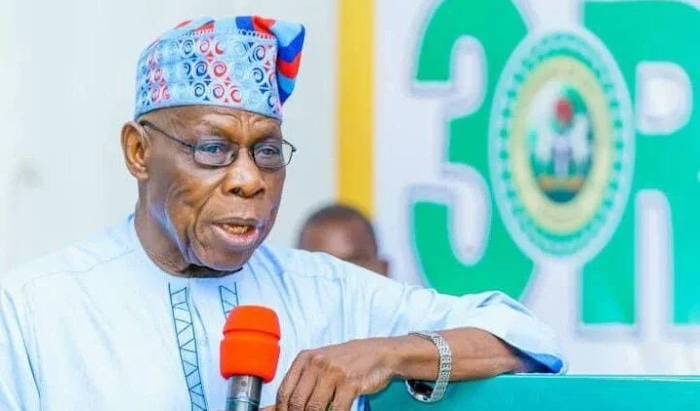
There are lies, and then there are Nigerian political lies – those brazen acts of verbal vandalism that not only dishonor the nation’s collective memory but also mock our shared morality. Former President Olusegun Obasanjo’s latest attempt to rewrite history concerning his failed third-term bid clearly falls into the latter category.
That Obasanjo barely eighteen years after the event, would casually deny the obvious tells you everything about the poverty of truth in Nigeria. That a man whose words carry weight would dismiss his own overreach so nonchalantly reveals how endangered truth has become in Nigeria. Obasanjo’s third-term project was not just a rumor. It was a calculated, consistent, and coordinated campaign that consumed the nation’s political oxygen between 2005 and 2006. It sought to stretch the Constitution like elastic to fit one man’s narcissistic ambition.
Olusegun Obasanjo didn’t just seek a third term – he actively fought for it. It dominated the final years of his presidency, divided the National Assembly, strained his party, the PDP, and sparked both domestic outrage and international concern. His ambition was halted not by humility or principles, but by resistance – from internal rebellion and the pressure of global democratic opinion. It failed – not because Obasanjo relented, but because the resistance was fierce: from within his party, from the press, from civil society, and from wary foreign allies. Obasanjo didn’t walk away; he was pushed away. That is history. That is the truth that Obasanjo can only retell but not revise.
Yet here we are, nearly two decades later, listening to Obasanjo tell the nation that he never sought what we all saw him fight for. He speaks as if the witnesses to that constitutional siege are all buried, as if Uche Chukwumerije’s death took the last testimony with it. But no, not everyone who watched that sordid drama is gone. Some of us remember. The ghosts of that betrayal still walk among us. History’s witnesses still breathe. The arrogance of Obasanjo’s revisionism is the same arrogance that once believed Nigeria could be bent to one man’s will.
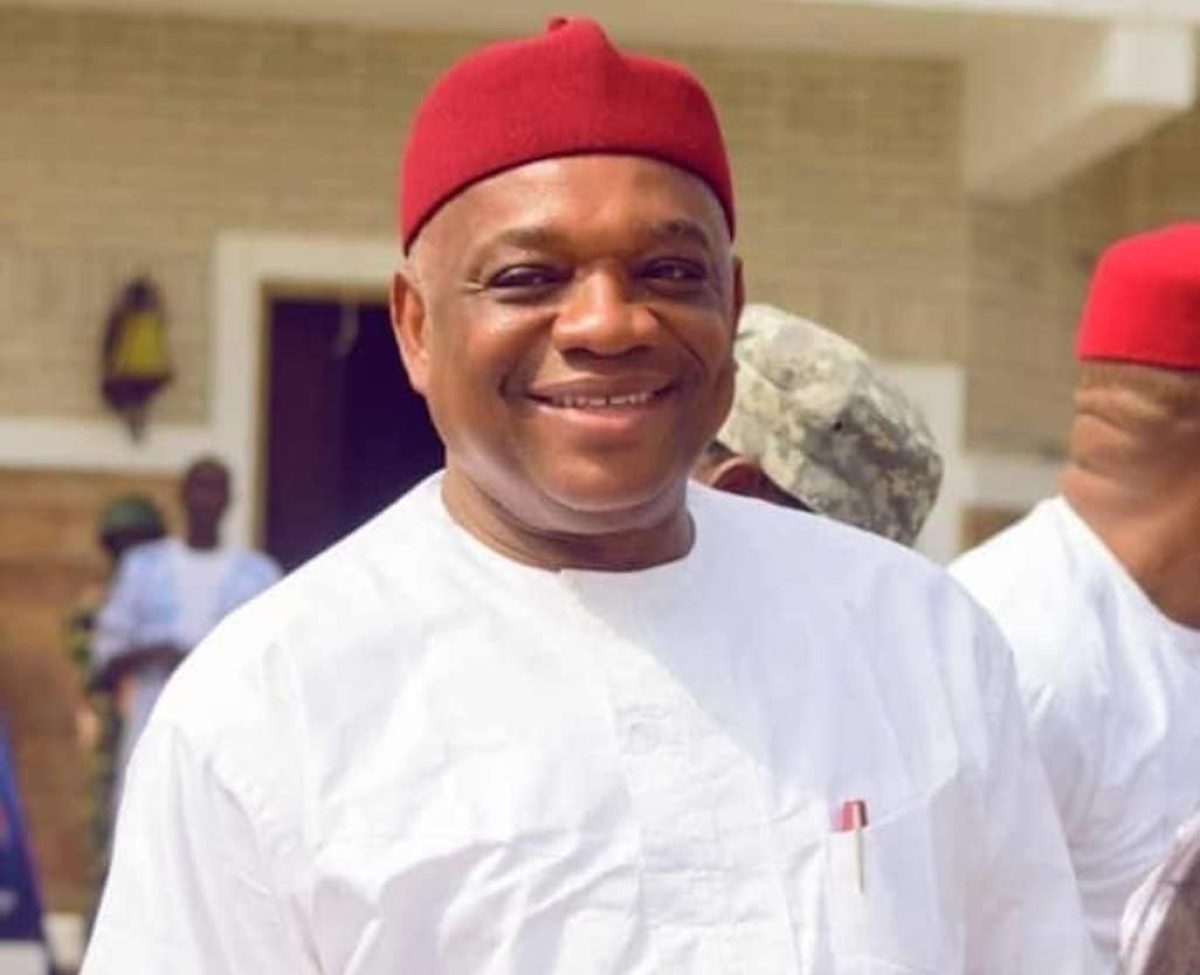
So yes, it is refreshing that Senator Orji Uzor Kalu stepped forward to challenge Obasanjo’s lies. But it is tragic that in doing so, Kalu created a second wound – one of hypocrisy so thick it could drown the truth itself. Kalu, in what should have been a moral correction, instead performed a tragic parody of virtue. In his interview with Seun Okinbaloye on Channels TV, Kalu – with all the solemnity of a man invoking divine witness – declared:
“I told him [Obasanjo at the Villa] that I am a committed Christian. That I have taken an oath with the Bible that we will do 8 years… Let President Obasanjo not annoy the gods of our land, because he wanted third term, and they stopped him from going to be third term.”
The irony is intense. The hypocrisy borders on the theatrical. For Orji Uzor Kalu – a man whose time as governor of Abia State remains a case study in plunder and decadence, and whose name has been engraved on the ledgers of the Economic and Financial Crimes Commission (EFCC) – to call himself a “committed Christian” is an insult not only to religion but also to reason. It’s the very definition of sacrilege. It’s not just ironic; it’s offensive. It’s as if corruption now seeks refuge beneath the shadow of the cross. Let the truth be told: Orji Uzor Kalu cannot suddenly appear as the defender of divine order.
Kalu’s political record does not reflect commitment to God or country; it is a litany of self-enrichment and misrule. He may have taken an oath on the Bible, but his actions have been a standing violation of everything that sacred book teaches. A man who cried his way out of prison for corruption cannot now anoint himself the defender of constitutional virtue. When Kalu says he told Obasanjo not to “annoy the gods of our land,” one wonders which gods he meant – for certainly not the God of justice, truth, or accountability.
Kalu then delivered what he thought was a seminal sermon on democracy: “The beauty of constitutional democracy is time limit. If you are in democracy and the Constitution says 8 years, nobody, anybody who wants to go more than 8 years in our country is asking God what will you do? And it’s not right.”
Here, one must pause and ask: when did Orji Uzor Kalu discover the “beauty of constitutional democracy”? For a man who has spent his career defiling every democratic principle – through vote buying, political manipulation, and moral compromise – this sudden evangelism for democracy’s sanctity is as laughable as it is insulting.
No, Senator, the beauty of constitutional democracy is not found in term limits. It is rooted in truth, justice, and service – virtues that individuals like you have often betrayed. The beauty of constitutional democracy resides in electoral integrity – in the sanctity of elections, in the humility of leadership, in respecting the will of the people, in upholding the rule of law, and in faithfully managing public resources – not in the convenient piety of politicians who discover God only when out of power. The real test of democracy is not how swiftly a person leaves office, but how honorably they serve while in office.
By that standard, Kalu failed. His years as governor left Abia State poorer and disillusioned. His reemergence as senator is a testament not to repentance but to Nigeria’s broken political morality – a system that rewards notoriety and punishes conscience. The truth is, Kalu does not understand democracy because he has never practiced it. He has only survived within its ruins. His career is a testimony to the corrosion of public morality – a man who treats conviction as an inconvenience and power as inheritance. So, when Kalu lectures the nation about “the gods of our land,” we must ask which altar he stands upon because this is the same man who, by his own public conduct, has repeatedly desecrated both altar and constitution.
So, what exactly did we witness on national television? Not a defense of truth, but a contest between two deceptions. Obasanjo and Kalu’s interviews are not a clash between truth and falsehood; they are a contest between two shades of deception. One man, Obasanjo, lied about the past; the other, Kalu, lied about himself. One rewrites history; the other pretends to embody virtue. One denied his ambition; the other denied his sins. Together, they staged a grotesque drama – Nigeria’s theater of sacred hypocrisy. They form the perfect portrait of Nigeria’s political decay – a land where truth is negotiable, integrity is theatrical, and religion is weaponized for self-cleansing.
The tragedy is that both men understand the power of their words, and both depend on a national culture that has forgotten how to be outraged. In a country where corruption and deceit are normalized, truth no longer shocks; it just amuses. And this is the deeper corruption. Obasanjo lies because he can. Kalu preaches because we allow him. It’s easy to laugh at Obasanjo’s denial of a third term or Kalu’s self-righteous sermons, but these are not harmless moments of comedy. They expose something darker – a nation where public figures no longer fear contradiction because truth itself no longer carries consequences. In Nigeria, moral shame has lost its sting.
In societies where memory still has muscle, such performances would provoke outrage. But in Nigeria, the moral stage is vacant. The audience no longer demands truth; we simply watch for entertainment. The same political class that wrecked the ship of state now argues over who saw the iceberg first – and expects applause.
Obasanjo and Kalu are mirror images of the same political culture: one that believes history is pliable and conscience expendable. Their separate interviews were not just political performances; they were moral confessions – confessions of how much we have declined as a people, that these men can speak so openly and expect to be believed.
Let us be clear: Obasanjo’s third-term bid was real. It was corrupt, coercive, and contemptible. Kalu’s claim to moral guardianship through his invocation of God as a shield for his own record is as obscene as it is deceitful. The two interviews – one self-absolving, the other self-anointing – expose not only the moral decay of Nigeria’s elite but also the collective amnesia of its people. Together, they remind Nigeria why it remains trapped – because even when we talk about truth, we do so through the mouths of men who have long divorced it. Both men are symptoms of a larger disease: the collapse of shame as a public virtue. In Nigeria, we no longer resign over dishonor; we run campaigns on it. The worse one’s record, the louder the sermon.
The most sobering truth is that between Obasanjo’s lies and Kalu’s hypocrisy, Nigeria is left with no moral witness. The guardians of memory have instead become its murderers, and, once again, the Nigerian public is left as witnesses and victims – listening to lies dressed as testimony, to hypocrisy masquerading as principles. So, while Obasanjo revises his history and Kalu recites his Bible, the nation trudges on – cynical, jaded, weary, and accustomed to deception. We are ruled not by leaders but by storytellers, each twisting and rewriting the same tragedy for his own benefit.
It should terrify us that in 2025, the truth about 2006 can still be debated – not because evidence is missing, but because liars have louder microphones. Maybe Obasanjo thinks he was the only one to survive that era. Maybe Kalu believes his piety will erase his past. But history, like conscience, never truly sleeps. It may rest, but it always remembers the sound of betrayal.
For now, all we can do is watch this theatre unfold – two men, each pretending to be the lesser evil, both confirming why Nigeria’s democracy drags behind like a wounded animal. The tragedy isn’t that Obasanjo lied. The tragedy is that when he did, the only person available to correct him was Orji Uzor Kalu – a man whose entire career is an argument against truth itself. So, for now, let’s just sit back and watch this epic Nigerian sequel titled “Historical Lies and the Histrionics of Liars.” And in the end, perhaps the gods of our land – the true ones, of truth – will rise in rage and revenge and not be mocked forever.
Dr. Vitus Ozoke is a lawyer, human rights activist, and public commentator based in the United States.