
Economy
Reviving Enugu Coal: A Strategic Energy And Economic Opportunity In Nigeria’s Post-Electricity Act Era -By Engr Chris Ebia
Reviving coal through modern technology, strong regulation, and private sector participation can transform Enugu from a historic Coal City into a contemporary power hub, easing pressure on the national grid and powering Nigeria’s growth in a challenging energy future.

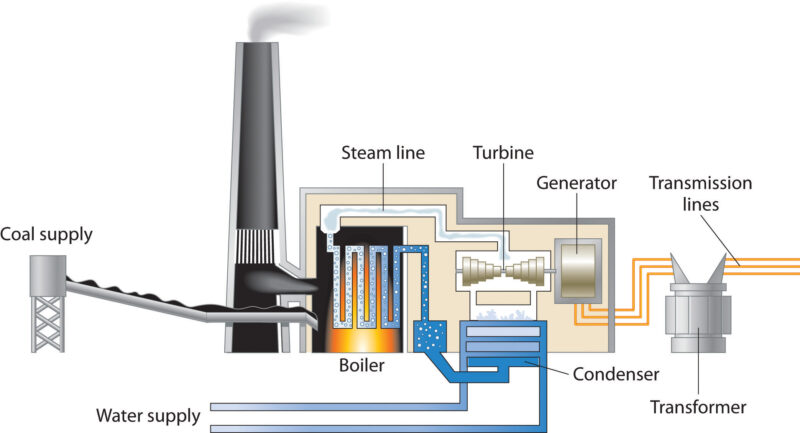
For over a century, coal defined the identity, economy, and early industrial promise of Enugu State. Aptly called the Coal City, Enugu once powered railways, industries, and colonial administration through its vast coal deposits. Today, those same deposits largely lie dormant while Nigeria struggles with chronic power shortages, grid instability, and rising energy demand. This paradox raises a compelling question: can Enugu coal be responsibly revived to support energy security and economic growth in the era of the Electricity Act?
A BRIEF HISTORY: FROM NATIONAL PRIDE TO NEGLECT
Coal was discovered in Enugu in 1909 at the Udi Ridge, and by 1916 commercial mining had begun. The industry grew rapidly, leading to the establishment of the Nigerian Coal Corporation in 1950, with headquarters in Enugu. Mines such as Ogbete, Iva Valley, Onyeama, and Okpara became economic lifelines, attracting workers from across Nigeria and accelerating urban development.
Coal fueled steam locomotives, powered industries, and earned foreign exchange through export. However, the discovery of crude oil in the late 1950s marked the beginning of coal’s decline. As Nigeria shifted to oil and diesel-powered systems, coal demand collapsed. By the 1970s and 1980s, most Enugu coal mines were abandoned, leaving behind unused resources, lost jobs, and degraded sites.
COAL LYING IN WASTE IN AN ENERGY-STARVED NATION
Nigeria today faces a severe electricity deficit. Installed capacity far exceeds available and delivered power, while millions of households and businesses rely on expensive and polluting diesel generators. The national grid, managed by the Transmission Company of Nigeria, remains under immense pressure, with frequent collapses and limited reach.
Ironically, Nigeria still possesses vast coal reserves, estimated at over 2 billion metric tonnes, much of it located in Enugu and the surrounding region. Leaving this resource untapped while importing fuel and enduring power shortages represents a major economic and strategic loss.
THE ELECTRICITY ACT ERA: A WINDOW FOR COAL REVIVAL
The recent Electricity Act has fundamentally changed Nigeria’s power landscape by decentralising electricity generation, transmission, and distribution. States can now generate, transmit, and distribute power independently or in partnership with private investors.
This legal shift creates a historic opportunity for Enugu State to:
1. Develop state-based or regional coal-fired power plants
2. Supply electricity directly to industries, commercial clusters, and households
3. Reduce reliance on the overstretched national grid
Rather than massive central plants, Enugu can adopt moderate-scale, mine-mouth coal power stations located close to coal deposits. This minimizes transportation costs and energy losses while improving reliability.
ECONOMIC IMPACT: JOBS, INDUSTRY, AND REVENUE
Reviving coal mining and coal-based power generation would have far-reaching economic benefits:
1. Employment creation
Coal revival would directly employ miners, engineers, geologists, electricians, and technicians, while indirectly supporting transport, construction, maintenance, and service sectors. Thousands of jobs could be created across the value chain.
2. Industrial revival
Stable electricity supply would attract industries such as cement production, ceramics, metallurgy, agro-processing, and manufacturing sectors that thrive on consistent power.
3. Revenue generation
Enugu State could earn revenue through royalties, taxes, power sales, and public-private partnerships, strengthening its internally generated revenue base.
4. Energy cost reduction
Locally generated coal power can reduce dependence on diesel generators, lowering production costs for businesses and improving competitiveness.
HOW MUCH ENERGY CAN ENUGU COAL GENERATE?
Coal is an energy-dense fuel. On average, one tonne of coal can generate about 2,000–2,500 kWh of electricity, depending on quality and technology. With millions of tonnes available, Enugu coal has the potential to support hundreds of megawatts (MW) of continuous power over several decades.
Even a 300–500 MW coal-fired power capacity dedicated to Enugu and neighbouring states would:
Significantly reduce load on the national grid
Stabilise supply for the South-East
Serve as a baseload complement to solar and hydro power
ENVIRONMENTAL REALITIES AND MODERN SOLUTIONS
Any coal revival must acknowledge environmental concerns. However, modern coal technologies such as circulating fluidized bed boilers, flue gas desulfurization, and particulate capture systems are far cleaner than legacy systems. With strict regulation, environmental remediation of abandoned mines, and community engagement, coal can be developed more responsibly.
Moreover, coal power can serve as a transition energy source, supporting industrial growth while Nigeria gradually expands renewables and gas infrastructure.
CONCLUSION: FROM ABANDONMENT TO STRATEGIC ASSET
Coal built Enugu. Its neglect has left economic scars and unrealised potential. In this new Electricity Act era, Enugu coal should no longer be seen as a relic of the past but as a strategic asset for energy security, industrial revival, and economic development.
Reviving coal through modern technology, strong regulation, and private sector participation can transform Enugu from a historic Coal City into a contemporary power hub, easing pressure on the national grid and powering Nigeria’s growth in a challenging energy future.
Engr C.O EBIA
Electrical Engineering Consultant & MD, MyDream Engineering Solutions ltd
Enugu State
07067115709
Info@mydream.com.ng

























You must be logged in to post a comment Login