Forgotten Dairies
Borno’s Insurgent Rehabilitation: A Necessary Peace or a Question of Justice? -By Ijanada Umaru
Communities across Borno State, many of them still carrying the wounds inflicted by those same men, were not asked. The victims families whose daughters were kidnapped, whose sons were conscripted, whose homes were burned watched from a distance as the state extended a hand of reintegration to the very people who shattered their lives.

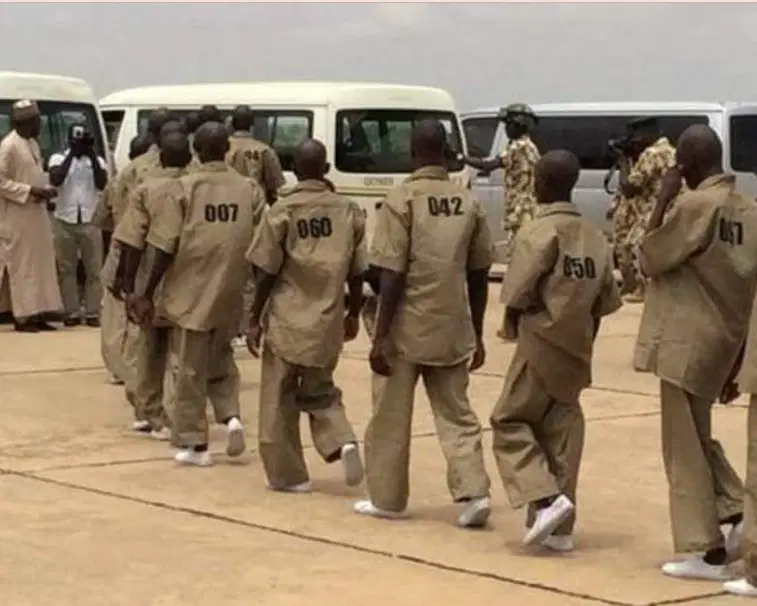
On June 12, 2026 Democracy Day the Borno State Government held a ceremony at the Hajj Camp in Maiduguri and released 720 former Boko Haram and ISWAP insurgents back into Nigerian communities. They were Batch 9 of the state’s Deradicalisation, Rehabilitation, and Reintegration (DRR) programme, known as the Borno Model, bringing the cumulative total of reintegrated ex-fighters to 9,680. Each recipient left with vocational skills, a government starter pack, cash support, and the blessing of state officials. They swore on the Quran. Officials called it a milestone.
Communities across Borno State, many of them still carrying the wounds inflicted by those same men, were not asked. The victims families whose daughters were kidnapped, whose sons were conscripted, whose homes were burned watched from a distance as the state extended a hand of reintegration to the very people who shattered their lives. No equivalent ceremony exists for the thieves serving time in Kano, or the fraud convict released from Lagos, or the petty criminal who exits a Nigerian correctional facility to find nothing waiting no training, no starter pack, no government handshake. Research consistently shows that Nigerian ex-convicts face stigma, unemployment, homelessness, and a near-total absence of structured reintegration support conditions that drive them back into crime.
The logic of the Borno Model is not without merit. Non-kinetic counter-insurgency drawing fighters away from armed groups through rehabilitation rather than only military force has international backing and demonstrable results. Over 350,000 people have surrendered from insurgent camps since the programme began in 2021. A military-only approach could not have achieved this. But merit is not the same as equity. When a state devotes its resources, ceremonies, and political will to rehabilitating mass killers while leaving petty offenders to fend for themselves, it communicates something deeply corrosive: that the scale of your violence determines the quality of the state’s mercy.
Borno State’s sense of security already fragile after years of Boko Haram devastation, and freshly tested by the Oyo school kidnappings of May 2026 cannot be rebuilt on policies that insult the ordinary victims of crime while celebrating the rehabilitation of extraordinary ones. The Borno Model should be expanded, not dismantled. But its rehabilitative logic must be extended to every Nigerian leaving prison, not just those who once carried AK-47s. Until that day, the state’s compassion will remain not a symbol of justice, but of its absence.
Ijanada Umaru writes on security, criminal justice, and human rights in Nigeria.