Opinion
BRICS+ Expansion Still Under Debates, by Kestér Kenn Klomegâh

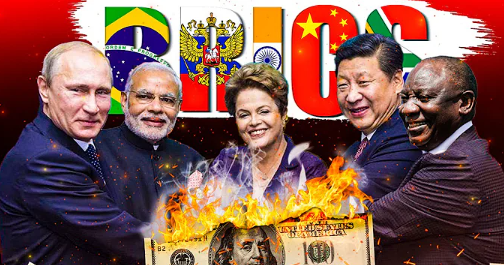
In an interview with Sky News Arabia on September 20, 2024, Russian Foreign Minister Sergey Lavrov expressed skepticism, but was straight to the point about strategic expansion of BRICS, an association comprising Brazil, Russia, India, China and South Africa. Under Russia’s BRICS presidency which began January 2024, Ethiopia, Egypt, Iran, Saudi Arabia and the United Arab Emirates became the second wave of the newest members to join BRICS. South Africa ascended in 2011 under China’s initiative.
Tracking down the history, operations and achievements, Lavrov acknowledged in his interview that the BRICS association is consolidating its positions and cooperating with a number of countries. At the same time, this association is facing certain challenges. It is necessary to promote collaboration based on a balance of interests, and most importantly, BRICS functions on the basis of consensus. The consensus principle primarily aims at finding agreements that reflect the mutual accord of all participants. This is not easy. The more partners, the harder it is to search for accord. It takes more time to finalise any consensus-based agreement than a vote-based solution.
Accrding to Lavrov, this provides a solid foundation for developing a strategic partnership within the association. Currently, BRICS comprises 10 countries; their number has doubled compared to last year. More than 30 countries have already submitted applications for interaction or membership in the association. At the summit to be held in Kazan in October, one of the main items on the agenda will be the consideration of applications from states that wish to interact and partner with BRICS.
BRICS expansion has sparked debates and discussion these several years, long before Ethiopia, Egypt, Iran, Saudi Arabia and the United Arab Emirates were finally accepted on the condition of “concensus” by BRICS members during the South African summit in August 2023. Lavrov has already indicated and repeated explained the “suspension” of membership into BRICS+. Instead of membership, Lavrov mentioned that potential countries can only only be accepted as a “partner group” with simple consideration to support and interact with BRICS association. The prescription is very simple – BRICS is an association based on a respectful attitude towards each other and on mutual consideration to promote collaboration based on a balance of interests and strictly adhere to the principle of the sovereign equality of states and non-interference in each other’s domestic affairs.
According to information monitored, more than 30 countries, with growing discontent against western hegemony, have expressed their readiness to join BRICS. Lavrov has also confirmed this figure in his interview with Sky News Arabia, and even earlier explained that “the modalities of ascension have to be collectively discussed” at subsequent summits in future.
In practical terms, Russia has suspended BRICS+ expansion, in other words BRICS+ flagship policy of boosting its numerical strength, with unique reports indicating that there were more than 30 countries worldwide – Latin America, Asia and Africa. At South Africa’s 15th Summit held under President Cyril Ramaphosa, several countries had expressed interest in ascending the BRICS association, but only five (5) finally joined. The official documents, as stipulated by the guidelines, set no concrete criteria or rules for admission except using the flexible term “consensus” – a general agreement at the summit which was utilized in the selection process. Foreign Minister Sergey Lavrov and Russian President Vladimir Putin have described (designated) this circle of BRICS+ friends into … what is now referred popularly to as “partner members” which starkly reflected in official documents.
At the Primakov Readings held in June 2024, the extraordinary key point was an announcement by Sergey Lavrov over ‘suspension’ of BRICS new membership. In mid-June 2024, Lavrov hosted the BRICS Foreign Ministers Council in Russia’s Nizhny Novgorod. The BRICS Foreign Ministers decided to suspend admission of new members and this step reflected in the final documents.
Local and foreign media reported Lavrov’s statement: “By the overwhelming majority, the ten members decided to ‘take a pause’ with new members, to ‘take in’ the new members who have doubled the association. At the same time, we are working of categories of partner countries as stages ahead of a full-fledged membership.” Lavrov said BRICS would use the pause to draw up a list of categories for BRICS partner countries that would serve as stepping stones toward full membership. Understandably, BRICS+ has decided to “take a pause’ in terms of admitting new members. The partner-country model in line with paragraph 92 of the Johannesburg II Declaration.
In a media release after June 10-11, BRICS foreign ministers meeting, noted prospects for promoting strategic partnership within BRICS, including the establishment of a new category of “partner countries” and suspension of new members from the Global South and Global East. As per the agreements reached at the BRICS Summit in Johannesburg in 2023, the ministers reviewed the efforts to coordinate the modalities of the new category, BRICS partner countries.
Within the stipulated guidelines, Russia took over the BRICS one-year-long presidency on January 1, 2024. The initial four BRIC (Brazil, Russia, India, and China) met in New York City in September 2006 at the margins of the UN Assembly, but held its first full-scale meeting in Yekaterinburg, Russia, on 16 June 2009. BRICS has experienced two phases of expansion. In 2011, South Africa joined the association, which included Brazil, Russia, India, and China. On January 1, 2024, five new members officially entered BRICS association namely Ethiopia, Egypt, Iran, Saudi Arabia and the United Arab Emirates.