Africa
Christmas in the Southeast -By IfeanyiChukwu Afuba
Christmas empowerment could be one such reaching out. In the past, it was mainly a case of governments giving workers a ten kg of rice and a bottle of vegetable oil. Sometimes, it came in the equivalent of cash. How did the states fare this year? Reports offer a varied picture. Enugu State announced the offer of free transportation from Lagos and Abuja for citizens of the State. Workers in Imo and Abia States were awarded the thirteenth month by their Governors.

For much of the world – ancient and modern – Christmas is at once a season and a mood with distinct flavour. God’s manifestation as man is a once – and – for – all phenomenon that will not happen again. By his eternal kingship, the birth of Christ was a universal milestone. It stands out as the only prophetic ministry, kingship, divine mission, foretold centuries before fulfillment. Drawn by power of the supernatural events, the three wise men from East tore through mountains and desert to Bethlehem in homage to the child – king; in an epic trip captured pungently by T. S. Eliot in the poem, “Journey of the Magi.” The light of Christmas transcends. A deliberate adjustment in date of commemoration by the apostles sent the reigning sungod feast at the time into oblivion.
And the aura of the incarnation continues to resound across time and space.
Especially for Christendom, Christmas ushers in the joy and hope of human salvation. The mission of man’s redemption which climaxes with the Easter Resurrection, begins at Christmas. Thus, Christmas unfolds beautifully like morning flower, radiant, colourful, sweet – smelling. It is a reminder of the oneness, of a common heritage as God’s people and therefore, members of the same society. This sense of community, gives the commemoration a publicness, drawing non – Christians into the celebration. Bhuddists are known to join in the festivities.
Christmas in this part of the world comes at a time of the hazy, harmattan weather. It’s windy, whistling air has a rustling effect on the body. The cool climate be soul – stirring too. An epicure said the weather is clement for guzzling beer. But, the weather is only one side of the season’s trend in Nigeria, more specifically, southeast Nigeria. It would be no more than the wrapping in which the sumptuous food is served.
At the turn of Advent in the Church’s liturgical calendar, a certain mystical appeal begins to unravel. The scent of the season hangs in the air. The faithful are called to a retreat of preparation for the
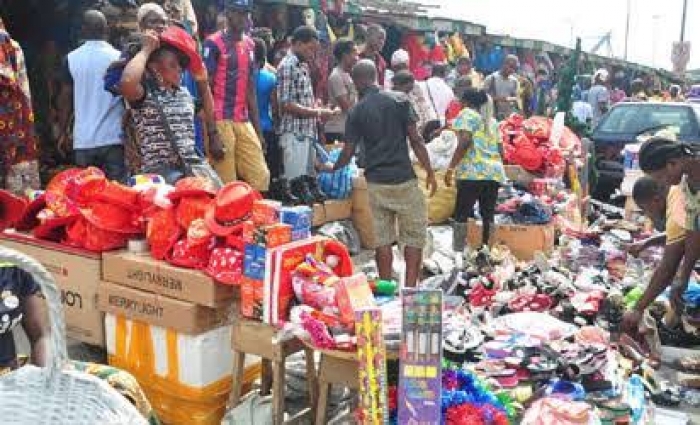
Nativity. Emphasis is on repentance, on acquiring the right disposition for the wonder of God’s revelation. Ironically, the foremost aspect of spiritual renewal is relegated to the bottom of Christmas consciousness. The charm that many find in the season consists mainly of the extended feasting and holidays. In a sense, the celebration assumes more importance than the event itself. Preparations for Christmas take on an all – consuming force that literally put every other thing on hold. The race to make it, to have everything ready before Christmas, cuts across age and gender. It’s a compulsive time to hustle. Mass movement is not only about benefitting from the spending spree. Traveling to one’s native town for the festivities is a given for many. It’s a prized opportunity to reconnect with the home front, enjoy the warmth of reunions and play a part in charting efforts. In the mix of it all, there’s surge in prices of goods and services. And the poor, whose expectations and appetite had been raised with tunes of “Jingle Bell”, “Silent Night”, “Mary’s Born Child” etc end up experiencing higher level of shortages.
It’s almost sixty years from the timeline of Chinua Achebe’s 1968 poem “Christmas in Biafra”. The social condition of 1968 was the collective siege, hunger and displacement. Everyone, including those on the other side were part of J.P. Clark’s “Casualties” of the war. Christmas in Biafra was a round walk from nostalgia to dreams. Today, the danger of insecurity lurks at every corner of Nigeria. In the southeast, the violence of kidnapping, cultism, robbery and touts, puts the population at general risk. Feeling of insecurity led to the holding of traditional marriage rites in “foreign” towns considered relatively safer, a practice alien to Igbo customs. For the same reason, some in the Diaspora and some in other parts of the country will not be coming home this December. It’s acknowledged that each state in the southeast has local, security formations in place. The big question however, is on the common framework for collaboratively tackling the threat in the region. Where is the synergy toward intelligence – driven, technology – based, security operations? Governors of the southeast states ought to appreciate better than anyone else that a robust security network is a solid incentive for investment and economic growth.
Governments exist to serve the people. Considering the subscription of the population to Christian civilisation, a meeting point by government and society at this juncture is desireable. Attending to the welfare of the people has no time boundary or lapse and would assume emphasis under certain conditions. A period of special significance such as Christmas is one which the government should be associated with. Progressive governments are ever mindful of the social conditions of the people as well as their responsibility towards improving living standards. The naira’s continued loss of purchasing power has left majority of Nigerians in poverty straits. Worse, many a privileged Nigerian seize every opportunity to corner the commonwealth for themselves. We just learnt about a corrupt public officer who spends $5m a year to sponsor his children’s education abroad. The sum, Mr Peter Obi tells us, could educate 600 pupils and pay the salary of 450 teachers a year. Studies by international bodies show that road construction costs in Nigeria are about the highest in Africa. Can the narrative of bad governance be changed? It can, even if it has to start with small gestures of concern and care.
Christmas empowerment could be one such reaching out. In the past, it was mainly a case of governments giving workers a ten kg of rice and a bottle of vegetable oil. Sometimes, it came in the equivalent of cash. How did the states fare this year? Reports offer a varied picture. Enugu State announced the offer of free transportation from Lagos and Abuja for citizens of the State. Workers in Imo and Abia States were awarded the thirteenth month by their Governors. Ebonyi State Governor Francis Nwifuru reportedly declared one hundred and fifty thousand naira grant for each member of the state workforce. Ebonyi State government further disbursed N254m to 5008 widows and elderly. Anambra State’s package was not available at the time of writing but Governor Charles Soludo in 2024 approved fifteen thousand naira bonus to employees of the government. The benefits afforded by Ebonyi, Abia and Imo state governments are notable. They should be commended. Ebonyi State stands out as the highest giver. She also takes the lead for extending the Christmas goodwill beyond the workers’ line.
The progress achieved on the Ebonyi front encourages us that state welfare intervention is practicable. The envisioned programme is a support scheme that targets several groups. Adding students to the Ebonyi template which includes widows, workers and the elderly, would be a good take – off point. Students in higher institutions today go through a lot of stress, not least, financial. If bursary award was deemed worthwhile decades ago when higher education was a walk in the park, why is educational palliative not necessary today? The plea of insufficient funds does not absolve government from social responsibility. Performance is as much a matter of funding as it is of priority and will. It should be borne in mind that Nigerians do not experience government subsidies on basic needs as enjoyed by citizens in many countries. Advocacy for state social protection in Nigeria is therefore not utopian. Societal mission advises that this pacification of vulnerable groups fits into the Christmas theme.