Africa
Climate Change And The Looming Humanitarian Crisis In West Africa -By Nkiru Okparuba Jude
The climate crisis is a ticking time bomb for West Africa. Unless urgent and collective action is taken, the region may soon face a humanitarian catastrophe of unprecedented scale. As the world debates carbon emissions and global targets, millions of Africans are already paying the price—with their land, their homes, and their lives. The question now is not whether the crisis will deepen, but whether the region will act fast enough to survive it.

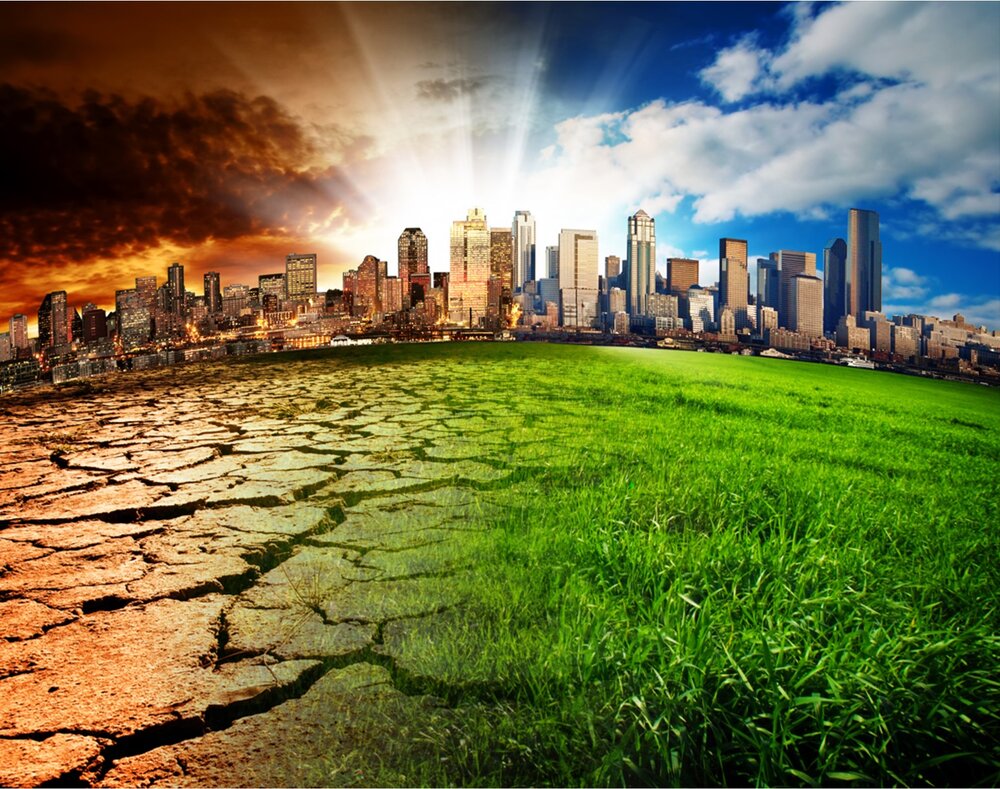
The West African region, already burdened by insecurity, poverty, and weak infrastructure, is now facing an even more devastating threat—climate change. From the advancing Sahara desert in Niger and Mali to the rising sea levels along the Nigerian and Ghanaian coasts, environmental degradation is fast becoming a humanitarian emergency. Farmers, herders, and fishermen who once relied on predictable weather patterns now struggle to survive in an increasingly hostile environment. The consequences are not just ecological—they are deeply social, economic, and political.
In Northern Nigeria, communities that depend on rain-fed agriculture are witnessing shorter rainy seasons and longer dry spells. The result is declining crop yields, food insecurity, and mass displacement. According to environmental experts, the Lake Chad basin—once one of Africa’s largest freshwater bodies—has shrunk by over 90 percent in the last five decades. This has left millions of people in Nigeria, Chad, Niger, and Cameroon without reliable water sources, fueling competition and, in some cases, violent conflict.
Across the Sahel, the story is much the same. Desertification continues to encroach on arable land, forcing herders southward in search of grazing fields. This mass migration often brings them into conflict with farming communities, leading to deadly clashes. The increasing frequency of such conflicts reveals how climate change is no longer just an environmental issue—it’s a driver of insecurity and displacement across West Africa.
Coastal regions are not spared either. In Lagos, Nigeria’s commercial hub, rising sea levels and unregulated urban expansion have made flooding an annual nightmare. Entire neighborhoods in low-lying areas like Lekki and Ajegunle are submerged during heavy rains, destroying homes, schools, and livelihoods. The same can be said for Freetown in Sierra Leone and Accra in Ghana, where poor drainage systems and heavy rainfall have turned city streets into rivers.
Experts warn that if the current trend continues, millions could become climate refugees in the next two decades. The United Nations Office for the Coordination of Humanitarian Affairs (OCHA) has already recorded increasing displacement due to environmental factors in the Sahel and coastal areas. This displacement puts immense pressure on already overstretched urban centers, creating new cycles of poverty and instability.
Climate change is also affecting health outcomes in the region. Rising temperatures and irregular rainfall have expanded the reach of vector-borne diseases such as malaria and dengue fever. In rural communities, prolonged droughts have reduced access to clean water, leading to outbreaks of cholera and other waterborne diseases. Children and women are particularly vulnerable, as they often bear the burden of walking long distances to fetch water from unsafe sources.
The impact on agriculture—the backbone of most West African economies—is perhaps the most alarming. Erratic rainfall has made planting seasons unpredictable, while prolonged droughts destroy crops and pasture. In some parts of Nigeria, Ghana, and Burkina Faso, farmers are abandoning traditional crops like maize and millet for drought-resistant alternatives. However, these adaptations come at a cost, often reducing overall productivity and income levels.
International organizations and governments have launched various initiatives to combat the crisis. The Great Green Wall project, for instance, aims to restore degraded land across 11 African countries by planting trees and promoting sustainable land management. Yet progress has been slow due to inadequate funding, corruption, and weak political will. Local adaptation programs—such as community irrigation schemes and renewable energy projects—have shown promise, but their scale remains insufficient to match the pace of environmental degradation.
Environmental activists argue that the solution lies not only in global climate agreements but also in regional collaboration. Countries must strengthen early warning systems, invest in green infrastructure, and create policies that protect vulnerable communities. More importantly, citizens must be empowered with education and resources to adapt to changing conditions. Without these measures, climate change will continue to exacerbate hunger, migration, and conflict in the region.
The climate crisis is a ticking time bomb for West Africa. Unless urgent and collective action is taken, the region may soon face a humanitarian catastrophe of unprecedented scale. As the world debates carbon emissions and global targets, millions of Africans are already paying the price—with their land, their homes, and their lives. The question now is not whether the crisis will deepen, but whether the region will act fast enough to survive it.
Nkiru Okparuba Jude is a 300 Level Student From Mass Communication Department University Of Maiduguri.