Africa
Daniel Bwala: When Political Memory Fails, Credibility Dies -By Jeff Okoroafor
They traded conviction for proximity to power. An op-ed on how Daniel Bwala and Reno Omokri embody Nigeria’s crisis of political memory and the high cost of renting out your principles.

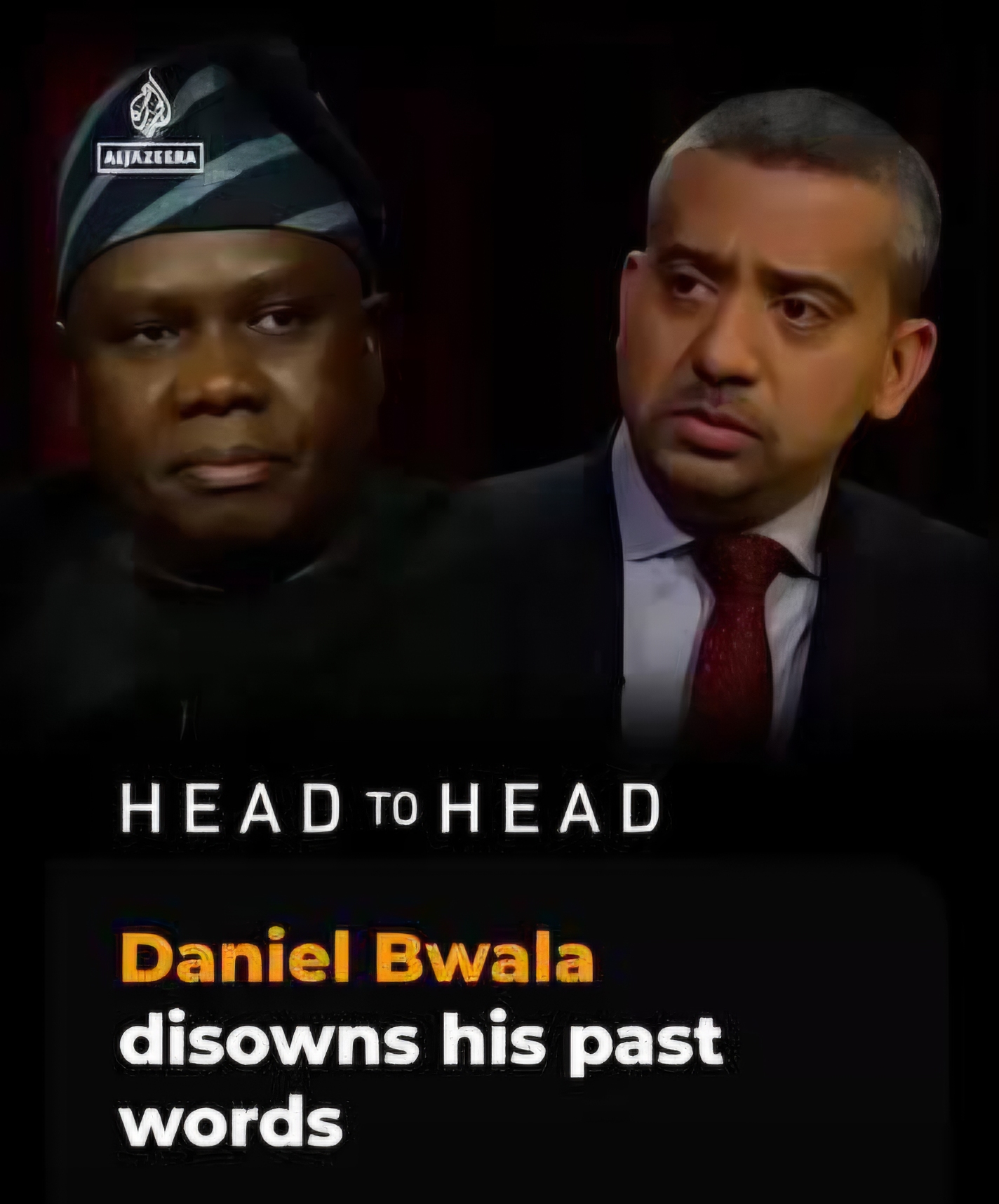
When Mehdi Hasan sat across from Daniel Bwala on Al Jazeera, he did what too few journalists bother to do anymore: he held up a record. Not rumors. Not opposition talking points. Daniel Bwala’s own words. His own archived declarations. His own venom.
And in that moment, Daniel Bwala did not defend himself. He squirmed. Because there is no defense for a man who spent years vilifying Tinubu, only to emerge as his defender the moment proximity to power became available.
Daniel Bwala is not alone. Reno Omokri walked the same path: from loud, relentless critic to visible, enthusiastic apologist. Their journeys are not stories of political evolution. They are case studies in intellectual bankruptcy dressed up as realignment.
This is not about changing one’s mind. This is about abandoning the pretense of conviction altogether.
Change Is Not the Crime. The Cover-Up Is
Political figures shift positions. That is not inherently disqualifying. What separates a statesman from a hustler is the willingness to say: “I was wrong. Here is why. Here is what changed.”
Daniel Bwala and Reno Omokri have done none of that. They have simply erased their pasts and hoped the public would follow suit. They have treated Nigerians as though we have no memory, no access to the internet, no capacity to scroll back and watch them perform outrage they never actually felt.
When a commentator spends years accusing a man of moral failure, incompetence, or worse—and then defends that same man with equal fervor—the public is left with only two possibilities:
Either the attacks were lies, or the defense is.
There is no third option. And silence in the face of that contradiction is an admission of guilt.
The Archive Does Not Forget
Mehdi Hasan’s interview was uncomfortable for Daniel Bwala not because the questions were unfair, but because they were factual. The clips existed. The words were his own. And when confronted, he offered no explanation, no reflection, no accountability. Just the desperate wriggling of a man who hoped the past would stay buried, as reflected in his deeply shameful and distasteful press conference.
But the digital age is a merciless witness. Every tweet, every interview, every theatrical condemnation lives forever. And when the record contradicts the present, the present collapses.
This is the trap Daneil Bwala and Reno Omokri now occupy. They cannot explain their reversals because the explanations would require admitting they were never sincere. That they played the public for fools. That the outrage was a performance for one audience, and the loyalty is a performance for another.
And once that conclusion settles in the public mind, nothing they say matters anymore.
Nigeria’s Culture of Political Hustling
These men are not outliers. They are symptoms of a political culture that has learned to reward ideological strip-tease. In Nigeria, yesterday’s enemy is today’s ally. Last year’s condemnation is this year’s campaign material. And the public is expected to smile and nod as though consistency were never a virtue.
But the cost of this cynicism is not abstract. It is the slow death of trust.
When citizens watch prominent voices flip without explanation, they learn that political speech is not about truth. It is about positioning. They stop asking whether an argument is sound and start asking who paid for it. The public square becomes a bazaar of rented opinions.
Daniel Bwala and Reno Omokri are not the cause of this rot. But they are its most visible beneficiaries. And they are also its most damaging evidence.
The Price of Proximity
In the short term, their calculations make sense. Aligning with power brings access, relevance, and influence. They sit closer to the table now. They are consulted. They are visible.
But the long-term cost is the one thing that cannot be reclaimed: credibility.
A commentator without credibility is just a mouth moving. Their arguments, no matter how polished, land as strategy rather than conviction. People stop listening to persuade and start listening to decode: Who is he working for today?
That is the fate of Daniel Bwala and Reno Omokri. They have won access and lost authority. They have gained proximity and surrendered trust.
A Modest Standard
Public figures are not required to be infallible. They are required to be honest about their own journeys. If Daniel Bwala and Reno Omokri genuinely evolved on Tinubu, the path was always clear: acknowledge the past, explain the shift, and let the public judge.
They chose silence instead. They chose evasion. They chose to gaslight the very people they once rallied.
That is not political evolution. That is contempt for the public. And in a democracy, contempt for the public is the one sin from which there is no return.
Because in the end, the problem is not that they changed sides. The problem is that they expect us to believe they were always on the same side—while the archive screams otherwise.
And until they reckon with that archive, their words will carry only the weight of a question: If you meant it then, you are a fraud now. If you mean it now, you were a fraud then.
There is no escape from that question. And they have earned no right to an answer.

Jeff Okoroafor
Jeff Okoroafor is a social accountability advocate and a political commentator focused on governance, accountability, and social justice in West Africa.