Africa
ECCAS And AU Have Lost Their Voices In Paul Biya’s Undeserved Victory -By Isaac Asabor
Paul Biya may have won another term, but it is an undeserved victory, a victory that exposes the moral emptiness of his rule and the cowardice of those who refuse to confront it. In the long arc of history, it is not Biya who will stand tall, but the Cameroonians who continue to demand freedom in spite of him.

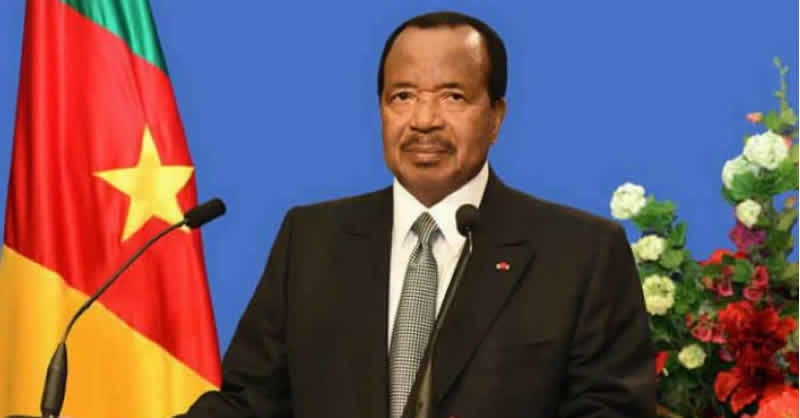
When history finally chronicles the decay of democracy in Central Africa, one name will stand out as both a symbol and a symptom of the continent’s unfinished political liberation: Paul Biya. And as his most recent and predictably “successful” election in Cameroon fades into yet another cycle of repression and decay, two institutions that were supposed to embody Africa’s collective conscience, the African Union (AU) and the Economic Community of Central African States (ECCAS), stand exposed as morally bankrupt and politically complicit. Their silence in the face of Biya’s undeserved victory is not just disappointing; it is a betrayal of the very ideals they were created to uphold.
Paul Biya has ruled Cameroon since 1982, a staggering 43 years of entrenched power, manipulation, and control. He is now one of the longest-serving leaders in the world, outlasting popes, monarchs, and generations of African heads of state. Under his rule, Cameroon has transformed from a promising postcolonial state into a nation paralyzed by corruption, division, and fear. Biya’s government has systematically weakened every democratic institution capable of holding him accountable. The judiciary is pliant, the legislature obedient, and the electoral system rigged beyond redemption.
Each election cycle in Cameroon follows the same well-rehearsed script: a tightly controlled political space, a co-opted electoral commission, and a security apparatus deployed not to protect citizens, but to silence them. Opposition voices are arrested, civil society groups are intimidated, and journalists who dare to question the regime face harassment, detention, or exile. By the time Cameroonians go to the polls, the results have already been decided in the corridors of the presidency.
And yet, every time Biya declares himself the victor, the international community sighs, and the African regional bodies, especially the AU and ECCAS, fall into an ominous silence. This time was no different. Their reluctance to even issue a statement questioning the credibility of the process is as damning as Biya’s own actions.
The African Union, which once promised to be a bulwark against unconstitutional changes of government, now appears selective in its outrage. When coups erupt in West Africa, the AU moves quickly, suspending countries, condemning military juntas, and calling for the restoration of democracy. But when autocrats like Biya manipulate constitutions, suppress opposition, and stage “civilian coups” through rigged elections, the AU suddenly becomes tongue-tied.
This selective silence is not just hypocrisy; it is complicity. The AU’s failure to act against long-term sit-tight rulers like Biya sends a dangerous message: that civilian autocracy is acceptable as long as it is dressed in the costume of electoral legitimacy. The organization’s moral authority has been eroded by political convenience. It has become an institution that roars at soldiers but whispers before presidents.
This silence undermines the AU’s own founding principles. Article 4 of the AU Constitutive Act emphasizes respect for democratic principles, human rights, and the rule of law. But what do these principles mean if they can be ignored every time a long-standing ruler tightens his grip on power? What message does it send to the people of Africa, particularly the youth, when their continental body looks away as democracy is strangled by its own leaders?
If the AU’s silence is disappointing, ECCAS’s inaction is disgraceful. As the regional bloc most directly responsible for political and economic stability in Central Africa, ECCAS should be at the forefront of ensuring that democracy, not despotism, thrives within its member states. Instead, it has become a club of leaders who protect one another from scrutiny.
ECCAS’s failure to call out Biya’s regime reflects a deeper crisis of legitimacy within the organization itself. Many of its member states, including Equatorial Guinea, Congo-Brazzaville, and Gabon (until recently), are governed by long-standing rulers or ruling families. In such a fraternity of entrenched power, there is little incentive for one autocrat to challenge another. The result is a culture of mutual tolerance for impunity, where stolen elections are politely ignored and repression is seen as “internal affairs.”
By refusing to speak up against Biya’s manipulation of the Cameroonian people, ECCAS has effectively abandoned one of its own populations to political suffocation. Its credibility as a regional peace and security actor is in tatters. How can an organization claim to mediate regional conflicts or promote development when it cannot even defend the democratic rights of its citizens?
Cameroon’s tragedy under Biya is both political and human. The once-stable country has been reduced to a fractured state, struggling under the weight of inequality, corruption, and ethnic tension. The Anglophone crisis alone has turned parts of the country into war zones, with thousands killed and hundreds of thousands displaced. Yet Biya’s government has chosen militarization over dialogue, repression over reconciliation.
The economy is stagnant, the youth are disillusioned, and public institutions are decaying from within. For many young Cameroonians, hope has migrated, often across the Mediterranean, because their future at home has been stolen by an aging ruler and his cronies. In this environment, the recent election was never about choice; it was about survival under an endless regime.
The AU and ECCAS’s silence is more than just a diplomatic misstep; it is a moral failure. It reflects how far Africa’s political elite have drifted from the liberation ideals of the continent’s founders. The Pan-African dream that once inspired unity and justice has been replaced by a transactional politics of self-preservation. Leaders protect leaders, even when they oppress their people.
What is worse is that these institutions often speak loudly when Western powers intervene in African affairs, decrying “neocolonialism” and “foreign interference.” But when African leaders themselves trample on democracy, the same institutions lose their tongues. True sovereignty is not the right to abuse one’s citizens; it is the responsibility to serve them.
The AU and ECCAS must understand that their silence today plants the seeds of instability tomorrow. When peaceful democratic transitions are denied, the alternatives are often violent and chaotic. The recent wave of coups in West Africa did not occur in a vacuum, they were born from years of frustration with leaders who refused to leave power. By tolerating Biya’s autocracy, these institutions are inviting similar chaos into Central Africa.
Paul Biya may once again occupy the presidential palace in Yaoundé, but his victory is hollow. It is a victory without legitimacy, without joy, and without moral weight. His rule may continue, but it no longer commands respect, only endurance. Even within Cameroon’s political establishment, fatigue has set in. Many of his loyalists serve not out of conviction, but out of fear and survival.
Cameroon loses every time Biya “wins.” It loses its youth to despair, its credibility to corruption, and its unity to conflict. But perhaps the greater loss this time is Africa’s collective voice. The AU and ECCAS, by their silence, have chosen expedience over principle, and caution over courage.
Africa does not need silent institutions. It needs moral leadership, the kind that speaks truth to power even when it is inconvenient. The AU and ECCAS cannot continue to posture as defenders of democracy while tiptoeing around dictatorships. They must find their voices again, or risk becoming irrelevant bureaucracies that exist only to rubber-stamp tyranny.
Cameroon’s tragedy should serve as a warning: silence in the face of injustice is not neutrality; it is endorsement. The people of Cameroon deserve better than to be forgotten by those who claim to represent them on the continental stage. And Africa deserves better than institutions that choose comfort over conscience.
Paul Biya may have won another term, but it is an undeserved victory, a victory that exposes the moral emptiness of his rule and the cowardice of those who refuse to confront it. In the long arc of history, it is not Biya who will stand tall, but the Cameroonians who continue to demand freedom in spite of him.
Until the AU and ECCAS rediscover their voices, the continent will continue to be haunted by the ghost of its unspoken truths.