Africa
Escalating Tension: The Farmer Herder Clash in Nigeria -By longbakwa Kevin Maiyaki
Even with the effort of the Nigerian government, this problem is still ongoing and will involve a multi-faceted approach: implementing sustainable ranching/grazing reserves, enhancing community dialogue and local peace committees, improving early warning systems with technology (GIS), strengthening law enforcement for justice, promoting education for peaceful coexistence, and enacting inclusive policies that recognize herders’ mobility while protecting farmers’ lands, often through collaborative resource management and addressing root causes like climate change.

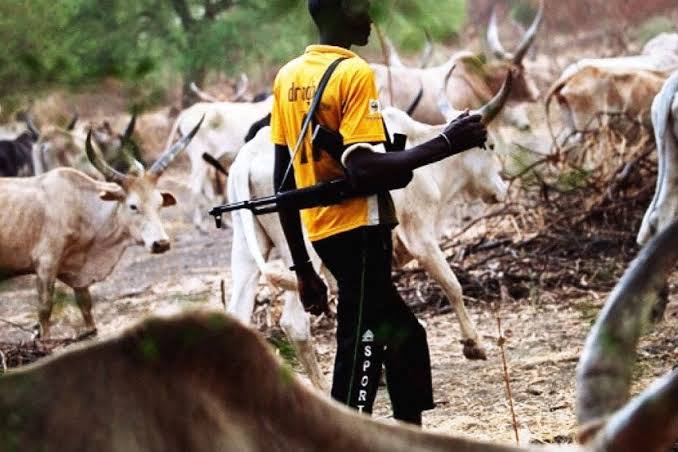
In Nigeria, there are various cases and dispute over farm land and herders. This dispute has been going on for years in the country and there are extensive records of violent farmer-herder conflicts in Nigeria, particularly in the Middle Belt, North-Central, North-West, and parts of the South, leading to massive casualties, displacement over 2.2million peoplein 7 years, disruption of farming, and significant food insecurity, with states like Benue, Plateau, Kaduna, and Taraba being heavily affected over the past decade.
Nigeria’s farmer-herder conflict has deep historical roots, dating back to pre-colonial times. The traditional “burti” system managed conflicts, but its collapse in the 1970s, coupled with climate change, population growth, and land use changes, has led to escalating violence. The conflict has claimed thousands of lives, displaced hundreds of thousands, and deepened ethnic and religious divisions, making it one of Nigeria’s gravest security challenges.
This conflict between farmer herder clash can be understood with the problems of climate change. Climate change worsens the conflict in Nigeria’s farmer-herder conflict by causing drought, desertification, and unpredictable rainfall, leading to competition for scarce resources like land, water, and pasture. This forces herders to migrate, sparking clashes with farmers. Land conflict is also not an exception to this problem. This problem has roots, starting in the 1970s and 2000s. There was an expansion of the agriculturist population and its cultivated land at the expense of pasturelands in the Middle Belt. Land space contributes to farmer-herder clashes in Nigeria primarily through intensified competition for scarce arable and grazing land, a situation driven by environmental factors, population growth, and governance failures. The core issue is the shrinking availability of land and water resources for both farming and pastoral activities, leading to direct conflict when herders’ livestock encroach on farmers’ fields.
The Nigerian government has responded to farmer-herder clashes with a mix of security deployments (military/police task forces like Operation Whirl Stroke), policy initiatives (National Livestock Transformation Plan, establishing grazing reserves/cattle colonies), and community engagement, aiming to modernize livestock rearing, stop open grazing, and provide land for herders to reduce mobility and conflict; however, implementation faces challenges, criticism for inconsistency, and accusations of insufficient political will, with recent efforts focusing on revitalizing gazetted reserves and creating a Livestock Ministry under the current administration.
The farmer-herder conflict in Nigeria results in high fatality rates and the displacement of millions, with over 1.3 million people forced into IDP camps as of 2025. Economically, the crisis drains the nation of approximately $14 billion annually and has caused farmland productivity to plummet to 60%, driving up food inflation.
Socially, the violence has destroyed communal trust, sparked the proliferation of illegal arms, and created a cycle of ethnic and religious polarization across the country.
Even with the effort of the Nigerian government, this problem is still ongoing and will involve a multi-faceted approach: implementing sustainable ranching/grazing reserves, enhancing community dialogue and local peace committees, improving early warning systems with technology (GIS), strengthening law enforcement for justice, promoting education for peaceful coexistence, and enacting inclusive policies that recognize herders’ mobility while protecting farmers’ lands, often through collaborative resource management and addressing root causes like climate change.
Ultimately, resolving this conflict is not merely about managing livestock; it is about securing Nigeria’s food future and restoring the social fabric of its rural heartlands. The conflict requires comprehensive approach to curb the root cause and promote lasting peace.
Longbakwa Kevin Maiyaki