Africa
Expediency Of Emotional Restraint Over Misdirected Activism Against GTBank -By Isaac Asabor
Also in a similar vein, it is expedient for the real issues to be targeted, not convenient ones: Aggrieved personalities who petitioned VDM are collectively the accusers. If there is an abuse of legal power or suppression of speech that is where public attention should go. In fact, to proverbially put it, GTBank, in this context, is like the head that took the knock as a punishment for the fart expelled from the anus. Aptly put, GTBank is unarguably a scapegoat in the whole mess.

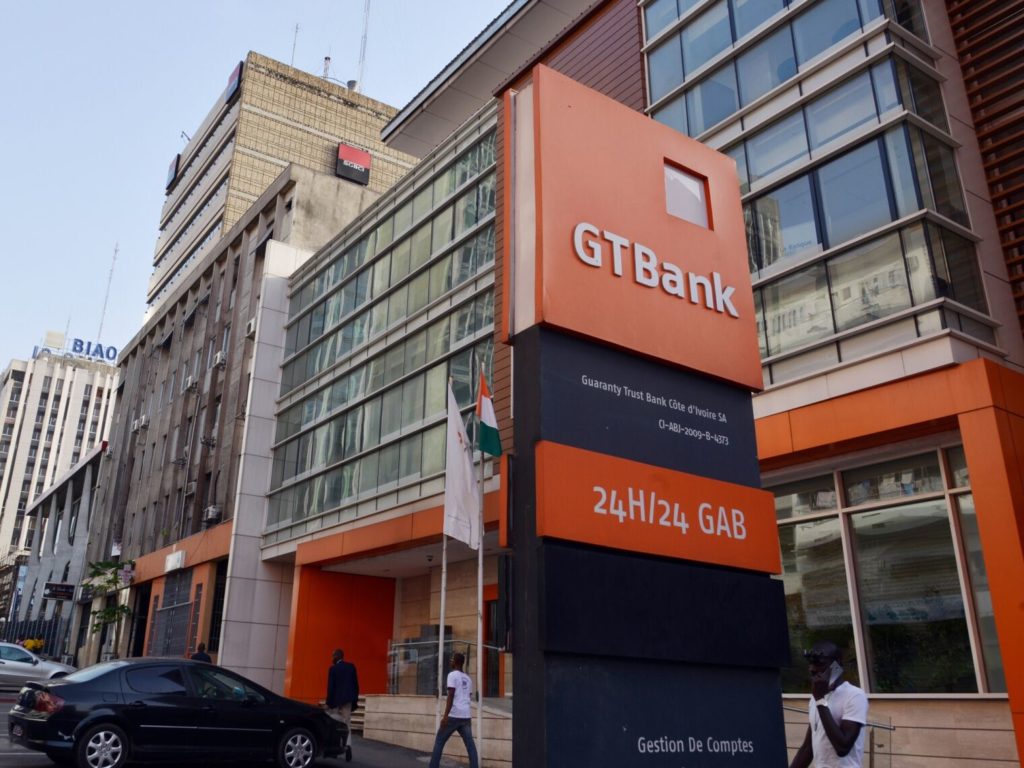
In an age where social media often serves as judge, jury, and executioner, public perception can be swiftly weaponized, even in the absence of facts. This has recently played out in the unfortunate and unwarranted campaign against Guaranty Trust Bank (GTBank) over the arrest of social media personality Martins Vincent Otse, popularly known as VeryDarkMan (VDM). Despite clear indications that the bank had no hand in the arrest, a wave of online outrage was directed at the financial institution, sparking a call for boycott campaign that frankly defies logic.
At the center of this storm lies a pressing societal concern: the lack of emotional restraint in public discourse, particularly in the digital age. Nigerians, understandably frustrated by systemic injustice and state inefficiencies, often lash out at visible institutions in the hope of triggering accountability. However, when that anger is misdirected, it not only undermines the credibility of the cause but also damages legitimate institutions that serve the public good.
At this juncture, it is expedient to ask, “What Actually Happened?” VDM, known for his aggressive exposés on social media, was ostensibly arrested as a result of compiled complaints from various individuals. So, how GTBank was dragged into the controversy surrounding his arrest has left not a few right thinking Nigerians thunderstruck.
As gathered, the petitions filed against him revolve around cyberbullying and defamation, charges serious enough to prompt the Nigerian legal system to act. Nowhere in the publicly available court filings or police statements was GTBank mentioned, let alone listed as a complainant.
Yet somehow, GTBank became the unintended scapegoat. Conspiracy theories quickly surfaced, wrongly linking the bank to the arrest. Perhaps it was due to past unrelated issues involving VDM and the bank, or simply the fact that GTBank, being a prominent institution, made for an easy target. Regardless of the rationale, the attack was misplaced and undeserved.
Given the foregoing backdrop, it is germane to opine that there is an urgent need for emotional restraint towards the imbroglio. In as much as activism is a powerful tool for social change, it remains so only when wielded responsibly. Reacting emotionally, without fact-checking or logical analysis, does more harm than good. It fuels chaos, delegitimizes genuine causes, and puts innocent parties in the crosshairs of public backlash.
In the case of GTBank, emotional outrage overtook reason. Instead of waiting for the facts to emerge or channeling energy toward legal reforms or protecting digital free speech, Nigerians, many, joined a bandwagon headed in the wrong direction. The repercussions of such actions are not to be taken lightly. Without a doubt, this lack of emotional discipline is costly as it weakens advocacy by divorcing it from evidence, destroys reputations based on unverified claims and undermines institutional trust in sectors vital to national stability.
Despite the backlashes and unfair allegations being made against the bank, its track record speaks for itself. Let us look beyond the emotional reaction and examine GTBank’s actual track record. Whether in terms of performance, innovation, or service delivery, the bank stands as a benchmark in Nigeria’s financial ecosystem.
It is not an exaggeration to say that GTBank has an unrivaled financial strength. According to its FY 2024 financial statements, GTBank posted a Profit Before Tax (PBT) of N609.3 billion, a 184.5% year-on-year growth from the previous year. Its total assets stood at N9.9 trillion, reflecting a strong and expanding balance sheet.
The bank recorded a Return on Equity (ROE) of 38.8%, highlighting exceptional management efficiency and profitability. These figures place GTBank among the most financially sound and well-governed banks in sub-Saharan Africa.
Similarly, the bank’s leadership in digital banking remains unmatched, having consistently pioneered innovative solutions in the sector. Notably, it was among the first Nigerian banks to launch fully integrated mobile and internet banking platforms, which now facilitate millions of transactions daily.
The bank’s mobile app and USSD banking platforms are among the most reliable and widely used in the country.
Given the foregoing verifiable facts, it is difficult to reconcile such a reputation for transparency and efficiency with the baseless accusation that the bank would orchestrate an arrest.
Also in a similar vein, the bank has over the years, through its services earned international recognition. Therefore, GTBank’s credibility is not just domestic; it is globally recognized: For instance, in 2023, the bank was awarded “Best Bank in Nigeria” by Euromoney, and it also holds high credit ratings from Fitch and Global Credit Ratings.
In fact, GTBank is one of the few Nigerian financial institutions listed on the London Stock Exchange, signifying high standards of governance, accountability, and investor confidence.
Looking at the bigger picture in this context, it is not an exaggeration to opine that the activism being directed against the bank is misdirected, and if unbridled, it will unarguably hurt us all. The real tragedy is that this misdirected outrage dilutes the potency of civic engagement. When the public channels its anger at the wrong targets, the real culprits, those who exploit legal loopholes or abuse the judicial process, escape scrutiny.
Moreover, this kind of unverified activism has broader implications. First is that there is bound to be investor sentiment as foreign and local investors observing such volatility may become wary of doing business in Nigeria.
Looking at the repercussion from the perspective of Nigeria’s banking sector stability, it is not an exaggeration to say that GTBank, like other top-tier banks, is systemically important, and therefore, any reputational damage could have ripple effects across the financial system. Worse still, from the prism of rule of Law, jumping to conclusions without evidence undermines the legal processes we so desperately want to see improved.
At this juncture, it is expedient to ask, “What should be done instead?” To answer the foregoing question, it is not out of place to say that to avoid falling into this trap again, Nigerians, especially digital activists and influencers, must adopt a more thoughtful approach.
First is to always engage in verifying before vilifying. Before amplifying accusations, confirm whether there is documented evidence. Do not let unsubstantiated tweets or social media rants dictate your outrage.
In a similar vein, ask better questions. Instead of dragging GTBank, why not ask why defamation and cyberbullying laws are so loosely interpreted in Nigeria? Why is remand so easily granted?
Also in a similar vein, it is expedient for the real issues to be targeted, not convenient ones: Aggrieved personalities who petitioned VDM are collectively the accusers. If there is an abuse of legal power or suppression of speech that is where public attention should go. In fact, to proverbially put it, GTBank, in this context, is like the head that took the knock as a punishment for the fart expelled from the anus. Aptly put, GTBank is unarguably a scapegoat in the whole mess.
Again, there is the need for the promotion of institutional accountability, not anarchy: Reputable institutions like GTBank should be held to account when there is clear evidence of wrongdoing, not targeted for speculative or emotional reasons.
On a final thought, the ease with which GTBank was pulled into a controversy it had nothing to do with speaks volumes about the urgency of cultivating emotional restraint in civic discourse. In the court of public opinion, truth must not be sacrificed at the altar of “virality”.
As citizens, we owe it to ourselves, and to the causes we care about, to apply discipline, logic, and fairness in our reactions. No matter the undeserved perception we collectively and individually hold against GTBank, there is no denying the fact that it has in this case clearly suffered an unjustifiable reputational blow.
If we are serious about justice, then the expediency of emotional restraint must guide our activism. Anything less is a disservice to both truth and progress.