Africa
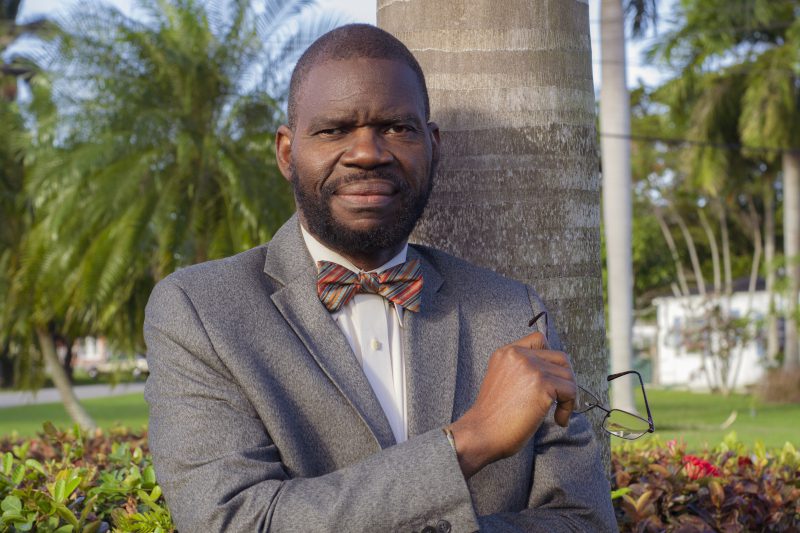
How The Supreme Court Dealt With The Overreaching Power Of AGF In The Past -By Sarafa Ibrahim
What the Supreme Court has done overtime is to safeguard our constitutional democracy from glaring abuse of office by overreaching public officials. In line with the oath of office prescribed in the Seventh Schedule, the AGF is expected to do “right to all manner of people, according to law, without fear or favour, affection or ill will.” However, any objective mind following events in Osun state since February when the Osun local governments crisis began will realise this hasn’t been the case. Bias is clearly pronounced and even this has no doubt impeded the manifestation of the rule of law

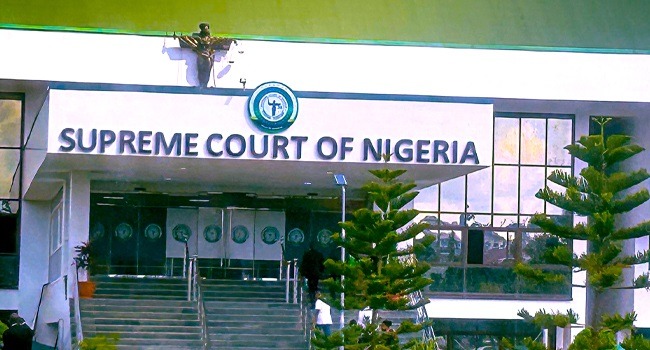
Our Constitution contains remarkably plain and simple provisions that defines the lines for people occupying public offices. But humans are usually bad with power and in many cases, they seems to go outside the dictates of the law in their line of duties. When that happens, the safeguard, and in the case of Nigeria, the Supreme Court (the highest court in the land) usually rise to save the country from descending into lawlessness.
I believe this was the scenario when the Supreme Court handed down a blistering reprimand on Mr. Michael Aondoakaa, SAN, a former Attorney-General of the Federation (AGF). The apex court in a lead judgement read by Her Lordship, Justice Kudirat Motonmori Olatokunbo Kekere-Ekun (the current CJN) on December 10, 2021, was apparently not prepared to give life to what was wrong and in tandem with its constitutional mandate, shut it down.
It was a messy stuff and highlighted the dangerous effect of the overreach of an AGF in the administration of justice. Justice Kekere-Ekun could not hide her disapproval for the brazen act and went ahead to echo the words of J.O.K Oyewole, JCA that “When an Attorney General acts imperiously, placing himself above the laws of the land, impunity and anarchy are enthroned. Public office is a sacred trust and an Attorney General should epitomise all that is good and noble in the legal profession. That office should in never again be occupied by individual of such poor quality as the Appellant. It is ironic that the appellant should approach the same template he so brazenly desecrated for succour against the consequences appealing conduct.”
Those who know about the case and followed the decision of the courts from the Federal High to Appeal Court and Supreme Court will not find it hard why the Supreme Court justices went this hard. It is not just Justice Kekere-Ekun that agreed with the observation of Justice Oyewole in the Appeal Court judgement, other members of the apex court panel which included Justices Muhammed Lawal Garba, Ibrahim Muhammed Musa Saulawa, Emmanuel Akomaiye Agim, Mary Ukaego Peter-Odili concurred with the lower judge reasoning.
I have read that part of the judgement several times and the message passed by the apex court remain the same– subversion of the ends of justice is wrong and will never be condoned by the country’s topmost court. Looking at the scenarios that led to the decision of the Supreme Court in the case involving Mr. Aondoakaa, SAN, and what is playing out in Osun state local governments imbroglio, you will find out that they are very similar.
In the case of Aondoakaa, SAN, he wrote the President of Court of Appeal as the AGF to disregard a judgement that ordered for a new tribunal to be set up to hear petition of Bassey Obot who though was nominated as the PDP candidate for the Uyo Federal Constituency House of Representatives seat for the 2007 general election, his name was replaced by another candidate. The President of the Court of Appeal disregarded him and obeyed the order of the court, setting up a panel which heard and decided the matter in April 2008. The matter went to the Court of Appeal and just as was decided by the Tribunal, the Court of Appeal ruled in favour of Obot and ordered the Independent National Electoral Commission (INEC) to issue him certificate of return and for the House of Representatives to swore him in as a member of the House.
But Aondoakaa, SAN, was not done and wrote INEC and the Speaker of the House of Representatives not to obey the judgement of the Appeal Court. And they complied despite the fact that that court was this final arbiter on the matter. This bears similar pattern to what played out in the Osun local governments imbroglio, which is currently before the Supreme Court for adjudication.
Like Aondoakaa, SAN, the current AGF, Prince Lateef Fagbemi, SAN, does not show resolve for justice as he has continued to treat pronouncements by courts of competent jurisdiction, notably the Federal High Court in suit no: FHC/OS/CS/103/2022 as inconsequential. This is in spite the fact that an appeal to upturn this judgement in appeal CA/AK/226M/2024 was dismissed by the appellate court on January 13, 2025 and attempt to relist it suffered similar fate from the Court of Appeal on June 13,.2025, effectively implying that the November 30, 2022 judgement of the FHC judgement that annuled the October 15, 2022 local governments election and the sack of beneficiaries is valid and subsisting.
Notwithstanding this fact of law, the AGF wrote a letter to the Accountant-General of the Federation, directing the payment of local governments fund to people already sacked by a court judgement. Even more, the AGF issued an advisory to the Osun State Government not to go ahead with the February 22, 2025 local governments election despite the existence of a court order recognising vacancies and sanctioning election to fill them. In essence, the AGF elevated his opinion beyond that of the court of law, which Justice Agim in the December 10, 2021 judgement against Aondoakaa frowned at by declaring that “The office of the Attorney-General is not a Court and has no power to assume that role.”
What the Supreme Court has done overtime is to safeguard our constitutional democracy from glaring abuse of office by overreaching public officials. In line with the oath of office prescribed in the Seventh Schedule, the AGF is expected to do “right to all manner of people, according to law, without fear or favour, affection or ill will.” However, any objective mind following events in Osun state since February when the Osun local governments crisis began will realise this hasn’t been the case. Bias is clearly pronounced and even this has no doubt impeded the manifestation of the rule of law
Because Section 287(2) of the 1999 Constitution (as amended) provides that “The decision of the Court of Appeal shall be enforced in any part of the Federation by all authorities and persons and by Court’s with subordinate jurisdiction to the Court of Appeal.” This made the Supreme Court to hold in the Aondoakaa’s case that “It was indeed highly reprehensible for the Chief Law Officer of the Federation to counsel disobedience to any judgement from which there is no further right of appeal. I am in complete agreement with the learned trial judge, as affirmed by the Court below, that having regard to the conduct of the appellant while occupying the sacred office of the Chief Law Officer of the Federation, he ought not to be entrusted with any public office at all.”
The manner which the AGF has dismissed the decision of the January 13, 2025 and June 13, 2025 of the Appeal Court is a desecration of the judiciary and coming from the supposed Chief Law Officer makes it quite troubling. The appealing thing about democracy is that, it promises that rules of law will always take precedence over any other considerations or interests.
The main ingredient of the rules of law is the adherence to court pronouncements. At the commencement of the 2024/2025 legal year and conferment of Senior Advocate of Nigeria (SAN) rank, the Chief Justice of Nigeria, Justice Kudirat Motonmori Olatokunbo Kekere-Ekun, warned that “Obedience to court ordered is non-negotiable. No individual or institution, irrespective of their standing, will be permitted to treat judgements of our courts with levity or disregard. The judiciary stands resolute in ensuring that the sanctity of our legal decisions is upheld.”
In a letter jointly signed by its President and General Secretary, Mazi Afam Osigwe, SAN, and Mobolaji Ojibara respectively, the Nigeria Bar Association (NBA) expressed deep concerns at the “dangerous precedent” that the unfolding development in Osun state portend and insist on the adherence to judicial pronouncements and the rule of laws. “It is the considered view of the NBA, supported by the correct interpretation of the relevant judgements of the Court of Appeal, that the only valid and legitimate officials who can legally occupy the elective offices in the LGAs in Osun State are those of the PDP. They are, therefore legitimately entitled to the release of the funds meant for their respective councils,” the NBA noted in a letter addressed to the AGF.
As was clearly shown with Aondoakaa v. Obot & Amor (2021) LPELR-56605(SC), the Supreme Court knows how better to tame and overreaching public officer, and one can only expect that it would rise up to the occasion again in the Osun scenario. This is not just about Osun state or today but it is about the future of our democracy and reinforces faith in it, and the sanctity of the judiciary, which is widely viewed as the last hope of the common man. The judiciary will matter when judgements are given their legal effects and not subscribed to the whim and caprices of the interest of certain public officials. In 2007, there was Obot but now, there are dozens of Obots in Osun state who have, in the words of Justice Agim, “prevented from enjoying the fruits of” their electoral victory since February by those who believed the law should not matter as long as it does not suit their interests. God help My Lords!
• Sarafa Ibrahim writes from Osogbo, Osun state. He can be reached via neyoclass09@gmail.com.