Africa
How Wike, Fubara and Rivers’ Lawmakers Are Disrespecting President Tinubu -By Isaac Asabor
What Wike, Fubara, and the lawmakers have done, collectively and individually, is to tell Nigerians that the President can speak, but they will decide whether his words matter. That is not federalism. That is not democracy. That is insubordination dressed up as political strategy.

In African tradition, leadership is not ornamental. It is not a title worn for ceremony or convenience. When a king intervenes in a dispute between feuding subjects, his word is not advice; it is authority. Peace is not negotiated after the king has spoken, it is restored. To ignore that intervention is not just stubbornness; it is a direct insult to the throne. It is a declaration that the authority of the crown no longer commands respect.
This cultural logic matters deeply in understanding what is unfolding in Rivers State today. Strip away the legal jargon, party labels, court motions and press statements, and what remains is something far more fundamental: a collective act of defiance against President Bola Ahmed Tinubu by Nyesom Wike, Governor Siminalayi Fubara, and the Rivers State House of Assembly.
Recall in this context that President Tinubu stepped in to broker peace in Rivers not as a meddler, but as the constitutional head of government and the political leader of the ruling party. In African political culture, long before colonial constitutions, such an intervention carries moral, symbolic, and practical weight. When the President convened, mediated, and publicly announced a framework for peace that should have been the end of the matter. Disagreements could persist privately, egos could simmer quietly, but public defiance should have ceased. Instead, what followed was a spectacle of arrogance.
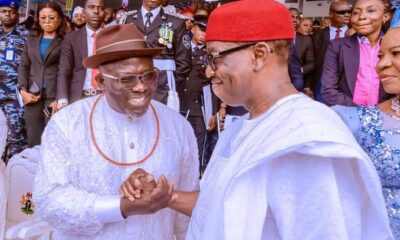
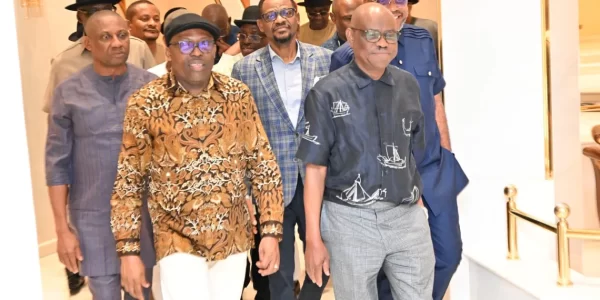
In fact, when President brokered peace, Governor Fubara and Wike nodded when the President spoke. They smiled for the cameras. They shook hands. They projected compliance. Yet, the moment they returned to Port Harcourt, each party resumed hostilities with renewed intensity, as if the President’s intervention was nothing more than a photo opportunity. In traditional African terms, this is not merely political indiscipline; it is an open insult to the king.
Wike’s role in this disrespect is particularly troubling. As a former governor, a serving minister, and a key power broker within the Rivers ‘political structure, he should understand the gravity of presidential mediation. Yet, his actions suggest otherwise. His continued dominance of Rivers politics, his open alignment with lawmakers against a sitting governor, who are all now members of the ruling party, the All Progressives Congress (APC) with him still affiliated to the opposition party, the Peoples Democratic Party (PDP), albeit presently under suspension, and his refusal to genuinely de-escalate tensions all point to one conclusion: Wike acted as though the President’s word could be selectively obeyed.
In African tradition, such behavior from a powerful subject is dangerous. It sends a message to others that authority is optional when one is influential enough.
Governor Fubara, for his part, has not covered himself in glory either. While he is often portrayed as a victim of political overreach, victimhood does not excuse defiance. When the President intervenes and sets parameters for peace, a governor does not get to reinterpret those terms to suit his comfort. Leadership demands restraint, humility, and an understanding of hierarchy. Fubara’s continued face-off with the lawmakers, despite presidential mediation, signals either a failure to grasp this reality or a deliberate choice to ignore it.
Then there is the Rivers State House of Assembly, arguably the most brazen actor in this drama. A legislature that has become less a lawmaking body and more a political weapon has treated presidential intervention with thinly veiled contempt. By persisting in actions that deepen the crisis, the lawmakers have effectively told Nigerians that the President’s authority ends in Abuja and does not extend to Port Harcourt.
In African traditional settings, such conduct would have consequences. Chiefs who defied the king after a peace pronouncement were not merely reprimanded; they were disgraced. Their legitimacy was questioned. Their standing in the community collapsed. This is the danger Rivers State now poses to Nigeria’s democratic order.
When political actors openly ignore presidential mediation without consequences, they weaken not just the office of the President but the very idea of central authority. Tomorrow, it will not be Rivers alone. Other states will take notes. Other governors, ministers, and lawmakers will learn that peace accords can be signed and discarded without cost. That is how disorder becomes normalized.
Let us be clear: this is not about supporting Tinubu as an individual. It is about respecting the institution he represents. In African political philosophy, respect for authority is what keeps plural societies from descending into chaos. Once leaders begin to treat the highest office in the land as a negotiable inconvenience, governance becomes impossible.
The tragedy is that all parties involved claim to be acting in the interest of Rivers people. This is perhaps the most insulting part of the charade. If the interest of Rivers people truly mattered, presidential intervention would have been embraced as a lifeline, not treated as a hurdle. Development does not thrive in an atmosphere of perpetual political warfare. Investors do not wait patiently while egos clash. Civil servants cannot function effectively when the political leadership is at war with itself.
In African folklore, when two brothers fight endlessly despite the elders’ intervention, the community eventually blames both. The elders withdraw their moral protection, and the brothers are left to face the consequences of their stubbornness. Rivers State is fast approaching that point.
What Wike, Fubara, and the lawmakers have done, collectively and individually, is to tell Nigerians that the President can speak, but they will decide whether his words matter. That is not federalism. That is not democracy. That is insubordination dressed up as political strategy.
If this disrespect goes unchecked, the long-term implications are dire. Presidential mediation will become meaningless. National cohesion will suffer. Political conflicts will harden rather than resolve.And the people, always the people; will pay the price through stalled development, policy paralysis, and institutional decay.
In traditional Africa, when a king is insulted, the concern is not the king’s ego but the stability of the kingdom. The same logic applies here. This is bigger than Tinubu. It is about whether Nigeria still recognizes authority, hierarchy, and the discipline required to govern a complex federation.
Wike, Fubara, and the Rivers lawmakers owe Nigerians more than political theatrics. They owe the country respect for its institutions. Until they acknowledge that ignoring presidential mediation is a dangerous insult, not a clever tactic, Rivers State will remain trapped in a crisis of its own making, and Nigeria’s democracy will be weaker for it.
When the king speaks and the subjects refuse to listen, the problem is no longer the feud. The problem is rebellion.