Africa
Ijebu-Jesa Grammar School at 70! (2) -By Abiodun KOMOLAFE
As I have argued earlier, IJGS’s alumni commitment is demonstrated through various renovation projects. I stand by it! For instance, in 2016, Class ‘76 renovated the school’s Assembly Hall to mark its 40th anniversary. Professor Oyewole Ajifolokun (’82 set) renovated a classroom block while Class ‘80 renovated the Principal’s Lodge to serve as the ‘Corpers Lodge’.

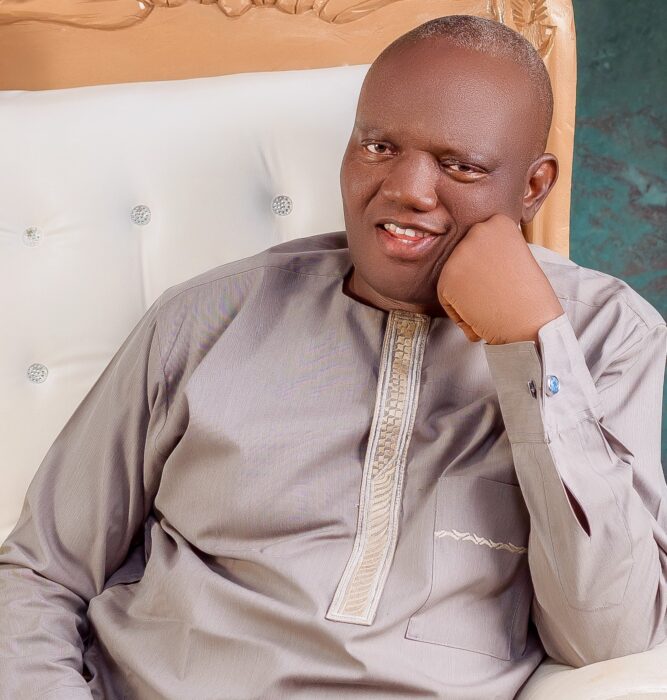
According to Michael Afolayan, a US-based Professor of Education and Linguistics, what is happening in IJGS “is a systemic problem – the aphorism of the crooked top. Today, we have a pseudo-leadership that has no value for education. Imagine such a great school you just appraised here having only 10 permanent teachers!”
In his words, “Just imagine the IJGS in the days of Oba Joseph Ajayi Palmer, when every trained teacher wanted to come and serve there. I recall the late Mr. E. Adegbola, owner of Surulere Bookstore in Ile-Ife and Ijebu-Jesa, who was a headmaster where I taught at the time. He would contribute any amount and donate a stockpile of books to IJGS”.
This legacy of excellence and community support is a microcosm of the much larger educational landscape of Nigeria today. Nigerian education parades more than 270 universities, over 160 Colleges of Education, and roughly 145 Polytechnics. This tertiary system is supplied by an immense basic education sector, including approximately 129,600 primary schools and over 43,000 secondary schools.
At the best of times, those who hold the view that secondary institutions act as the foundational pipeline by preparing students academically and morally, and providing the required SSCE certification for university admission, are not far from the truth. After all, universities, in turn, influence the secondary system by setting minimum academic standards and by training the teaching manpower for the schools.
Beyond the cloak of deniability and euphemism, the voices and forces of the competition between public and private secondary schools have become so severe that, during SSCE periods, public school students often gravitate towards private schools, aka ‘miracle centers’, over their own institutions. The significant increase in the number of schools compared to the past, when secondary schools were scarce, has also contributed to the woes.
The truth we ignore is that Nigerian parents are no longer holding public education in high regard as they once did. As things stand, many Nigerian parents even prefer sending their children to schools with inadequate facilities, simply because they are labeled as private institutions. Added to these problems is the dearth of qualified teachers and essential teaching facilities.
Evidently, the 1955 noble vision has become a trickle, proving that parents will always seek the best available educational life raft. To put it in succinct terms, IJGS’s stagnant enrollment is an indictment of the state’s negligence of the education sector. Unfortunately, there has been no focused opposition to expose these fatal flaws, thereby leading to a dangerous normalization of misplaced priorities. Or how do we situate the building of urban flyovers over the building of rural roads? This lack of scrutiny surrounding these decisions has been normalized as political sagacity across the states and only God can help us!
To rise out of this quagmire, governments across the board must stop using public schools as political dumping grounds for unqualified staff. For my alma mater, there’s an urgent need for an immediate cash injection to hire trained teaching, even non-teaching, staff to effectively compete with the glossy façade of the private sector. Otherwise, the school risks becoming a historic relic.
There’s no need to reinvent the wheel; the current efforts of Nigeria’s oldest school, CMS Grammar School, Bariga, Lagos, serve as a powerful example. Founded in 1859, former students of the school have laid the foundation for a $2.5m ICT centre to prepare its students for the future of technology. Similarly, Ilesa Grammar School’s distinguished alumni, including Wole Olanipekun SAN, and Obi Daramola, provide funding for resources and facility upgrades.
The Government College, Ibadan, Old Boys Association (GCIOBA) now manages its alma mater, following its government handover. India, Malaysia and Brazil have also demonstrated that alumni associations play a critical role in achieving sustainable development. Efforts such as this must not just be acknowledged but actively emulated by IJGS. This emulation would be the greatest acknowledgment and appreciation of the great community who planted the seed for this enduring institution seventy years ago.
To achieve this, IJGSOSA should set up an endowment fund to attract funds from home and abroad, towards bringing the institution to the cutting edge of modern society and meeting the needs of the next 50 years. This focus on capacity building represents the biggest expression of the ultimate concept of acceptable empowerment. We can go on and on, but handing out perishables or things that have no lasting economic impact should be out of sync with true empowerment.
On a day like this, we remember Bayo Okunmuyide, one of the authors of Champions Mathematics, published by MacMillan, and an inaugural graduating student. His son, Tayo Okunmuyide (‘89 set), currently works with TotalEnergies SE.
We also honour Mike Awoyinfa (HSC, ’71 set), the Pioneer Editor of Weekend Concord and the founding Managing Director/Editor-in-Chief of The Sun Publishing Limited. Another prominent alumnus is Lanre Arogundade (1976/77 set), the man who famously described IJGS as a “university of high standards”.
Olukemi Babatunji, the Otun Iyalode of All Souls Anglican Church, Ijebu-Jesa, belonged to the ’84 set. The younger sister of Bishop Babatunji, she’s currently the Manager of Nursing Services in an Oil and Gas multinational concern.
We also remember the many dedicated academic staff members who guided us during those formative years at the school. These include: Pa Joshua Agunsoye, Mr. & Mrs. D.D.W. Chandratilleke, Mr. & Mrs. P.J.D. Thanasingh and Chief (Mrs.) Hannah Babatunji.
Further names include: S.K. Tsipotey, Y. Ofori, Kofi Agyeman-Duah, C.A. Fasina, S.F. Obisesan, and many others like I.D. Hayibor, Nana Osei, Soula Pani, C.A. Afouda and Mrs. P.O. Ayoade.
Our remembrance extends beyond the classroom staff to honour the valuable administrative and supporting personnel, including: J.O. Dagunduro (Librarian), Akin Adejuwon (Bursar), Miss Bintu Asimi (Typist), and Biodun Kato (Clerk). We also remember Asimi Sanni, Josiah Obileye, Samuel Fajemisin, and Sunday Loye (Gardeners); Mustapha Atanda, aka ‘Kosepo’ (Driver), and Gabriel Ikotun (Night Watchman).
Still in the spirit of commemoration, Isaac Aderogba, aka ‘Kammy-Cut’ and ‘Baba Olomi’, comes to mind. Pa Aderogba was the ever-ready, always-smiling, happy and ‘no-dull-moment’ tailor who made the School’s uniforms and house wears until the late 1970s.
As I have argued earlier, IJGS’s alumni commitment is demonstrated through various renovation projects. I stand by it! For instance, in 2016, Class ‘76 renovated the school’s Assembly Hall to mark its 40th anniversary. Professor Oyewole Ajifolokun (’82 set) renovated a classroom block while Class ‘80 renovated the Principal’s Lodge to serve as the ‘Corpers Lodge’.
The ‘89 set has been sponsoring the Chemistry teacher since September 2022, and the results of this effort have been fantastic. This set counts two professors among its members. The first is Professor Oloyede Bolaji, who is currently the Head of Department, Medical Microbiology and Parasitology, at the College of Health Sciences, Osun State University, Osogbo.
Professor Bolaji is the President of the Class ’89 and also serves as the Global Assistant General Secretary 2 in the current IJGSOSA Executive Committee. The second is Professor Olumide Longe, currently the Vice Chancellor of West Midlands Open University, Lagos.
Although he didn’t attend the school, retired Army Colonel Wole Ogunseemi made a significant contribution to its infrastructure. During his time as a member of the Osun State House of Assembly (2003-2007) and as the Executive Chairman of Oriade Local Government (2008-2011), he constructed three blocks of nine classrooms in the school. Wole Oke, the Member Representing Obokun/Oriade Federal Constituency in the National Assembly, also renovated a block of classrooms as a constituency project.
Felix Septuaginta Annorum Celebratio ad IJGS!
May the Lamb of God, who takes away the sin of the world, grant us peace in Nigeria!
*KOMOLAFE wrote from Ijebu-Jesa, Osun State, Nigeria (ijebujesa@yahoo.co.uk; 08033614419 – SMS only)
●Concluded.