Africa
Illustrating The Power Of The Pen Over The Sword, by Isaac Asabor

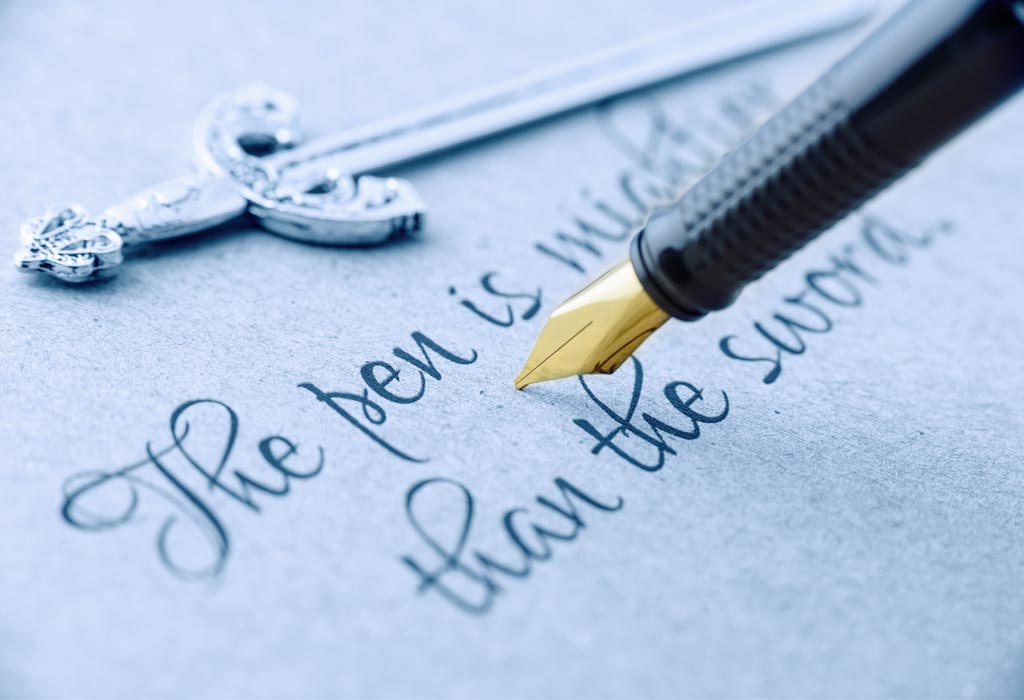
The age-old adage, “The pen is mightier than the sword,” encapsulates a profound truth about the influence of ideas and communication in shaping societies. While the sword represents brute force and violence, the pen symbolizes intellect, creativity, and the power of words. It is against the foregoing backdrop that this writer is in this context exploring how the written word has historically triumphed over physical might, influencing change, inspiring movements, and fostering understanding.
Throughout history, humanity has witnessed numerous instances where the written word has led to significant societal transformations. Consider the impact of influential texts such as Thomas Paine’s “Common Sense”, which galvanized the American colonies towards independence. Paine’s persuasive arguments and eloquent prose inspired a revolution, demonstrating that ideas can mobilize people far more effectively than weapons.
Similarly, the abolitionist writings of Frederick Douglass and Harriet Beecher Stowe played crucial roles in the fight against slavery. Their words not only raised awareness but also humanized the plight of enslaved individuals, swaying public opinion and ultimately contributing to the abolition movement. These examples illustrate that while swords can conquer territories, it is the pen that can conquer hearts and minds.
Literature and journalism have long served as powerful tools for social change. Novels like George Orwell’s “Nineteen Eighty-Four” and Harper Lee’s “To Kill a Mockingbird” have sparked critical conversations about governance, justice, and morality. These works challenge readers to reflect on their values and the world around them, often leading to a greater awareness of social injustices.
In the realm of journalism, investigative reporting has exposed corruption and abuse of power, holding leaders accountable. The Watergate scandal, uncovered by journalists Bob Woodward and Carl Bernstein, is a prime example of how the pen can dismantle political tyranny. Their relentless pursuit of truth through writing ultimately led to the resignation of President Nixon, showcasing the pen’s ability to effect change where force fails.
In today’s world, where freedom of speech is increasingly threatened and governance often fails to serve the people, opinion articles have emerged as a powerful tool for holding those in power accountable. These pieces are more than just personal expressions; they act as intellectual protests against bad governance, exposing leadership failures, challenging unjust policies, and giving a voice to the silenced.
One of the key roles of opinion articles is fostering accountability in governance. In countries where institutions are weak and corruption is rampant, governments often operate with impunity. Opinion writers step in to fill this void by shedding light on failures that would otherwise go unnoticed. Whether it’s economic mismanagement, poor infrastructure, or widespread corruption, these articles serve as the public’s eyes and ears, calling out inefficiencies and demanding corrective action.
Politicians often try to shape narratives through public relations and spin, but opinion articles counter this with reasoned analysis and evidence. When governance fails, whether in economic policy, handling insecurity, or providing basic services, opinion writers expose these gaps, offering an alternative discourse that challenges official propaganda. By cutting through political spin, these pieces become a form of protest, providing a clearer picture of reality.
The phrase “speaking truth to power” finds its purest expression in opinion writing. Unlike objective news reporting, which must remain neutral, opinion articles allow writers to take a stance, critique leadership, and challenge the status quo. This freedom is essential in environments where bad governance thrives on public silence or institutional complicity. Through carefully crafted arguments, opinion writers hold leaders accountable for their actions and decisions, putting them under public scrutiny.
Tough questions, such as why public funds are mismanaged or why citizens lack basic services like healthcare and education, are posed by opinion writers. By asking these questions, they place pressure on those in power. Without these inquiries, governance would go unchecked, allowing corruption and inefficiency to flourish. Opinion articles become a thorn in the side of complacent leaders, forcing them to confront uncomfortable truths.
In places where political protest is banned or restricted, opinion writing becomes a form of silent civil disobedience. The pen becomes a powerful weapon against bad governance, allowing writers to express dissatisfaction without the risks associated with public demonstrations. Many journalists and opinion writers have faced persecution for their work because their words can influence public opinion and destabilize oppressive regimes. The silent protest embedded in these articles can be as effective as large-scale demonstrations, often sparking larger conversations about human rights abuses or financial scandals.
One of the most potent aspects of opinion articles is their ability to amplify the voices of the marginalized and disenfranchised, those most affected by bad governance. Opinion writers give these individuals a platform, highlighting their struggles and exposing the inequalities that stem from poor leadership. When government policies fail to address citizens’ basic needs, such as access to clean water, affordable housing, or functional healthcare, opinion articles act as advocacy pieces. They bring the plight of ordinary citizens into public view and pressurize governments to act.
In some cases, these articles have the power to shape public opinion and even influence policy. By providing well-researched, thoughtful analysis, opinion writers spark debates that go beyond the newspaper pages. Public opinion is a powerful force in any democracy, and well-informed citizens can demand better leadership. Historically, opinion pieces have driven policy changes by exposing governmental neglect or advocating for reforms. When written by respected voices, they carry authority, compelling policymakers to respond and often triggering reforms.
As new forms of communication, like social media, the role of opinion writing remains critical in protesting bad governance. While social media may ignite conversations, opinion articles provide the depth, structure, and insight needed for lasting change. In an increasingly complex world grappling with issues like economic inequality, climate change, and pandemics, incisive criticism through opinion writing is more urgent than ever. These articles remind those in power that their actions are being closely watched and judged by a critical public.
In today’s digital age, the power of the pen has evolved but remains just as potent. Social media platforms allow individuals to share their thoughts and mobilize support for various causes. Movements like #BlackLivesMatter,#MeToo, #EndBadGovernance and #EndSARS gained momentum through the written word, demonstrating how online discourse can challenge systemic injustices and promote social change.
However, this new landscape also presents challenges. Misinformation can spread rapidly, and the written word can be weaponized to incite division and hatred. Therefore, it is crucial for individuals to wield their pens responsibly, ensuring that their words contribute to constructive dialogue rather than conflict.
In fact, the phrase “The pen is mightier than the sword” serves as a reminder of the enduring power of words. While swords may achieve temporary victories, it is the ideas and narratives shaped by the pen that leave a lasting impact on humanity. As we navigate an increasingly complex world, let us remember to harness the power of our words to inspire, educate, and unite rather than divide. In doing so, we can continue to illustrate the profound truth that the pen, indeed, holds greater power than the sword.