National Issues
Insecurity and Terrorism: Will Nigeria Finally Take Action to End its Longstanding Problem of Insecurity and Terrorism -By Justina Udeh
The causes of insecurity and terrorism in Nigeria are: Poor governace, poverty and climate change. In many instances, the rising incidents of violent attacks are symptoms of weak, exclusionary, or exploitative governance systems in northwest Nigeria. Compounding factors include weak capacity within the police extreme inequality, poverty, unemployment, and citizens’ alienation the government Indeed, five of the country’s 10 poorest states -Sokoto, Katsina, Kebbi, and Jigawa are in the northwest region.

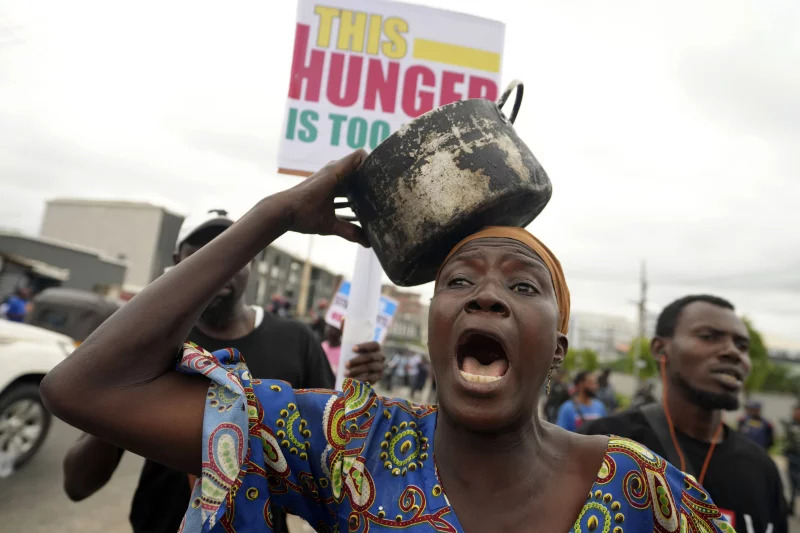
Since Nigeria returned to democracy in 1999 after a long period of military rule, the country has been plagued with several conflicts and insecurities which leave impact on socio-economic development and hindered the country reaping full democratic dividends.
There have been several forms of insecurity and terrorism but these three stand out and have resulted in the highest numbers of fatalities and destruction of properties. The first is the armed pastoralist and sedentary farmers these are being experienced in the north central and middle belt regions of Nigeria. The conflict between farmers and pastoralists is most prevalent in Nigeria and over the years the number rose from 716 clashes between 2012 and 2018 to over 2000 clashes, although factors such as climate change, and reduction in grazing routes, competition for land and water resources drought and desertification have been identified as the main causes of the conflict.
The second is terrorism, particularly the scourge of Book Haram and it’s affiliates especially the Islamic state west Africa province (ISWAP). The terrorism in Nigeria started around 2002 (3 years after the return to democracy) and has plagued the country till date.
The third and most recent issues is kidnapping, over 11years since the abduction of 276 girls from a school in chibok, Borno state, the Nigerian government has failed woefully in tackling the country’s insecurity crisis. Ten years ago the late former Nigerian president Muhammadu Buhari declared that government had “technically won the war” against the Islamist insurgent group Boko Haram. This was a year and a half after 276 girls were kidnapped from a secondary school in chibok Buhari’s claim was a biald-faced lie, and arguably the foundation of what can be called gross negligence by the Nigerian government amidst a sever crisis. Since then armed attacks have been ultra-frequently with at least 16 mass school abduction. And now again history repeats itself in the early hours of Friday, November 21, 2025, over 300 students and 12 teachers were abducted by armed attackers at ST. Mary’s catholic boarding school in papiri, a community in Niger state, north central Nigeria following the attack on government girl’s comprehensive secondary school in maga, a town in northwestern Kebbi state where 25 students were kidnapped and two security master Hassan Yakubu and watch guard Aliyu shehu were killed one of the 25 kidnapped escaped under the leadership of president Bola Ahmed Tinubu and if the late president Muhammadu Buhari said that the Boko Haram were technically defeated, then it’s a lie those people were just pushed out to the bush and that gives them a breeding ground to evolve and be more sophisticated. And for years, journalists, activists, observers, and many citizens have complained about the Nigerian government’s lack of urgency in dealing with the terrorism that has rocked the majority of the country since 2011, Nigeria has consistently ranked in the top ten of the Global terrorism index (GTI) and rose up two spots to sixth place on the latest edition. Last month have brought arguably the highest attention to Nigeria’s gross insecurity crisis which led the U.S. president Donald Trump declaring Nigeria a “country of particular concern” on alleged christian genocide
The causes of insecurity and terrorism in Nigeria are: Poor governace, poverty and climate change. In many instances, the rising incidents of violent attacks are symptoms of weak, exclusionary, or exploitative governance systems in northwest Nigeria. Compounding factors include weak capacity within the police extreme inequality, poverty, unemployment, and citizens’ alienation the government Indeed, five of the country’s 10 poorest states -Sokoto, Katsina, Kebbi, and Jigawa are in the northwest region. Evidence suggests that population explosion, poor governance, and high incidence of poverty could render many unemployed youths more vulnerable to recruitment by terror groups in the region.
2. Overburdened security apparatus and diminishing presence of the federal government. The state security response to the rising insecurity in the region is compromised by the decadelong war with Boko Haram in the northeast, deteriorating security in the Niger farmer-herder conflicts in north-central and southern Nigeria, and other forms of criminality across the country.
3. Controversial peace agreements between some state governments and criminal groups. In an attempt to stop these attacks, and due to larger failures part of the federal government, the state governments of Katsina, Sokoto, and Zamfara initiated direct negotiations with these criminal groups, As part of these negotiations.
4. Armed and weapons trafficking. The groups terrorizing north central Nigeria are known to deploy sophisticated weapons in their operations; again, often due to the porous Nigeria-Niger border.
Recommendations are:
1.Better supported border security and stamping down on corruption. The federal government must collaborate with state governments to address the immediate challenge of border porosity. Concerted efforts to recruit, train, and post adequately customs and immigration personnel to the region can boost surveillance and stem the tide of the free flow of arms into the country. Moreover, addressing corruption here is pivotal, because border patrol is a major racket for forces and government officials, ongoing military response must also be sustained through strategic coordination.
2. Improve law enforcement. Furthermore, the federal government must prioritize law enforcement solutions in tackling rising insecurity in Nigeria. Policing is critical to intelligence gathering in identifying and tracking the cells of criminal groups in the states and aiding community response to insecurity.
3. Strategic investments in human and infrastructural development. Such investments can work to solve the long-term, underlying challenges created by poor governance and deepening poverty that feed such insecurity.
4. Concerted local engagement.The federal and state governments must collaborate with the established religious and traditional institutions to build community resilience against terrorism.
Nigeria’s battle against kidnapping and banditry is complex, but with coordinated effort and political will, the tide can still turn.
Justina Udeh