Forgotten Dairies
International Developments and Their Impact on Our Lives -By Nofetri Dewi Walagri
As a student, I feel we cannot focus solely on domestic issues without understanding the global situation. Many of the things we plan for the future, such as continuing our studies, working for a large company, or even starting a business, are all related to international conditions. Therefore, I believe it’s crucial for the younger generation to have a broader perspective and not be apathetic towards global issues.

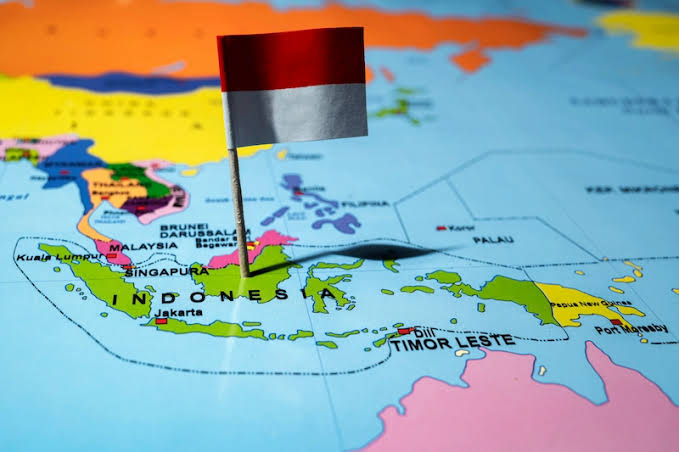
I used to think that international issues were too distant from my life. It felt like they were just the business of national leaders or major news stories that passed by on television. However, the more I read the news and participated in class discussions, the more I began to realize that international developments actually have a real impact on our daily lives.
In a class discussion, one of my lecturers said that a country must build relationships with other nations if it doesn’t want to be left behind. Indonesia itself has established various partnerships within Southeast Asia and with other countries through trade, investment, and economic cooperation. One concrete example is the collaboration between Indonesia and Japan on the construction of the Jakarta MRT. Through this project, the public can directly experience the benefits of international relations, such as more efficient transportation and reduced congestion. Furthermore, this collaboration also creates jobs and provides opportunities for local workers to learn modern transportation technology. This demonstrates that relations between countries are not only impacted at the government level but also directly felt by the community.
However, relations between countries not only bring positive impacts but can also have far-reaching consequences when conflicts occur. For example, the conflict between Russia and Ukraine. At first, I just saw it as ordinary foreign news. But after a while, I began to realize the impact was being felt at home as well. Fuel prices were rising, the cost of basic necessities was fluctuating, and the economic situation felt uncertain. From there, I began to understand that the world today is truly inextricably linked. What happens in one country can impact other countries, even ordinary people like us.
Furthermore, the rivalry between the United States and China is frequently discussed in various media outlets. They compete in technology, trade, and political influence. It may seem like a competition between large powers, but its impact can actually affect job opportunities and industrial development in developing countries. I’m starting to think that other countries, including Indonesia, must be smart about maintaining balance so as not to become overly dependent on one party.
Technological advances have also made the world feel closer. Now we can learn about events abroad simply through our mobile phones. Information spreads very quickly, sometimes even before we have time to understand the context. I think this presents a challenge in itself. On the one hand, we gain a lot of new knowledge, but on the other, we also need to be more discerning in filtering information to avoid being easily influenced by news that is not necessarily true.
This phenomenon is also related to the impact of international trade on domestic life. Increasingly open trade makes it easier for foreign products to enter the Indonesian market, thus influencing consumer consumption patterns and increasing competition for local products. Globalization and information technology make it easier for people to recognize, choose, and even desire foreign products because they are perceived as more modern or of higher quality, resulting in local products often being unable to compete in the domestic market. This shows that an increasingly connected world not only brings rapid information but also directly influences people’s lifestyles, preferences, and economic choices.
Looking at the various global dynamics currently occurring, from inter-state conflicts to economic and technological competition, I begin to wonder: where does Indonesia actually fit into this increasingly complex global landscape? Are we merely affected, or are we beginning to take a more active role?
In my opinion, Indonesia has recently begun to demonstrate a more strategic position. One example is its membership in BRICS. This move, in my opinion, is not merely a token gesture of membership, but demonstrates that Indonesia is viewed as a country with considerable economic potential. Amidst the changing global economic landscape, Indonesia’s entry into a forum like BRICS provides greater opportunities to expand trade, investment, and development cooperation.
Furthermore, Indonesia’s presence at the 2025 BRICS Summit also emphasizes that we don’t want to be merely a passive member. Indonesia is striving to demonstrate its role as a country capable of bridging the interests of developing and developed countries. I see this as a unique and advantageous position. Indonesia isn’t entirely within a single power bloc, but still maintains good relations with various parties.
This is also evident in Indonesia’s continued strong cooperative relationship with the United States. Amidst increasingly fierce global competition, Indonesia is strengthening its strategic partnership in the economic sector. I believe this is a smart move, as Indonesia doesn’t isolate itself from one party simply because it is involved in another forum. In fact, by maintaining balance, Indonesia has more flexible diplomatic space.
On the other hand, Indonesia has also demonstrated its commitment to global peace and stability. Involvement in forums discussing global stability and the reconstruction of Gaza demonstrates the consistent implementation of an independent and active foreign policy. This is important to me because it demonstrates that Indonesia is not only pursuing economic interests but also embodying humanitarian values in international diplomacy.
Considering all of this, I feel that Indonesia is actually in a quite advantageous position in current international developments. We have a strategic geographic location, significant economic potential, and a relatively neutral foreign policy. This combination provides Indonesia with the opportunity to play a more active role at the global level. However, these opportunities will be meaningless if not balanced by domestic preparedness. Indonesia needs to continuously improve the quality of its human resources, strengthen its national industry, and maintain economic stability. We must not be known only as a large market without being able to become a major player in the global economy.
As a student, I feel we cannot focus solely on domestic issues without understanding the global situation. Many of the things we plan for the future, such as continuing our studies, working for a large company, or even starting a business, are all related to international conditions. Therefore, I believe it’s crucial for the younger generation to have a broader perspective and not be apathetic towards global issues.
Ultimately, I realized that international developments aren’t something abstract or distant from our lives. They manifest in changes in prices, job opportunities, the flow of information, and even the way we view the world. Therefore, rather than simply being spectators, it’s better for us to start understanding and following these developments. That way, we can be better prepared for an increasingly open and competitive future.