Africa
Japan and Africa: Stepping Up Sustainable Development and Technology -By Kestér Kenn Klomegâh
On the future free-trade deals between Japan and African countries, Japan’s biggest business lobby, Keidanren, noted that Tokyo must work to win the trust of developing countries with loan guarantees and investment incentives for Japanese firms. “By actively contributing to solving the social issues faced by countries in the Global South, Japan must be chosen as a trustworthy partner,” Keidanren said in a policy recommendation in June.

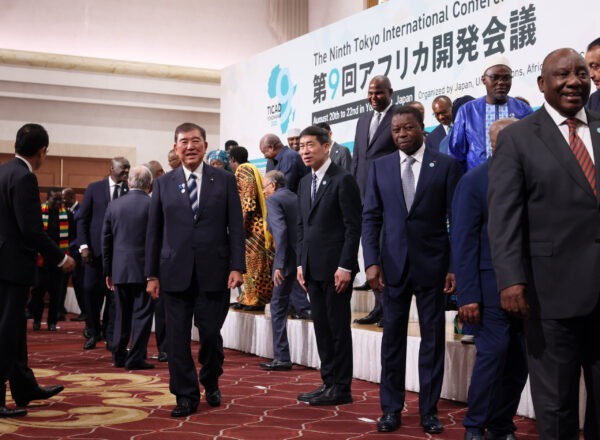
Japan has one combined distinctive goal on the African agenda – investment, trade and development. This was indicated explicitly most all speeches and presentations at the three-day development conference, from August 20-22, in Japan attended by African leaders and top-level entrepreneurs where Tokyo offered a multifaceted agenda an alternative to other key players competing for spots across the continent described as wealthy in untapped natural resources. Africa’s human resource is huge, while the estimated population of 1.4 billion people constitutes the largest consumer market in the Global South.
In the simple words of UN head Antonio Guterres, Africa has everything it takes to become the lastest economic power, as he assertively called for greater investment, especially in the economic sectors across the resource-rich continent. Guterres, in his speech, underlined the fact that Africa needed increased concessional finance and greater lending capacity from multilateral development banks.
“Africa must have a stronger voice in shaping the decisions that affect its own future. We must mobilise finance and technology, so that Africa’s natural wealth benefits African people, we must build a thriving renewables and manufacturing base across the continent,” Guterres said at the Tokyo International Conference on African Development (TICAD).
Over the past decade, the United States and Europe’s investment have drastically fallen, while Russia, as a latecomer with tectonic anti-western criticism, is currently struggling to locate its roadmap into the continent. For years, China has invested heavily in Africa, with many of its companies already there signed deals worth hundreds of billions of dollars to finance several projects under Beijing’s Belt and Road global infrastructure initiative.
As expected, African countries grappling with rapidly geopolitical changes are at the same time making the right pragmatic choices from among the tremendous emerging opportunities. African leaders are indiscriminately searching for sustainable investment and trade relations, even with United States after Donald Trump slapped on them trade tariffs. Further to that many African leaders, including Nigerian President Bola Tinubu, South African President Cyril Ramaphosa and Kenyan President William Ruto, are feverishly negotiating for the renewal of African Growth and Opportunity Act (AGOA).
In his opening address at the forum on August 20, Japan’s Prime Minister Shigeru Ishiba announced a plan to train 30,000 people in artificial intelligence in Africa over three years and to study the idea of a Japan-Africa Economic Partnership. Prime Minister Shigeru Ishiba also announced a vision for a distribution network to link African and Indian Ocean nations. Under the Indian Ocean Africa economic zone initiative, Japan aims to bring investment into Africa from Japanese companies operating in India and the Middle East.
The Tokyo International Conference on African Development (TICAD) has strengthened business and investment in the region and promote free trade by connecting the Indian Ocean region to the African continent. “Japan believes in Africa’s future,” Prime Minister Shigeru Ishiba said. “Japan backs the concept of African Continental Free Trade Area,” which aims to bolster the region’s competitiveness.
As part of practical steps toward strengthening economic partnership, Prime Minister Shigeru Ishiba said Japan would extend loans of up to $5.5 billion in coordination with African Development Bank to promote Africa’s sustainable development and to address their debt problems. Amid the current intensifying global competition for influence, Japan’s concrete allocation of funds demonstrated its presence as a long-term reliable partner ready to invest, and more importantly with credibility, across Africa. It is noticeable that Japanese firms are promoting resonating large-scale investment in infrastructure, technology, and industrial development.
According to the August edition of the Diplomat magazine, Japanese officials have signed major agreements in Angola, Namibia, and the Democratic Republic of the Congo (DRC), including a $1 billion commitment to mineral exploration and production. Tokyo plans to expand its network of bilateral investment treaties to provide greater legal certainty for Japanese investors. Ultimately these agreements, combined with Africa’s ongoing efforts to implement the African Continental Free Trade Area, could unlock significant new flows of capital and trade. The magazine’s article indicated that at TICAD 8, held in 2022, Tokyo, mostly operating through a model of partnered engagement, offered Africa an amount of $30 billion in investment under a ‘three-year period’ which ended in 2025.
On the future free-trade deals between Japan and African countries, Japan’s biggest business lobby, Keidanren, noted that Tokyo must work to win the trust of developing countries with loan guarantees and investment incentives for Japanese firms. “By actively contributing to solving the social issues faced by countries in the Global South, Japan must be chosen as a trustworthy partner,” Keidanren said in a policy recommendation in June.
“The debt and liquidity crisis on the African continent is worsening the challenging socio-economic environment and constraining the fiscal space for governments to cast a safety net over its citizens,” Ramaphosa’s office said in an official statement coinciding the conference.
The high-level summit held in Yokohama, near Tokyo, focused on the economy as well as peace and stability, health, climate change and education. Leaders and representatives from about 50 countries from the African continent, as well as officials from international organizations, stakeholders, non-profit enterprises and business executives, participated. The summit participants adopted the “Yokohama declaration” which was announced as part of the final summit outcomes at the media conference. The TICAD summit was last held in Tunisia in 2022. According to historical documents, Japan launched the Tokyo International Conference on African Development (TICAD) in 1993.
—