Africa
Lagos Needs Proven, Transformational Leadership Again: A Case for Governor Akinwunmi Ambode -By Ayodeji Olatubora, Esq
If the overarching goal is to make Lagos a safer, more productive, and more livable megacity that attracts domestic and foreign investment, the state should prioritize leaders with demonstrated capacity to convert policy into pavement, policy into buses in the street, and budgets into functioning power and public services. Akinwunmi Ambode’s record contains those conversions. For Lagosians who measure leaders by the roads they ply, the lights that stay on, and the buses that move people to work, his return is a proposition worth serious public debate.

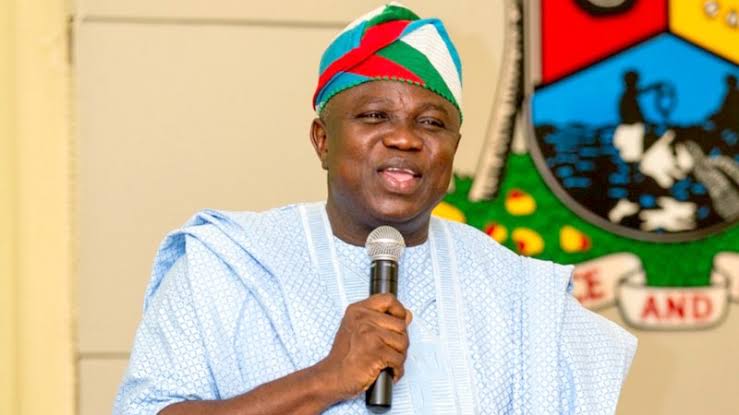
Nigeria’s most important state deserves leadership that marries vision with delivery — and few modern Lagos leaders fit that description better than Akinwunmi Ambode. As Lagos continues to grapple with explosive urban growth, fragile infrastructure, power shortfalls, and transport chaos, the record Ambode left behind is not nostalgia: it’s a playbook for pragmatic, scalable reform. This article makes the case for his return by focusing on the measurable, system-level wins his administration delivered — and why Lagos (and by extension Nigeria) would benefit from his renewed stewardship.
1) Roads, bridges and the visible renewal of city arteries
During Ambode’s administration Lagos recorded a huge push on road construction and rehabilitation, with hundreds of roads completed and many more upgraded — projects that directly eased movement, shortened commute times and unblocked economic corridors. The Lagos State communications under his administration highlighted completion of hundreds of roads and dozens of other “impactful projects” within short time frames, a level of capital works that materially improved urban mobility and local commerce.
Why this matters now: Lagos’s economy is built on movement — people, goods and services. Restoring a leadership proven to quickly roll out reliable inner-city and connecting roads reduces logistics costs and unlocks private investment across sectors.
2) Transport reforms with scale ambition and technical grounding
Ambode’s government pushed the next phase of Lagos’s long-term transport reform: expanding Bus Rapid Transit (BRT) capabilities, planning depot rollouts, and initiating projects that began integrating formal and informal transit in a city dominated by minibuses (danfos). Independent transport studies have treated Lagos’s BRT and LUTRP (Lagos Urban Transport Reform Project) as central to the city’s transformation, and Ambode’s era accelerated those reforms and procurement of higher-capacity buses.
Why this matters now: Transport reform reduces congestion, pollution and time poverty. A leader with experience in scaling transport interventions is uniquely positioned to coordinate Lagos’s complex public-private transport ecosystem.
3) Security investment and public safety strengthening
Ambode’s administration invested substantially in frontline security capabilities — from patrol vehicles and armored assets to aerial surveillance — part of a broader modernization push for policing and emergency response across the megacity. Analysts and civil society observers acknowledged the visible strengthening of Lagos’s security architecture under his watch.
Why this matters now: Economic confidence and investment depend on perceptions (and realities) of safety. Investing in modern, accountable security infrastructure helps protect citizens and commercial activity alike.
4) Power-sector reform initiatives at the state level
One lasting legislative and policy legacy was Ambode’s role in advancing Lagos’s organized approach to local power and electrification. Notably, Lagos moved on electric power sector reforms and initiatives designed to strengthen state-level action on distributed power and street lighting — interventions that tangibly improved business conditions and night-time economic activity. A number of commentators and policy reviews singled out the Lagos power reform efforts as important innovations.
Why this matters now: Reliable electricity is the backbone of a 21st-century economy. A leader who prioritizes pragmatic reforms that enable distributed and institutional solutions to power shortfalls helps small businesses and industry scale.
5) Recognition and third-party validation for infrastructure delivery
Ambode’s administration received multiple awards and public recognition for the scale of infrastructure delivery in Lagos — not as mere trophies but as external validation that the state’s capital program under his watch accelerated visible public goods across education, roads, lighting and transport. Coverage from national outlets at the time highlighted that recognition.
Why this matters now: External recognition correlates with a trustworthy track record — and track record matters to investors, development partners and citizens alike.
The case for his return: experience, delivery and the capacity to coordinate
What transforms a city like Lagos is not charisma alone but systems leadership: the ability to coordinate ministries, manage large procurement and capital programs, negotiate with federal agencies and partners, and keep projects on time and open to scrutiny. Ambode demonstrated this combination in a way that produced visible outcomes — roads, transport initiatives, public lighting, education refurbishments and improved security assets.
A return to that experience could bring:
- Faster, lower-friction delivery of critical capital works;
- Continuity and scaling of transport modernization (BRT and depot networks);
- Renewed focus on state-level power solutions and street electrification;
- Better investor confidence because projects would have a credible implementer at the helm.
A candid word on politics and performance
No leader is without critique; Lagos’s governance ecosystem is fiercely contested and complex. But when the choice is between stalled plans and a tested record of execution, Lagos should weigh tangible delivery heavily. A political comeback for Ambode would not be about reinstating a single style of governance — it would be about returning an implementer with a proven ability to mobilize capital, manage projects and deliver public goods at scale.
Conclusion: Lagos must privilege capacity and delivery
If the overarching goal is to make Lagos a safer, more productive, and more livable megacity that attracts domestic and foreign investment, the state should prioritize leaders with demonstrated capacity to convert policy into pavement, policy into buses in the street, and budgets into functioning power and public services. Akinwunmi Ambode’s record contains those conversions. For Lagosians who measure leaders by the roads they ply, the lights that stay on, and the buses that move people to work, his return is a proposition worth serious public debate.
Ayodeji Olatubora writes from Lagos. He is an Attorney, Development Policy Advisor, and Policy Enthusiast. Contact: ayodejiolatubora@gmail.com +2349065468318