Forgotten Dairies
Legends Lost! An Era Closes! A Nation Mourns! -By Abiodun Komolafe
Adebanjo was once here! Now, he belongs in history! He has done his bit and he has left the stage. He fought tirelessly for his principles, unyielding in the face of adversity, and uncompromising in his pursuit of a more just and equitable society. His legacy, now forever entwined with the fabric of Afenifere, stands as an inspiration, illuminating the enduring importance of equity, good governance and social justice – timeless ideals that transcend the boundaries of mortality.

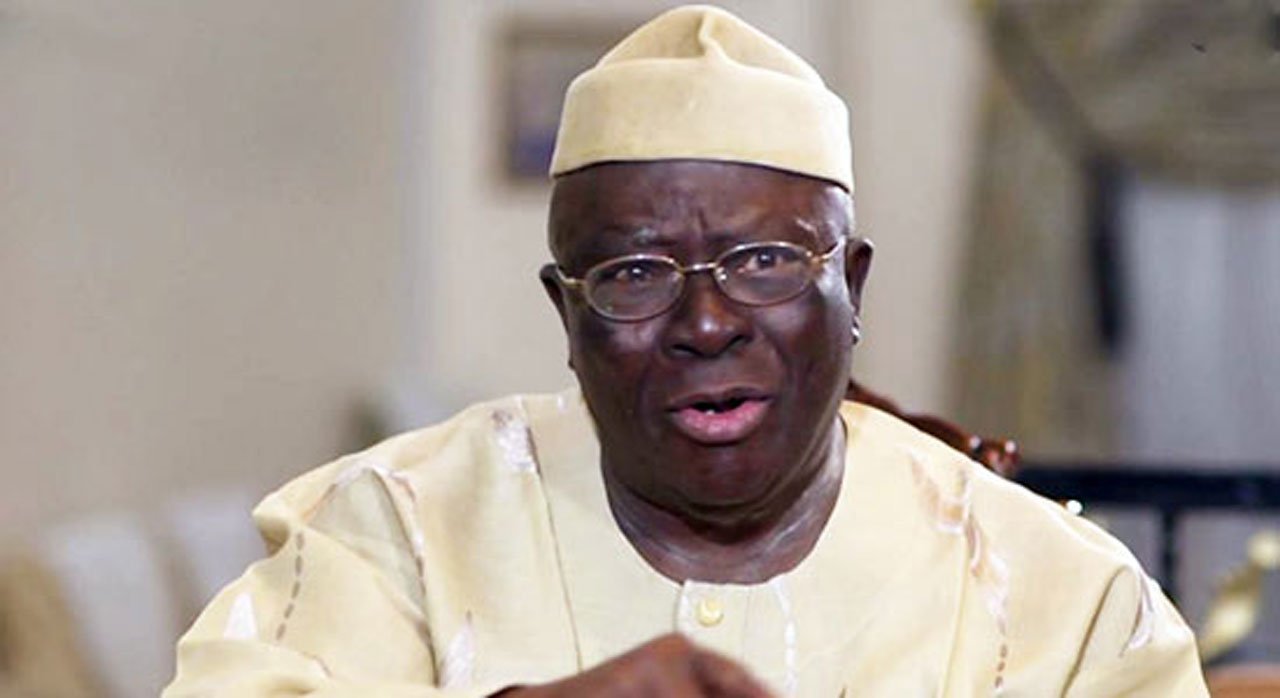
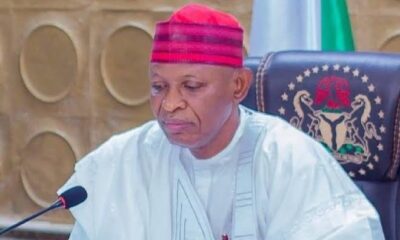
The passing of Chief Ayo Adebanjo, a renowned elder statesman and Afenifere chieftain, and the breaking news about Chief Edwin Clark, mark the end of an era.
Focusing primarily on Adebanjo, he represented, very much like Clark, the spirit of emancipation, which arose out of the earlier stages of the agitation for an end to the colonial incursion in Africa. Indeed, Clark was actually, as a student at Holborn College of Law in London, an active member of the West African Students’ Union (WASU). Between 1952 and 1965, he was also a member of the Honourable Society of Inner Temple, London.
WASU is of great significance, for it triggered off the current of thinking, based on the progressive philosophical base, not just for dismantling colonialism but for presenting a programme of action to guide the post-colonial state. The position of WASU affected the thinking of movements such as the Action Group (AG) in Nigeria and the Convention People’s Party (CPP) in Ghana, amongst others.
Indeed, the manifesto pledge of the AG, to ‘make life more abundant’, is aligned with WASU’s affiliation with the ground-breaking manifesto of the Labour Party in 1945, ‘Let us face the future’, which has stood as the most important manifesto ever issued. Significantly, it was the AG manifesto in 1951 which persuaded Adebanjo to switch from the National Council of Nigeria and the Cameroons (NCNC) to AG. The late sage obviously felt that AG’s manifesto was in alignment with his own political philosophy.
By the time the foremost nationalist switched to AG, the NCNC had undergone a significant shift in its ideology. Following the death of Herbert Macaulay, the party abandoned its initial stance on a federalist post-colonial state and adopted a highly centralized ‘unification’ position. This drastic change had far-reaching consequences, leading to disastrous effects that still plague the country today.
Adebanjo’s shift in allegiance revealed the politics of an era which was based on philosophical ideas and ideological thrusts. This is in marked contradistinction to today’s trend of ‘decamping’ for purely personal advancement and pecuniary benefits. He remained steadfast in his progressive beliefs from his early 20s until his passing at 96. This is why an era has passed, and the passing of that era should be treated with deep regret. The highly respected Nigerian did not shift from his ideological position, through tribulations, setbacks and defeats, including the prospect of going to jail.
During the 1962 treasonable felony trial, Adebanjo faced a choice: abandon his principles and gain a lucrative appointment by testifying for the prosecution, or stand firm. He chose the latter! Today, the political atmosphere is in direct contrast to the faithfulness exhibited by the Isanya Ogbo, Ijebu Ode-born leader and the nation is financially and morally poorer for it. Nigeria is today mired in the ’development of the underdevelopment’, underachievement and an alarming slide into the fringes in the world pecking order.
In my January 6, 2009 article, ‘Afenifere: Once upon an identity’, I wrote that many Yorubas believed the once-revered body had become extinct, with its relevance dying even before the passing of notable figures like Bola Ige and Abraham Adesanya. Fast-forward to today, and the question remains: how relevant is Afenifere in the face of widespread crises, including security concerns and rampant unemployment in the Southwest?
If a country’s politics is not ideologically driven, there are always consequences. In other words, if Nigeria had continued to produce people who believed in the ideological current and stayed faithful, the country could have lived to be at par with Brazil, which is the world’s 10th largest economy; if not, with India, which is the 5th largest.
Instructively, there was a clear ideological mandate of President Luiz Inacio Lula da Silva that, in his first coming, that translated into practice moved forty million Brazilians out of poverty and built one million housing units annually for eight years. Nigeria could have achieved similar progress, and more, if it had continued to create the atmosphere that produced Ayo Adebanjo and people like him, such as Edwin Clark.
Speaking generally, Nigeria’s biggest problem is the attitude of its leaders and the popular. Imagine the plight of the average citizen! As fate would have it, Nigeria now has one of the highest poverty rates in the world, with significant spatial and socio-economic inequalities, exacerbating social unrest and instability. The living standards are going down, and there’s mass unemployment, with large trade deficits and dependence on oil exports not only resulting in economic stagnation but also hindering development. Here, corruption is a fair game. Bribery is also a fair game. The trouble is that either is a seed; once it is sown, it will surely germinate, then bear fruit. After that comes the harvest season.
The reality is unambiguous: many families survive on less than N5,000 per week, while the minimum wage barely covers the cost of a bag of rice. Soaring gasoline prices, inadequate education, healthcare and nutrition have all contributed to a vicious cycle of poverty and underdevelopment. To make matters worse, the inflation rate has skyrocketed to an all-time high, exacerbating the country’s economic challenges; and it is as if the gods are angry!
With these pressing issues staring us in the face, what concrete solutions is Afenifere proposing, and how is it engaging with organizations like the Development Agenda for Western Nigeria (DAWN) to address these challenges? Furthermore, as Afenifere’s stance seems to swing and swerve depending on the whims of its leaders, is the organization presenting solid position papers and working collaboratively with others to drive meaningful change?
The fall of giants like Ayo Adebanjo serves as a poignant reminder that the baton of leadership must be passed to a new generation of Nigerians who are equally committed to the ideals of democracy, social justice, and federalism. In saner societies, Afenifere is supposed to have evolved into a research institute powerhouse for Southwest Nigeria, proffering ironclad solutions to state and local governments on education, internal security, food security and health challenges. But is it doing that?
How many people relate to Afenifere these days, apart from a tiny segment of the elite? Again, if one may ask, what’s the continued relevance of Afenifere? Its influence has waned, and its connection to the average person, particularly outside the elite circle, is tenuous at best. If you talk to somebody in Ijebu-Jesa, my Native Nazareth, what is his concern with Afenifere? Does he know what it stands for? With the last of the titans finding their way to their Creator, will Afenifere still be relevant in decades to come?
Adebanjo was once here! Now, he belongs in history! He has done his bit and he has left the stage. He fought tirelessly for his principles, unyielding in the face of adversity, and uncompromising in his pursuit of a more just and equitable society. His legacy, now forever entwined with the fabric of Afenifere, stands as an inspiration, illuminating the enduring importance of equity, good governance and social justice – timeless ideals that transcend the boundaries of mortality.
Adebanjo’s passing represents what we have lost and what might have been. The lesson from the passing of people like him should be taught in schools and documentary dramas made about their lives in order to instruct, guide and guard. Perhaps, it’d still be possible to rekindle that era!
May the beautiful souls of Chief Ayo Adebanjo and Chief Edwin Clark find rest in the bosom of their Creator!
May the Lamb of God, who takes away the sin of the world, grant us peace in Nigeria!
*KOMOLAFE wrote from Ijebu-Jesa, Osun State, Nigeria (ijebujesa@yahoo.co.uk)