Africa
Mr. President, What is Wrong with the Minister of Education and His Misguided Policies?, by John Egbeazien Oshodi

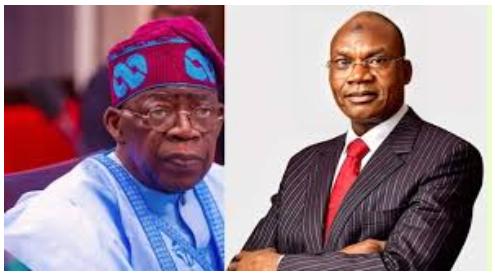
Nigerians have long endured an educational system plagued by mediocrity, underfunding, and poor leadership. But the current wave of decisions under Minister of Education Tahir Mamman is unprecedented in its level of incompetence, further entrenching the educational sector in confusion and frustration. It’s as if the Ministry is actively working against the aspirations of the Nigerian youth, and at the heart of this disastrous approach are two shockingly misguided policies: the ban on foreign degrees and the arbitrary age limit for the Unified Tertiary Matriculation Examination (UTME).
These policies are not just poorly thought out; they represent an assault on the dreams of thousands of Nigerian students. And the real tragedy? These issues could have been handled with wisdom and empathy—something sorely lacking in today’s administration.
Let’s be clear—banning degrees from institutions in Benin Republic, Togo, and other neighboring countries is a reckless, cruel decision that throws the future of over 22,500 Nigerian graduates into disarray. These are students who, for various reasons—financial constraints, strikes, overpopulation in Nigerian universities—sought education abroad. To now declare that their years of hard work and financial investment amount to nothing because of an impulsive policy is nothing short of government-sanctioned sabotage.
What was the rationale behind this decision? Were there consultations? Any investigation into the academic standards of these schools? If there were any legitimate concerns over the quality of education in these countries, why not work diplomatically with these institutions to improve standards? Why not verify degrees on a case-by-case basis rather than enact a blanket ban that disrupts lives and careers? This move reeks of anxious, poorly planned governance, not a well-thought-out strategy to protect the integrity of Nigeria’s education system.
If the Ministry genuinely cared about maintaining the quality of degrees, the solution was clear. Rather than resorting to a punitive ban, the Minister should have conducted an audit of the schools in question to assess their educational standards. Collaborating with international education bodies to create a list of accredited institutions and work with non-accredited ones to meet those standards would have been a far more constructive approach. Additionally, establishing a grace period for students currently enrolled in these foreign schools, allowing them to complete their studies while working toward accreditation, would have balanced the need for quality control with fairness. These steps would have protected students while ensuring that only quality education is recognized. But instead, the Ministry’s knee-jerk reaction shows that they are out of touch with the real challenges facing Nigerian students.
Another glaring example of this government’s incompetence is the recently introduced age limit on UTME applicants. Forcing students to meet an arbitrary age requirement by 2025 is not just cruel, it is fundamentally ignorant of the struggles many Nigerian students face in accessing education. How can a government so disconnected from the daily realities of its people expect students to meet these demands when they are already battling endemic poverty, constant strikes, and subpar schooling conditions?
This policy completely ignores the reasons why many students are older by the time they can even think about higher education. In a country where access to education is delayed due to strikes, poor infrastructure, or the need for students to work and support their families, setting age limits is simply irresponsible. The government is, in essence, punishing students for the system’s own failures.
The logical solution would have been to expand access to education, not restrict it further. The Ministry should have implemented policies that offer flexibility, especially for students from marginalized backgrounds who face delays in completing their education. Introducing dual enrollment programs for academically gifted underage students would have encouraged excellence, and focusing on tackling the systemic issues—such as strikes, poor infrastructure, and teacher shortages—that delay education for so many would have been the responsible approach. Instead, the Ministry’s actions further disadvantage students who are already struggling under the weight of a broken system.
Minister Tahir Mamman’s track record is clear: his decisions are harmful, short-sighted, and destructive to Nigeria’s education sector. These latest policies are not isolated incidents but part of a larger pattern of anxious, poorly conceived governance. Why, then, is President Bola Tinubu standing by a minister who is clearly incompetent and out of touch with the realities of the Nigerian people?
This government is facing a crisis of credibility. In a country with skyrocketing unemployment, an underperforming educational system, and a youth population desperate for opportunities, the Minister of Education should be a beacon of hope and innovation. Instead, we are left with policies that destroy futures and stifle aspirations.
What Minister Mamman—and by extension, the Tinubu administration—fails to grasp is that these decisions will have devastating long-term effects. By banning degrees from neighboring countries, the government is closing off critical educational pathways for thousands of students who were only trying to better themselves in the face of Nigeria’s failing system. These students will now face limited job prospects, discrimination, and economic instability.
Similarly, the age-limit policy will force thousands of older students out of the education system altogether, condemning them to a future of low-paying jobs, unemployment, or even criminal activity. When young people feel that they are pushed out of the system, they lose hope—and a nation without hope among its youth is a nation on the brink of collapse.
What the government fails to understand is that education is not just about classrooms and exams—it’s about social mobility, economic empowerment, and national development. These policies destroy the very fabric of what education is supposed to achieve. And for what? To satisfy a misguided sense of control over a system that the government itself has failed to manage?
President Tinubu, the Nigerian people need you to step in and correct these mistakes before they spiral out of control. Your Minister of Education is leading the sector into chaos. Your government’s reputation is at stake—not just locally, but globally. You cannot afford to be silent while 22,500 students are left in limbo and countless others are punished by arbitrary policies.
It is imperative that the Nigerian government immediately reverse the ill-conceived ban on foreign degrees and implement a comprehensive accreditation framework that ensures educational quality while safeguarding the interests of students. The recent imposition of an age limit on the UTME must be scrapped entirely. Instead, the focus should be on instituting inclusive policies that address the actual barriers to education in Nigeria. The Ministry of Education urgently needs leaders who understand that education is not merely a bureaucratic function but the cornerstone of national progress.
Minister Tahir Mamman’s tenure has been marked by a series of damaging and myopic decisions that undermine the integrity of Nigeria’s education sector. His background as a university professor of law and a former university administrator seems to have done little to inform his recent policies, which starkly reveal his disconnection from contemporary educational realities. The minister and his team need to urgently engage in rigorous training and development to catch up with the modern landscape of higher education. They must seek comprehensive updates and lessons on current university practices and educational trends, rather than clinging to outdated paradigms. It is shocking that individuals with such a background could produce policies so out of touch with the needs and expectations of today’s academic environment. Until this essential knowledge gap is addressed, their approach will continue to flounder, exacerbating the confusion and inadequacy that currently plague Nigeria’s education system.
This ongoing failure is not just a minor oversight—it is a blatant disregard for the future of countless students and the broader educational framework. The government’s current trajectory, under Minister Mamman’s misguided leadership, is leading Nigeria’s education system toward further decline and irrelevance. Immediate corrective action is needed to salvage the nation’s educational prospects and restore some semblance of credibility to the Ministry of Education.
The future of Nigeria depends on its youth, and right now, they are being failed by those who claim to govern in their best interests. The clock is ticking, Mr. President. It’s time to lead with wisdom, compassion, and vision, or risk irreversibly damaging the future of our country. The stakes have never been higher, and action is needed now.
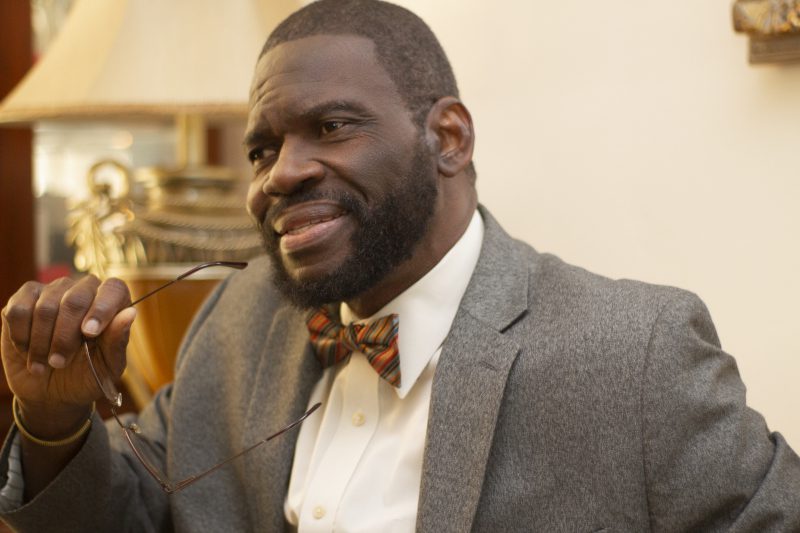
Professor John Egbeazien Oshodi, born in Uromi, Edo State, Nigeria, is an American-based police and prison scientist, forensic psychologist, public policy psychologist, and legal psychologist. He’s a government advisor on forensic-clinical psychological services in the USA and the founder of the Dr. John Egbeazien Oshodi Foundation for Psychological Health. With a significant role in introducing forensic psychology to Nigeria through N.U.C. and Nasarawa State University, he’s also a former Secretary-General of the Nigeria Psychological Association. He’s taught at esteemed institutions like Florida Memorial University, Florida International University, Nova Southeastern University, and more, and is currently an online faculty member at Weldios University, Nexus International University, and Walden University.