Africa
Natasha Akpoti-Uduaghan and the Emerging Controversies -By Abiodun Komolafe
A national conference of all the female legislators should be convened to work out a clear programme for female advancement as well as gender disparity. The main thrust will be, by closing the gender gap, the country will be using all its resources and in the process become, not just a more competitive society but also a fairer one. Ignoring half of the potential productivity of a nation does not make economic sense. Out of the present mindless diversion and immersion into trivial, Nigeria must take a new dispassionate look at the benefits of ending gender disparity which puts a break on the use of the nation’s talents.

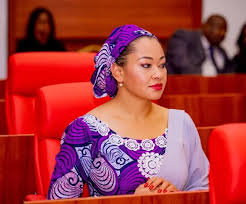
The suspension of Senator Natasha Akpoti-Uduaghan for six months, stemming from her allegations of sexual harassment and abuse of office against Senate President Godswill Akpabio, reveals a deeper issue within Nigeria’s political system. This incident, among others, raises questions about Nigeria’s claim to being a republic, as it exhibits characteristics of a feudal system, where social and economic relationships are defined by patron-client attachments.
In the case of the senate president, a lot has been revealed about the misogynistic nature of much of the Nigerian state. This issue has persisted for more than half a century, resulting in numerous allegations of victimization in educational institutions and workplaces. With the exception of a few cases, not much has been done to counteract this.

Although much of the Akpabio/Akpoti-Uduaghan matter is still hazy, it is deeply disturbing that the matter arose in the first place, Regardless of the outcome, the key issues are not about to go away in a hurry. To ensure transparency, there ought of course to be a full and open inquiry, broadcast live and publicly, allowing the public to form their own opinions. Unfortunately, such an inquiry is not likely to occur!
In the words of Paul Johnson, “We live in a world in which politics has become a form of psychotherapy.” Tragically, the incident also reveals the lack of a clear ideological anchor underpinning our politics. Conventions, mores, and norms should dictate parliamentary etiquette, such as whether members are sitting or standing.
Meanwhile, parliamentary time is scarce anywhere in the world at any time, making it deeply disturbing that Nigeria, faced with multifaceted challenges, is devoting so much parliamentary space to this needless controversy. No parliament has enough time, even if the parliamentarians are sitting at odd hours. So, why waste so much time on trivial matters? In sane climes, a more robust political structure would have put together countervailing mechanisms which would have prevented this from becoming an imbroglio.
Underneath it all, the issue of misogyny must be addressed immediately. With only 4 female senators out of 109, Nigeria is underutilizing the talents of its female population, which makes up half of the country. This underrepresentation is alarming, especially considering the scarcity of talent. Since women make up half of the population, there is something to be very worried about. Even though it is still inadequate, women are making greater strides in the corporate world and really proving their mettle.

Notable figures like Hannatu Musawa, the Minister of Art, Culture, Tourism and the Creative Economy, Jumoke Oduwole, the Minister of Industry, Trade, and Investment and Doris Uzoka-Anite, the Minister of State for Finance, are demonstrating exceptional ability in handling their portfolios. They are truly excelling in their roles, setting a high standard for others to follow. Unfortunately, the legislative sphere tells a different story. The lack of female representation in federal, state and local governments is concerning, and urgent action is necessary to address this imbalance.
There is a lot to be done to secure a more gender-based society. One strategy is to emulate legislatures that have addressed tax and inheritance issues that discriminate against women. Political parties must commit to promoting female entrants into male-dominated assemblies.
To address the gender imbalance in Nigeria’s legislatures, we have to explore different models from other countries, such as the all-female list in some constituencies in places like the United Kingdom which has over time beefed up female representation in the legislatures. Female legislators, who have overcome significant obstacles to reach their positions, must also up the ante. They must intensify their efforts! This is the only way to fight back against the structural imbalance which discriminates against inclusivity in society.
The Nigerian government can learn from other countries that have successfully implemented measures to increase women’s representation in politics. For instance, Rwanda has achieved 61% female representation in parliament, while Sweden has implemented policies to promote gender equality in decision-making processes.
A key legislation already done by the Scandinavian countries is to ensure the provision of crèche services in all organizations in the public and private sectors employing more than 50 people in the same location. This should be mandatory anyway in the public sector. The private sector can also be given tax credits to offset the additional costs in its operations. By incentivizing childcare provisions, governments can boost productivity and promote gender balance in the workforce.
To address the emerging controversies surrounding Akpoti-Uduaghan, it’s essential to scrutinize the impacts of women in Nigeria’s legislative landscape. Women must demonstrate their capabilities and compete for genuine political power, rather than relying on handouts. Inspirational figures like Olufunmilayo Ransom Kuti, Dora Akunyili and Ngozi Okonjo-Iweala have shown that women can thrive in politics with maturity and dedication.
To achieve more empowerment for women, this very huge female community must understand the game better and take the statements of the First Lady, Senator Oluremi Tinubu, about maturity seriously. For a long time, Tinubu has been a strong advocate for women’s empowerment, supporting bills that promote gender inclusion in governance.
Nigerian women must be willing to compete and take on leadership roles to effect change. As the First Lady emphasized, “Women constitute a vital part of our nation’s progress, yet their representation in governance remains limited”. So, it’s time for women to take center stage and demand their rightful place in Nigeria’s politics. For example, too many women grapple with the problem of returning to work after delivery. It is really disruptive, both to the individual and the employer, and definitely hampers the career prospects of women! This kind of initiative also creates its own economy in terms of providing employment for retired matrons and other medical personnel across the board to augment their pensions. It is a win-win situation all round!

Given the typically higher productivity of women, it’s time for the Nigerian legislature and supporters of women’s rights to know where the pressure points are and initiate conversations about their future, establishing a benchmark for other gender-based institutions to follow. Female legislators should be fixated on crafting and being at the forefront of legislations such as this. It will improve overall productivity and enhance the career prospects of women, thereby bridging the gender gap. As far as their powers can take them, it is time for our women to run!
A national conference of all the female legislators should be convened to work out a clear programme for female advancement as well as gender disparity. The main thrust will be, by closing the gender gap, the country will be using all its resources and in the process become, not just a more competitive society but also a fairer one. Ignoring half of the potential productivity of a nation does not make economic sense. Out of the present mindless diversion and immersion into trivial, Nigeria must take a new dispassionate look at the benefits of ending gender disparity which puts a break on the use of the nation’s talents.
As a final point, the controversy surrounding Akpoti-Uduaghan serves as an unembellished reminder of the need for integrity, transparency and accountability in Nigerian politics. As Tinubu rightly pointed out, the senate “is an inside place and it’s a matured chamber. It’s a mature chamber, and it should be treated with respect.” To move forward, Nigeria must prioritize the empowerment of women, address gender disparity, and promote a culture of integrity. Only then can we build a more just and equitable society.
May the Lamb of God, who takes away the sin of the world, grant us peace in Nigeria!
*KOMOLAFE wrote from Ijebu-Jesa, Osun State, Nigeria (ijebujesa@yahoo.co.uk)