Opinion
Navigating Social Media Activism: A Call For Prudent Action, by Isaac Asabor

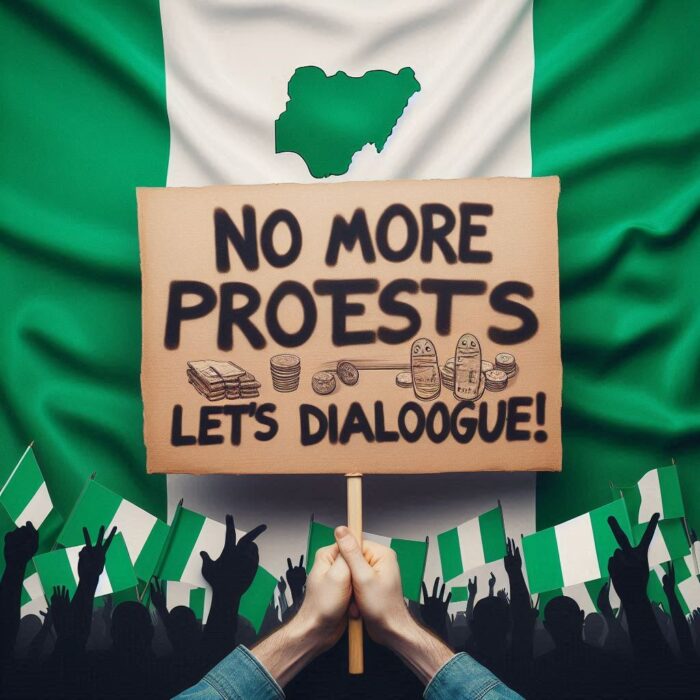
In the wake of the #EndSARS movement, Nigeria witnessed a powerful surge of digital activism. Young activists harnessed the potency of social media platforms to amplify their voices, demand justice, and call for the dissolution of the notorious Special Anti-Robbery Squad (SARS). However, as we observe the current landscape of online discourse, it becomes evident that another protest akin to #EndSARS may be brewing.
Given the foregoing conjectural view, it is expedient we explore the implications of such protest and advocate for a measured approach that safeguards both citizens’ rights and the nation’s fragile economy. The reason for the foregoing view cannot be farfetched as there are perils that are unarguably inherent in unbridled protests. In fact, while protests serve as essential tools for social change, they also carry inherent risks, and that is why another large-scale protest could harm Nigeria’s economy.
For instance, protests disrupt daily life, affect businesses, transportation, and essential services, even as prolonged demonstrations can lead to supply chain disruptions, reduced productivity, and investor uncertainty.
Again, the youths, particularly those who are categorized to be Gen Zs should not forget that Nigeria’s economy relies on foreign investment, and that a prolonged protest could erode investor confidence, leading to capital flight and stalling economic growth.
Not only that, they should not forget that vandalism and clashes during protests harm public infrastructure, straining government resources for repairs and reconstruction, and in a similar vein escalate tensions which may exacerbate inflation, and thereby impacting purchasing power and worsening food insecurity.
Given the fact that beyond violence that there are constructive ways to engage with Nigeria’s challenges, it is expedient to recall in this context that Nigeria, as a nation is at the moment grappling with economic hardships, and that it faces a critical moment. So, inasmuch as the fact cannot be denied that while frustration simmers, the idea of violent protests looms, there is also the need for anyone that is mooting the idea of protests to pause and consider alternative paths as violent protests are counterproductive. Rather, it is expedient to advocate for more effective ways to address our grievances, rather than setting the country on fire.
In fact, if there are things to considered that would justify perishing the thought of protests, they are no doubt things that have in the last few years negatively been shaping Nigeria’s economy, and they cut across recession, inflation, unemployment, and inadequate infrastructure. Paradoxically, the citizens are the ones bearing the brunt of rising food prices, power outages, and limited access to quality healthcare. Though a closer look at the retrogressive socioeconomic factors reveals that they are collectively dire in nature, and makes emotions run high, and the urge to protest violently may seem justified. Still, they do not justify a protest.
To this writer, instead of resorting to nationwide protests, there is a need to consider other avenues of sending messages across to the government on how bad the economy has become since the current leaders came to power on May 29, 2023.
First and foremost, there is an urgent need for engaging in constructive conversations with policymakers, legislators, and local leaders, and in the same vein seek accountability and transparency, more than ever before.
Again, there is need for every Nigerian to join or support civil society organizations that advocate for reforms as collective voices amplify impact.
In a similar vein, there is also the need to always follow legal channels by going through petition courts, use of Freedom of Information requests, and participating in public hearings, rather than engaging in a nationwide protests.
Though organizing peaceful demonstrations could have been one of the recommendations in this context as it embodies respect for the laws and public order. Unfortunately, in this part of the world, peaceful demonstrations are more often than not hijacked by miscreants, popularly called “Area Boys”. Not only that it appears police officers and members of other security agencies in the country always find it difficult to understand what peaceful protest looks like, and therefore always stir up a hornet’s nest by either maiming or killing protesters, and this no doubt always compel protesters to immediately seek for vengeance. After all, the basic premise of activism is “An injury to one is an injury to all”. It means that the mistreatment of any protester creates the possibility of retaliation against such mistreatment.
In fact, while we look forward to a peaceful Nigeria where issues are amicably resolved without rancor, there is the need for the presidency to be sensitive in dissemination of information to the public. The reason for the foregoing viewpoint cannot be farfetched as there is a raging controversy surrounding Peter Obi’s alleged involvement in the planned protest.
Without a doubt, it is germane to recall that in the wake of the planned nationwide anti-government protest that accusations have been flying about the involvement of Peter Obi, the Labour Party’s presidential flag bearer in the 2023 elections. The Presidency claims that Obi and his supporters are behind the protest, which has been organized under the hashtags #TinubuMustGo and #Revolution2024. However, the Labour Party has refuted these claims, warning against dragging Obi into the rising tension.
Bayo Onanuga, the Special Adviser to the President on Information and Strategy, took to X (former Twitter) to accuse Obi and his supporters of spreading treasonable hashtags. According to Onanuga, calling for the end of an elected government and advocating for revolution amounts to high treason. He also linked the protest organizers to the #EndSARS protests of October 2020, which turned violent after being infiltrated by IPOB elements.
Onanuga further claimed that the protest planners lacked patience and were attempting to destabilize Nigeria by staging a civilian coup against President Bola Tinubu. He even named specific individuals allegedly involved in organizing the protest.
However, the leadership of the Labour Party swiftly responded to the accusations. They emphasized that Peter Obi was not behind the planned protest and cautioned against dragging his name into the controversy. The party maintained that Obi’s focus was on constructive engagement and democratic processes, rather than fomenting unrest.
As the planned protest approaches, it remains crucial to separate fact from fiction. While accusations fly, it is essential to maintain a fair and evidence-based perspective. Peter Obi’s name should not be unfairly dragged into this situation, and the focus should remain on addressing the legitimate concerns raised by the protesters.
In fact, Journalists working at the Presidency as media aides should not forget so soon that responsible journalism requires verifying information before making claims. Therefore, they should always seek the truth and promote informed dialogue.
Again, it should not be forgotten that Nigerians have a rich history of collective action. From the fight against military rule to #EndSARS, our voices matter. Therefore, let us channel our energy into strategic, peaceful advocacy.
To conclusively put it at this juncture, it is germane to opine that violence begets more suffering. As citizens, we must choose wisely. Let us speak truth to power, demand accountability, and work toward a Nigeria where prosperity and justice prevail, and we should always have it at the back of our minds that our strength lies not in chaos, but in unity and resilience.