Africa
Need For Sanity In Rivers As It Is Bigger Than Wike And Fubara, by Isaac Asabor


Rivers State, a critical economic hub in Nigeria, is often in the spotlight for its political and economic relevance. Known for its oil wealth, diverse culture, and bustling capital, Port Harcourt, the state holds immense potential to shape not just the Niger Delta region but also the broader national landscape. However, the political tension between the current Governor Siminalayi Fubara and his predecessor, Nyesom Wike, is casting a shadow over the state’s future. While both men play significant roles in Rivers’ political sphere, it is clear that Rivers State is far bigger than their individual ambitions. It is time for sanity to prevail in governance, for the people deserve leadership focused on their welfare rather than personal power struggles.
Nyesom Wike is a figure who commands attention, not only in Rivers State but across Nigeria. During his eight-year tenure as governor, he built a reputation for assertiveness, infrastructural development, and a no-nonsense approach to governance. Under his leadership, Port Harcourt witnessed several large-scale development projects, and Wike’s combative political style earned him a national profile as a staunch defender of his state’s interests.
His administration oversaw the construction of flyovers, bridges, hospitals, and schools. Wike’s personality and leadership style often led to political battles with the federal government, but his resilience endeared him to many in Rivers. Wike successfully turned Rivers into a strong political force within the national opposition party, the People’s Democratic Party (PDP), and expanded his influence beyond the state.
However, with every leader comes the inevitable challenge of legacy management. The question often arises: How will history remember Wike’s time in office? Will he be remembered for his contributions to infrastructural development or for political divisiveness? This question has only become more relevant with the growing friction between him and Governor Fubara, his former ally.
Governor Siminalayi Fubara, Wike’s successor, came to power with an endorsement from Wike, who was expected to continue wielding significant influence even after leaving office. As a former Accountant-General of Rivers State, Fubara’s technocratic background was seen as a stabilizing factor for the state’s finances, and his rise to the governorship was largely viewed as Wike’s attempt to maintain control of the state’s political machinery.
Yet, political successions are rarely as straightforward as they seem. Since assuming office, Fubara has sought to establish his own political identity, distancing himself from Wike’s overpowering influence. Fubara’s administration is still young, but the early signs indicate that he is keen on carving out his own path, which has inevitably led to clashes with his former mentor. Political observers note that Fubara’s decision to assert his authority is not only about personal ambition but also about the political survival that comes with stepping out of Wike’s shadow.
The ongoing power struggle between Wike and Fubara is not without consequences. Political distractions like these divert attention away from the real issues plaguing the state. From insecurity in the Niger Delta to unemployment and underdevelopment in rural areas, Rivers State faces numerous challenges that require urgent and focused governance. In a state that plays such a critical role in Nigeria’s oil economy, any prolonged political instability could have broader national repercussions.
Rivers State is one of the country’s highest oil-producing regions, contributing billions of naira to the national treasury. Beyond oil, the state’s bustling ports and burgeoning industrial sector make it a key player in Nigeria’s economic future. However, these economic advantages can be easily undone by political instability. Business confidence, investment inflows, and development projects all suffer when political leaders focus on personal vendettas instead of creating an enabling environment for growth.
While Wike and Fubara lock horns in a battle for supremacy, the people of Rivers State are left to contend with everyday problems like poor infrastructure in rural areas, inadequate healthcare, and worsening insecurity. Political stability is the bedrock of effective governance, and if Wike and Fubara do not resolve their differences soon, the people who voted them into office may begin to lose faith in their leadership.
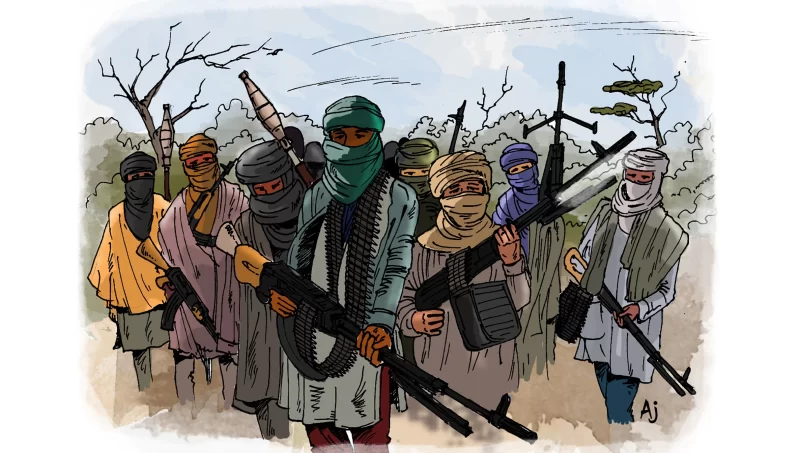
Another dimension to consider in this ongoing political drama is the issue of security in the Niger Delta. Over the years, Rivers State has had a history of militancy and unrest, largely fueled by the grievances of marginalized communities that feel left out of the state’s oil wealth. Although militancy has reduced in recent years, thanks to the amnesty programs and other peace initiatives, it remains a sensitive issue that can be reignited by political instability.
When politicians in leadership positions engage in open confrontations, it often sends a dangerous signal to disaffected groups. The lingering mistrust between the government and these groups could be exacerbated by a perception that the state’s leadership is distracted or disunited. The last thing Rivers State needs is for political instability to reignite old conflicts or lead to fresh waves of unrest.
For governance to be effective in Rivers State, Wike and Fubara must realize that leadership is not about personal egos. The people of Rivers did not vote for a personality contest; they voted for leaders who could deliver on their promises. Both men have their strengths and have contributed to the state’s development in different ways, but these strengths must be channeled toward a collective goal.
Fubara, in his role as governor, needs peace and stability to fulfill his electoral promises. And Wike, as a political heavyweight, has a duty to support the government for the greater good of Rivers State. As a leader who claims to have the people’s interests at heart, Wike should be more invested in ensuring that his legacy is not one of division and conflict but of continued progress and peace.
This is not the time for political king-making or behind-the-scenes maneuvering. It is the time for statesmanship. The future of Rivers State must not be held hostage to political egos.
Beyond Wike and Fubara, other political, traditional, and religious leaders in Rivers State must also play their part in ensuring that peace and stability are maintained. Political observers in Nigeria are well aware of how traditional rulers and civil society can mediate disputes between political leaders. In times like these, their roles become even more crucial.
Traditional rulers, with their moral authority, can serve as mediators to broker peace between the two warring camps. Civil society organizations, particularly those advocating for good governance and social justice, must rise to the occasion by holding both leaders accountable for their actions and decisions. Religious leaders, too, have a critical voice in calling for unity and reminding political leaders of their responsibilities to the people.
Rivers State is not just a political playground; it is home to millions of Nigerians whose lives depend on effective governance. It is a critical economic asset to Nigeria, and its stability should be a top priority for anyone in leadership. The ongoing tensions between Wike and Fubara must be resolved through dialogue, humility, and a shared commitment to the state’s future. Political sanity must prevail because Rivers is bigger than the ambitions of any single individual.
If Wike and Fubara truly care about Rivers State, they must put aside their differences and work for the common good. In the end, history will not judge them by the political battles they fought, but by the impact they had on the lives of the people they were elected to serve.