Connect with us

National Issues

Nigeria’s Crack Down on Online Misinformation -By Abdulhaq Ibn Luqman

Analysts stress that striking a balance is essential: over-regulation could silence legitimate voices, while under-regulation allows harmful content to thrive. Transparent enforcement, public education, and technology-assisted moderation are key to protecting both freedom of expression and societal stability in Nigeria.

Published

on

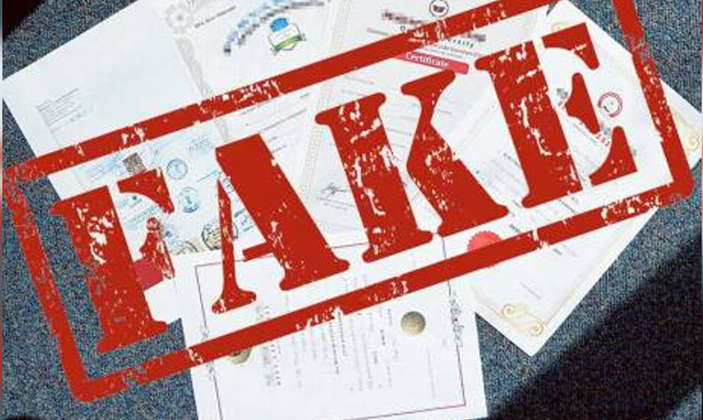
Fake Degrees

LAGOS, Nigeria — With over 100 million internet users, Nigeria is taking decisive action to combat misinformation and harmful content on social media platforms. Authorities warn that unchecked fake news, hate speech, and cyber scams pose serious threats to public trust, social stability, and economic growth.

The tension between freedom of expression and public safety has intensified in recent years. Section 39 of Nigeria’s Constitution guarantees freedom of speech, while the Cybercrime (Prohibition, Prevention, etc.) Act 2015 criminalizes online fraud, identity theft, and the dissemination of harmful content. Regulatory bodies like the Nigerian Communications Commission (NCC) and National Broadcasting Commission (NBC) oversee digital content, issuing fines or blocking material considered misleading or dangerous.

Past incidents, including the seven-month Twitter ban in 2021, highlight the challenges of balancing citizen rights with national security concerns. Experts point to politically motivated fake news, health misinformation, and ethnic or religious hate speech as the most significant threats amplified through platforms such as Twitter/X, Facebook, Instagram, TikTok, and WhatsApp.

Dr. Lanre Olusola, a cybersecurity expert, said, “Without digital literacy and strong legal enforcement, social media will remain a double-edged sword for democracy in Nigeria.” Economic analyst Ngozi Okonjo-Iweala added, “Unchecked online scams and misinformation pose serious risks to economic growth and international business confidence.”

Efforts to curb misinformation include AI-powered and crowdsourced content moderation, legislative proposals requiring tech companies to comply with local regulations, and digital literacy campaigns. Civil society advocates emphasize collaboration between government, tech platforms, and citizens to ensure transparent, targeted regulation without stifling civic engagement.

Advertisement

Analysts stress that striking a balance is essential: over-regulation could silence legitimate voices, while under-regulation allows harmful content to thrive. Transparent enforcement, public education, and technology-assisted moderation are key to protecting both freedom of expression and societal stability in Nigeria.

Continue Reading
Advertisement
Click to comment

Leave a Reply

Your email address will not be published. Required fields are marked *

Trending Contents

Topical Issues

ISAAC ASABOR ISAAC ASABOR
Africa15 hours ago

How Primordial Sentiment And Blind Followership Are Fueling Nigeria’s Governance Crisis -By Isaac Asabor

Most importantly, voters must learn to reject patronage Politics. This is as short-term financial incentives should never dictate political choices....

Kebbi-school-Maga Kebbi-school-Maga
Africa16 hours ago

Nigeria’s Security Paradox: How Massive Military Spending Failed as Education Crumbled -By Daniel Nduka Okonkwo

Nigeria’s situation is precarious, but it is not irreversible. A meaningful rebalancing of national priorities, one that treats education as...

Soludo Soludo
Africa16 hours ago

Triumph Of Leadership At Onitsha -By IfeanyiChukwu Afuba

Politics is at the centre of the other front that railed against the (Onitsha) market stabilisation policy. The problem was...

IGP OLU EGBETOKUN IGP OLU EGBETOKUN
Africa21 hours ago

Why Nigeria Must Reject Sensationalism In Matters Of Security -By Danjuma Lamido

Security challenges must be addressed with honesty, legality and collective responsibility. Misrepresenting facts, attacking lawful institutions and misleading the public...

Africa1 day ago

Why Standing Your Ground is Not a Strength but a Failure -By Syeda Fatima Gardezi

Flexibility in the rule is not exhibited through stubbornness. The skill to rule responsibly in the world, which is complex,...

Boko Haram and Nigerian Soldier Boko Haram and Nigerian Soldier
Africa1 day ago

Why Nigeria’s Security Crisis Persists Despite a Huge Military Budget -By Daniel Nduka Okonkwo

Nigeria’s insecurity does not exist in isolation. As Africa’s most populous country and a regional economic anchor, instability within its...

Tinubu Tinubu
Forgotten Dairies1 day ago

Time Is Proving Critics of President Tinubu’s Economic Reforms Wrong -By Aguolu Kenechukwu Chizoba

At the time President Tinubu took office, Nigeria’s economy was effectively in a state of comatose. Several state governments were...

Nigeria flag Nigeria flag
Africa1 day ago

Beyond Waivers: What Nigeria Must Do for Its Pharma Sector -By Patrick Iwelunmor

The pharmaceutical industry’s distress is not merely an industry problem. It is a policy problem. Nigeria can continue to rely...

Nyesom-Wike-FCT-minister- Nyesom-Wike-FCT-minister-
Forgotten Dairies2 days ago

Leadership Without A Base? Tinubu, Wike And The Limits Of Political Authority In Rivers -By Isaac Asabor

If Wike is to be Rivers’ political leader, let it be clearly defined: through party alignment, formal roles, or negotiated...

Forgotten Dairies2 days ago

What Tonto Dikeh’s Reunion With Husband Teaches Us About Marriage, Mercy, And The Ministry Of Reconciliation -By Isaac Asabor

For couples watching this reunion from their living rooms, some bitter, some tired, some quietly resigned, and the lesson is...