Opinion
Nigeria’s Economy: What Is To Be Done? -By Abiodun KOMOLAFE
Tinubu recently ended a state visit to Türkiye. Were it not for Atatürk, Türkiye would have remained a backward nation. Today, it is a modernized, advanced power. Beyond its status as a contemporary society, the country is built on real programmes. But what policies and programmes did Chukwuma Kaduna Nzeogwu and his colleagues actually have for Nigeria – those for which their adherents have been making noise all these years?

Using the phrase ‘What is to be done?’ in the headline to this analysis is deliberate. Vladimir Ilyich Lenin used the title in a brilliant 1902 treatise to outline the strategic methodology needed for a successful transformation of the state. It is a question that remains hauntingly relevant whenever a nation faces structural decay. ‘What is to be done?’ is important because out of it came solutions which, through their focus on organizational discipline and ideological clarity, continue to illuminate the path for any leadership seeking to dismantle a dysfunctional status quo.
We must now look ahead to what ought to be done in a Second Term for President Bola Ahmed Tinubu. Surely certainly, Tinubu will obtain a convincing victory in next year’s presidential election, but the question becomes how that victory will be turned into a consolidation of the gains of the First Term, as well as a decisive forward march towards building a new, enduring society for which history will be positively in his favour.
In a Second Term, Tinubu will have the political clout to finally face the real issue: the structural dysfunction inherent in the Nigerian state, whose genesis was the ill-advised, infantile suspension of the 1963 Republican Constitution. That Constitution was backed by the legitimacy of an era that saw a turnout of 82% of registered voters in its formative plebiscites – the highest in Nigeria’s history from 1923 to date. A Tinubu Second Term must speak to the tenor and ethos of the 1963 Constitution. The suspension of that document turned Nigeria from a country whose political economy was based on production into a consumptionist state, with predictably disastrous results. Nigeria succumbed to the tempting froth from the cup of easy oil rents, and that left a majority of its citizens outside the loop of opportunity. The data is heartbreaking!
On October 1, 1960, Nigeria was the 57th largest economy in the world. Sixty-five years later, by October 1, 2025, we had slipped to 59th. Had we maintained the 1963 Constitution, even under the most incompetent governments, Nigeria would not have been anything less than the world’s 25th largest economy. Had the country enjoyed competent leadership at all levels, there is no doubt that our dear fatherland would today be the 14th or 15th largest economy in the world. We truly lost our way, and a Tinubu Second Term must lead us back to it.
In 25 years’ time, India – whose federal model mirrors Nigeria’s 1963 structure – will likely have displaced the US as a global economic leader; and the heavens will not fall. The performance of India as a multi-ethnic, multi-racial, and religiously diverse entity should provide the blueprint for a Tinubu Second Term.
India since 1947 has faced much of the dysfunction affecting the Nigerian state, but it stayed the course with positive results because its constitution, unbroken since independence, has been anchored on production. This is why a Tinubu Second Term must focus on how political skills and modernization can be used to recreate a modern adaptation of the 1963 Constitution. Frankly, the country has no alternative. For example, Nigeria must create at least 27 million new jobs by the year 2030. Whatever macro- and micro-economic policies are pursued by even the most competent government or an independent Central Bank, it is difficult to see how even half of this figure can be achieved without a return to the spirit of productive interface embedded in the 1963 Constitution. We ignore this path at our peril!
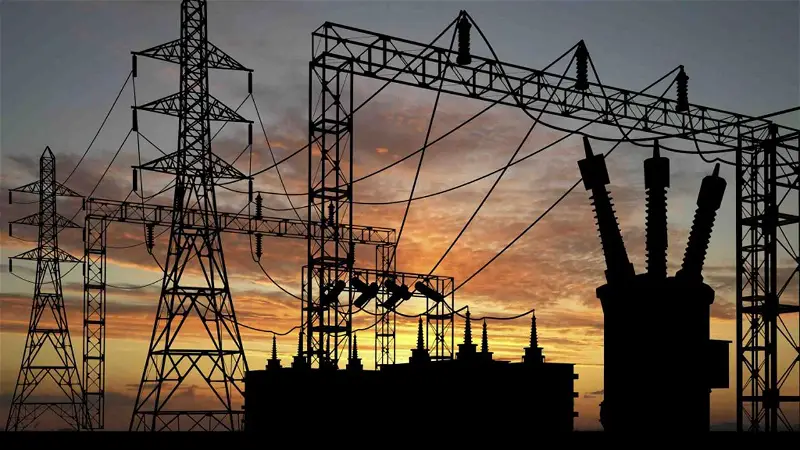
On January 27 this year, we had another national grid collapse – a perennial feature of our economic landscape. Sadly, no modern economy since the Industrial Revolution has been built without a cost-effective, regular supply of electricity. ‘Cost-effective’ is the key phrase!
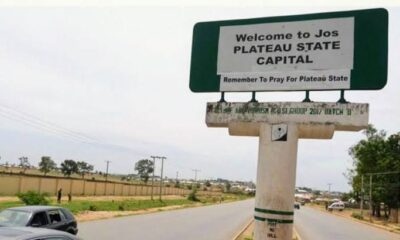
In the 1950s and the early 1960s, the power needs of the tin mines in Jos, Plateau State, were fully met; Jos was arguably the only place on the African continent where a 24-hour electricity supply was guaranteed. Had we stayed with a federalist constitution in which you ‘eat what you kill’, it is inconceivable that Nigeria would be generating, transmitting and distributing anything less than 70,000 megawatts of electricity, which, in truth, is still no great achievement for a population estimated at over 200 million people. For instance, Lagos State alone – if it is to be competitive against places like Hong Kong, Singapore and Johannesburg – cannot possibly be a viable economy while generating, transmitting, and distributing anything less than 25,000 megawatts. Without a constitutional revamp, no amount of ‘increased revenue’ can solve Nigeria’s problems, for that revenue will only go to fund the activities of a parasitic establishment while the citizens become more and more hapless.
In the context of the struggle for our national soul, Ayo Opadokun’s recently published book, The Gun Hegemony, is deeply relevant. It is one of the most important analyses of Nigeria in recent decades. The septuagenarian valiantly – and with patriotic vigour – debunks the self-serving deceit that the January 15, 1966, coup d’état was born of nationalistic fervour. It was not! It stood in stark contrast to the epoch-making Free Officers Coup in Egypt in 1952, led by Gamal Abdel Nasser, or the earlier reconstitution of Turkey out of the Ottoman ruins by Mustafa Kemal, whom a grateful nation venerated into immortality as Atatürk (The Father of the Turks). The 1966 putsch (was it actually a coup?) did not liberate; instead, it has hamstrung the Nigerian federation and debilitated its prospects for development.
Both Atatürk and the Free Officers in Egypt had clear programmes and an ideological vision. The vacuous postulations made by those who seized radio stations on January 15, 1966, cannot in any way be described as programmes of liberation, let alone development. If there was any ideological base, it can be traced back to the 1950 Constitution of the National Council of Nigeria and the Cameroons (NCNC), which called for the creation of a unitary state – a clear absurdity in a multi-ethnic entity. The NCNC manifesto of 1950 divided the Western wing of the party to the extent that notable figures like Mojeed Agbaje, A.M.A. Akinloye left to form the Ibadan People’s Party. The only person left standing was the brilliant Adegoke Adelabu (Penkelemesi).
Not surprisingly, the apeing of the NCNC fantasy about the constitution of a unitary state led to the military’s imposition of the destructive unification decree of 1966. Although later repealed, the damage had been done because the genie had fled from the bottle and has never been put back! For Nigeria, it has been downhill all the way – a gladiatorial clash between darkness and light, hypocrisy and truth. This decline reveals itself in underperformance, a lack of basic industries, and the inability to develop a productive, modern, and competitive economy.
Tinubu recently ended a state visit to Türkiye. Were it not for Atatürk, Türkiye would have remained a backward nation. Today, it is a modernized, advanced power. Beyond its status as a contemporary society, the country is built on real programmes. But what policies and programmes did Chukwuma Kaduna Nzeogwu and his colleagues actually have for Nigeria – those for which their adherents have been making noise all these years?
It is early days yet, but Opadokun should be a frontrunner for ‘Man of the Year 2026.’ His book will always be a key strategic intervention in redressing the lies, concoctions, and negative revisionist perspectives which continue to distort what has led to today’s painful reality.
Kudos to Ayo Opadokun!
May the Lamb of God, who takes away the sin of the world, grant us peace in Nigeria!
Email: ijebujesa@yahoo.co.uk.
Mobile: 08033614419 SMS only.