Africa
Nigeria’s Rising Debt Profile: A Looming Threat To Future Generations -By Rachael Emmanuel Durkwa
Nigeria’s rising debt profile is not just an economic issue; it is a matter of national security and sovereignty. A country overly dependent on foreign loans risks losing control over its decision-making processes, as lenders may begin to dictate policies in exchange for financial support. For ordinary Nigerians, the consequences are already visible in high inflation, rising taxes, dwindling job opportunities, and a general decline in living standards.

Nigeria’s debt burden has become a recurring decimal in national conversations, raising concerns not just among policymakers but also among ordinary citizens whose livelihoods are being affected by the consequences of excessive borrowing. While debt in itself is not inherently bad—since countries borrow to finance development projects—the sheer size of Nigeria’s public debt and the rate at which it has accumulated in recent years have sparked fears of a looming economic crisis. The Debt Management Office (DMO) reported in mid-2025 that Nigeria’s total public debt stood at over ₦121 trillion, a sharp increase compared to figures from only a few years ago. This figure, representing both external and domestic borrowings, paints a worrying picture for Africa’s largest economy.
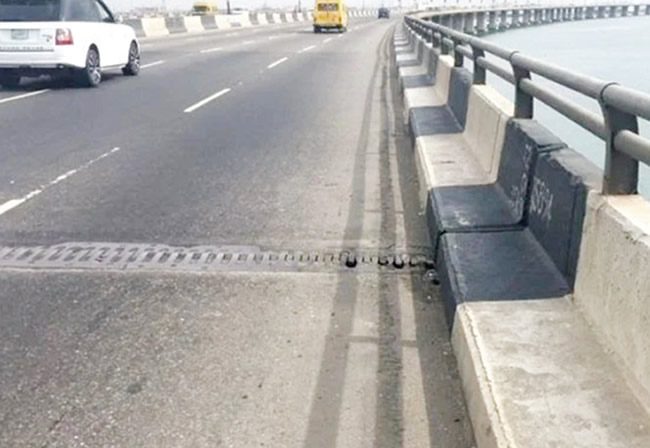
One of the major issues fueling the anxiety around Nigeria’s debt is the fact that much of the borrowed funds do not appear to translate into visible, sustainable development projects. Across many states, abandoned projects dot the landscape, raising questions about accountability and effective utilization of loans. Instead of addressing infrastructural deficits and stimulating growth, debt servicing now gulps a significant portion of the country’s revenue. According to reports from the Budget Office, over 70 percent of federal revenue is currently used for debt servicing. This means less money is available for education, healthcare, job creation, and other critical sectors that directly impact the people.
The dependence on borrowing has been partly fueled by declining revenues from crude oil, which still serves as Nigeria’s primary source of foreign exchange. Global oil price fluctuations and Nigeria’s inability to diversify its economy have worsened the problem. Although successive governments have promised to broaden the revenue base, little progress has been made. Agriculture, solid minerals, manufacturing, and technology remain underdeveloped. As a result, when oil revenues dip, the government resorts to borrowing as a quick fix, thereby deepening the debt trap.
What makes the situation even more alarming is the burden being placed on future generations. Loans obtained today will have to be repaid tomorrow, often with interest rates that grow over time. This intergenerational debt trap means that young Nigerians and those yet unborn will shoulder the responsibility of paying back loans they had no say in contracting. Already, the country’s youthful population faces a bleak economic environment characterized by high unemployment, inflation, and limited opportunities. Adding a heavy debt burden to this equation only complicates their prospects for a better future.
At the state level, the story is no different. Many governors have borrowed massively to fund recurrent expenditures such as salaries, instead of investing in long-term projects that could boost revenue and create jobs. Some states are so dependent on federal allocations that they spend up to 90 percent of their budgets on paying workers, leaving little or nothing for development. This culture of reckless borrowing without a clear repayment strategy has further worsened Nigeria’s economic vulnerabilities.
Experts have consistently warned that unless drastic steps are taken, Nigeria could soon face a debt crisis similar to what it experienced in the late 1990s and early 2000s before the Paris Club debt relief. Back then, Nigeria was granted forgiveness of about $18 billion in external debt, giving it a fresh start. However, the current pace of borrowing suggests that the country is heading toward another round of debt overhang, this time without the likelihood of international lenders offering the same relief.
To address the situation, analysts propose a two-pronged approach: first, Nigeria must adopt fiscal discipline by cutting down on wasteful spending, plugging revenue leakages, and prioritizing projects that yield tangible economic benefits. Second, the country must aggressively diversify its economy. Nations like Malaysia, Indonesia, and Brazil have shown that economic diversification, when pursued with determination, can transform countries from debt-ridden economies into growth hubs. Nigeria has the human and natural resources to achieve this but lacks the political will to pursue reforms consistently.
Civil society groups and economists also emphasize the need for transparency in the management of borrowed funds. Citizens deserve to know how loans are being used, who benefits from them, and what mechanisms are in place to ensure repayment without mortgaging the nation’s future. The National Assembly, as a watchdog of government spending, must strengthen its oversight functions to prevent arbitrary borrowing and ensure that debt agreements align with national interest.
Ultimately, Nigeria’s rising debt profile is not just an economic issue; it is a matter of national security and sovereignty. A country overly dependent on foreign loans risks losing control over its decision-making processes, as lenders may begin to dictate policies in exchange for financial support. For ordinary Nigerians, the consequences are already visible in high inflation, rising taxes, dwindling job opportunities, and a general decline in living standards. Unless urgent action is taken, the debt mountain may soon become insurmountable, leaving Nigeria in a vicious cycle of borrowing to survive rather than borrowing to thrive.
Rachael Emmanuel Durkwa is a 300 Level Student From Mass Communication Department University Of Maiduguri.