Africa
Nnamdi Kanu’s Life Sentence: The Judicial Seal on Nigeria’s Systemic Persecution of the Igbo People -By Jeff Okoroafor
The life sentence for Kanu completes a brutal trifecta of marginalization that has defined the Igbo experience in Nigeria since the end of the Biafran Civil War in 1970.

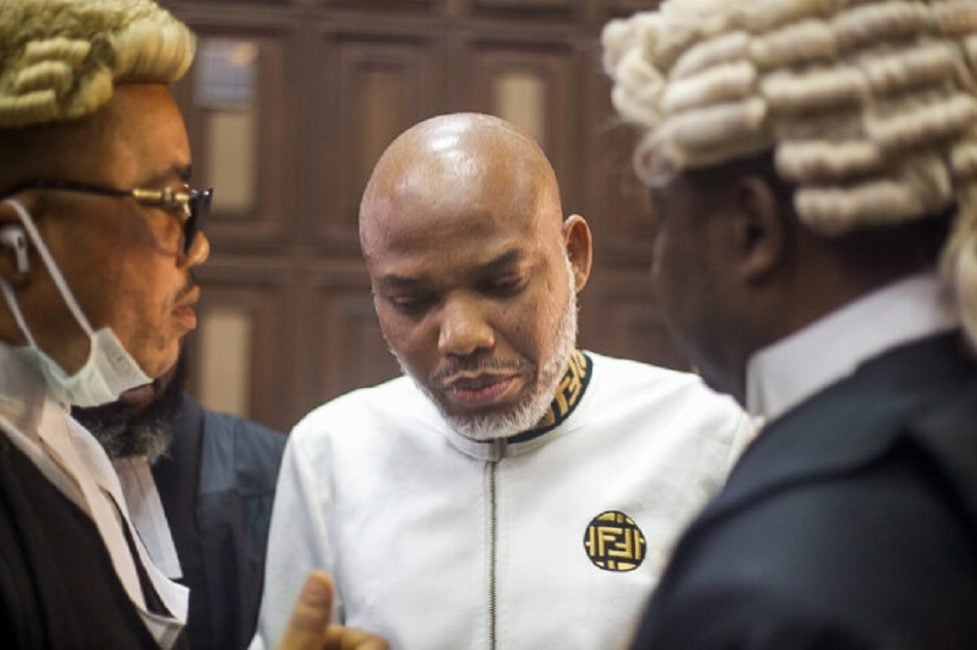
In a ruling that was as predictable as it was politically motivated, Justice James Omotosho of the Federal High Court in Abuja has sentenced Mazi Nnamdi Kanu, the leader of the Indigenous People of Biafra (IPOB), to life imprisonment. The charge: terrorism. The evidence: radio broadcasts. The context: a nation where mass-murdering terrorists are granted amnesty and a pathway to the presidency, while a man whose weapon is a microphone is caged for life.
This judgment is not merely a miscarriage of justice; it is the judicial ratification of a long-standing, systemic policy of subjugation against the Igbo people of Nigeria. It completes a vicious cycle that began with an illegal abduction, was sustained by a fraudulent trial, and now ends with a punitive sentence designed not to secure the nation, but to break the spirit of a people.
To understand the perfidy of this conviction, one must first acknowledge the criminality that underpinned Kanu’s prosecution. Kanu was not simply arrested; he was the victim of an international crime. His initial arrest in 2015 was for the “crime” of agitating for self-determination, a right enshrined in international law. While on bail in 2017, the Nigerian Army invaded his home in a violent raid, an act of extra-judicial aggression that forced him to flee for his life. This blatant state-sponsored attack on a citizen awaiting trial rendered any continued legal process a sham. The government’s pièce de résistance was his abduction in Kenya in 2021. He was detained, tortured, and illegally flown to Nigeria in a flagrant violation of international law. The United Nations Working Group on Arbitrary Detention unequivocally condemned this act and called for his immediate release. A Nigerian Court of Appeal, in a landmark judgment on October 13, 2022, also quashed the charges against him, stating that the government “irresponsibly violated” its own laws and international norms. The Federal Government, in a display of impunity, simply ignored these rulings. To convict a man procured through such illegality is to legitimize state-sponsored kidnapping.
The most damning evidence against the Nigerian state is not found in Kanu’s broadcasts, but in the stark, unmissable contrast in how it treats separatist agitation from different ethnic groups. Consider the case of Sunday Adeyemo, known as Igboho, the Yoruba nation agitator. He led a campaign that saw the blockade of highways and the invasion of a government house in Ibadan. His supporters wielded arms and caused significant mayhem. When arrested in Benin Republic, the Yoruba political and traditional elite rallied behind him. He was never renditioned, faced legal processes in Benin, and was eventually released, returning to Nigeria a free man. His agitation was treated as a political issue.
This hypocrisy becomes a gaping chasm when compared to the treatment of northern insurgents. Boko Haram and ISWAP terrorists, responsible for the deaths of over 350,000 people according to the UN, have been met with a policy of “deradicalization” and reintegration. The Nigerian state has spent billions of Naira on amnesty programmes for individuals who have beheaded children and burnt villagers alive. Former insurgents are not only pardoned but are, as confirmed by military reports, being recruited into the Nigerian Army. The message is clear: mass murder is a pardonable offense if you are from the right region. Similarly, militant Fulani herdsmen, designated by the Global Terrorism Index as the fourth deadliest terrorist group globally, have ravaged farming communities with thousands of deaths to their name, yet there has been no concerted nationwide terrorism trial for these actors.
Against this backdrop, what is Nnamdi Kanu’s crime? Incendiary broadcasts. To pin the entirety of the Southeast’s complex security crises on Kanu’s words from a DSS dungeon is a convenient fiction for a state unwilling to address its own foundational injustices.
The life sentence for Kanu completes a brutal trifecta of marginalization that has defined the Igbo experience in Nigeria since the end of the Biafran Civil War in 1970. First is economic crippling. Through state policies, the Igbo have been systematically excluded from the highest echelons of power. The infamous “Abandoned Property” policy after the war was a state-sanctioned theft of Igbo wealth. Today, the deliberate neglect of federal infrastructure in the Southeast serves as a constant brake on the region’s legendary entrepreneurial spirit. Second is political ostracization. The presidency remains a calculated mirage for an Igbo person. The two main political parties have never ceded their presidential tickets to an Igbo candidate since 1999. The message is unequivocal: you can be a voter, but you cannot be a leader. Third is psychological warfare. The relentless message from the state is that Igbo agitation for equity is the nation’s greatest problem. The life sentence for Kanu is the ultimate psychological blow—a declaration that the expression of Igbo grievance is a terrorism worse than the mass slaughter perpetrated by others. As former Senate President Adolphus Wabara pointed out, a Boko Haram leader was sentenced to a mere five years in prison just a day before Kanu received a life term. The math of Nigerian justice is simple: the life of an Igbo activist is worth less than that of a convicted terrorist.
The imprisonment of Nnamdi Kanu will not bring peace to the Southeast. It will immortalize him as a martyr and deepen the wells of resentment from which he drew his support. It tells every young Igbo man and woman that the system is rigged against them, that their cries for justice are met with the full, unforgiving force of the state, while the killers of their kin are welcomed with open arms. By choosing to jail a dissident instead of addressing the root causes of his dissent, the Nigerian government has not proven its strength. It has revealed its profound fragility and its deep-seated bias. This judgment is not the end of a problem; it is the genesis of a more intractable one. It is a stark warning to the world that in Nigeria, justice is not blind, but wears the glaring and unforgiving colours of ethnic prejudice.

Jeff Okoroafor
Jeff Okoroafor is a social accountability advocate and a political commentator focused on governance, accountability, and social justice in West Africa.