
Africa
Not Even the President, the AGF, the CJN, the IGP, the NSA, or the Military Can Stop a Democratic Party -Prof. John Egbeazien Oshodi
I belong to no political party in Nigeria. My loyalty is not to partisan lines but to justice, fairness, and the psychological balance that keeps a democracy sane. When justice fails, the mind of a nation begins to break. My concern is for that mind — for Nigeria’s collective psychological health — which can only survive when truth and courage are not treated as crimes.

Withdraw All Cases — Even the President Will Agree: Nigeria Still Has a Constitution No Matter What
The Law of Natural Justice
There exists a law greater than decrees, stronger than intimidation, and older than constitutions — the law of natural justice. It flows from human conscience, from that inner awareness of fairness that no government can silence. Before judges wore robes, this law ruled in the hearts of free people. Before nations carved boundaries, this law guided tribes to seek order and truth.
As a forensic, clinical, and public policy psychologist, I understand that every society, however bruised, retains an instinct for justice. It is the same instinct that once made Nigerians stand against colonialism, against military decrees, and against rigged transitions. It is the same instinct that now calls the Peoples Democratic Party (PDP) to remember who it is — a party born from the people’s right to gather, organize, and lead without fear.
No office can destroy that will. Not even the President, not the Attorney-General of the Federation, not the Chief Justice of Nigeria, not the Inspector-General of Police, not the National Security Adviser — and not even the military. They may delay, they may distract, but they cannot override the pulse of a democratic people. Natural justice is older than their authority and deeper than their intimidation.
A Nation That Keeps Forgetting It Is a Democracy
Nigeria’s most dangerous illness is not economic collapse or insecurity — it is institutional amnesia. Every few years, the system forgets that power belongs to the people. Leaders rediscover democratic vocabulary for speeches, but their actions reveal the habits of monarchy. Courtrooms echo with political quarrels; security agencies hover around civic spaces; and advisers whisper strategies of control under the banner of national interest.
This pattern reflects a psychological distortion: power gradually convinces itself that stability means silence. It fears dissent because dissent exposes inadequacy. But democracy was never designed for comfort; it was designed for accountability.
The PDP must break this cycle of submission. Democracy does not survive on courtroom oxygen; it breathes through human participation. It is sustained by voices, gatherings, and convictions — not by permissions stamped in Abuja.
Therefore, I say without hesitation: stay away from any court as long as it is a Nigerian court. The judiciary, by its own insiders’ admissions, has been deeply compromised. Retired justices have confessed publicly that fear, favoritism, and political contamination have eaten deep.
A compromised bench cannot deliver clean justice. Renewal will come from courage, not from court orders.
The Danger of Borrowed Confidence
When a political movement begins to depend on external approval before it acts, it has already surrendered part of its soul. The PDP today faces this psychological trap — seeking reassurance from institutions that have long ceased to inspire trust. It files motions, waits for rulings, and measures progress by adjournments.
But politics, like psychology, is about energy and momentum. Delay is not neutrality; delay is decay. Those who fear the PDP’s revival understand that the slow poison of litigation is more effective than outright repression. Each court date becomes anesthesia — dulling courage and confusing focus.
Do not rely on unpredictable fairness. Even if a judge wakes up fair tomorrow, the institution remains morally diseased. Fairness that depends on personality is not justice; it is chance.
True validation must now come from conscience, not from courts. Natural justice — that deep, internal sense of right — is the only tribunal that still commands public respect in Nigeria. The PDP must locate its legitimacy there.
The Psychology of Fear
Every system of domination, whether political or psychological, begins by teaching fear. The powerful say, “Be patient,” and the oppressed mistake that for wisdom. Fear is presented as prudence; silence is advertised as discipline.
Within the PDP are men and women who sincerely love the party but are paralyzed by caution. They whisper about being careful not to offend, about waiting for the right time, about pleasing invisible forces.
But as a clinical psychologist, I know that fear, once internalized, becomes self-censorship. It creates learned helplessness — a mental condition where individuals believe they can no longer change their circumstances, even when they can. This is what must be healed in the opposition.
Real leadership is not recklessness; it is the steady courage to move despite pressure.
Every delay is now a reward to manipulation. Every appeal filed is a quiet surrender. The PDP must detoxify itself from institutional fear. Power respects only those who act from conviction.
When the Presidency Itself Acknowledges the Need for Opposition
In recent remarks, President Bola Ahmed Tinubu and his Chief of Staff, Femi Gbajabiamila, openly admitted that Nigeria gains stability and progress when a strong opposition exists. Their acknowledgment is not mere politics — it is psychological truth. Every democracy requires the tension of opposites. Power and opposition are like inhaling and exhaling; remove one, and the national body collapses.
When opposition weakens, power becomes impulsive, insulated, and self-referential. It begins to mistake control for competence and applause for achievement. But when opposition stands firm, even rulers think carefully, and citizens feel represented beyond the ruling circle.
That is why the PDP’s right to convene is not defiance but civic duty. When the presidency itself admits that Nigeria gains from opposition, it is confessing that democracy cannot survive without contrast. The PDP’s convention in Ibadan, therefore, is not a challenge to authority — it is a contribution to balance, accountability, and renewal. It is the therapy Nigeria’s political system needs.
Ibadan: The Gathering of Renewal
Ibadan is more than a venue; it is a metaphor for history’s endurance. It is the city of firsts, the soil where Nigeria’s earliest democratic awakenings took root. Holding a convention there is not an act of defiance — it is an act of remembrance.
The PDP must step into Ibadan as a patient steps into therapy — ready to confront its fears and restore its sense of agency. The convention must not merely elect officers; it must re-elect hope into the Nigerian psyche. The party must speak not only to its delegates but to a nation weary of hypocrisy.
Let the message be clear and repeated: not even the President, not the AGF, not the CJN, not the IGP, not the NSA, and not even the military can stop a democratic party.
A lawful gathering is not rebellion; it is the heartbeat of civic life. The Constitution may shake under political weight, but the people’s conscience stands firm. Natural justice is stronger than decree, and truth, once awake, cannot be bullied back to sleep.
Invite the World to Witness
The Ibadan convention must not happen in secrecy or fear; it should unfold under the light of global observation. Invite the African press, the American press, and the British press. Let international eyes bear witness to democracy at work in Nigeria — unfiltered, unafraid, and unbowed. Visibility is protection. When truth stands in public view, intimidation loses its power. Let cameras, microphones, and honest journalism surround Ibadan, so that any attempt to distort, disrupt, or silence will be seen for what it is — a fear of accountability.
By opening its doors to the global press, the PDP will be sending a message larger than politics: that Nigeria’s democracy is not dead, and that opposition is not treason. It is patriotism in its purest form — the people’s insistence on being seen, heard, and respected before the world.
When Power Pretends to Bless What It Fears
In Nigeria’s political culture, hypocrisy often wears the robe of respectability. Those who benefit from the silence of the opposition are the same ones who publicly proclaim the need for a “vibrant democracy.” They praise dissent as a concept but punish it in practice.
This psychological contradiction reveals insecurity. A confident government does not fear scrutiny; only a brittle one does. Power that must control every narrative has already lost faith in its legitimacy.
The PDP must see this drama for what it is — a projection of fear disguised as order.
The proper response is not noise but presence. Natural justice aligns with those who act without hatred but with clarity. The calmer the opposition, the more unstable the hypocrisy of power becomes. As in therapy, composure often unsettles those who rely on chaos.
Withdraw All Cases Now. Proceed. Declare.
It is time for strategic clarity. Withdraw every case. Proceed with the convention. Declare your right to exist.
The Nigerian people are not looking for speeches; they are searching for signals — proof that conviction can still survive compromise.
Every naira spent on litigation is a naira stolen from reform, training, and rebuilding. The courts are no longer neutral grounds; they are psychological labyrinths designed to exhaust idealism. Stay away from any court as long as it is a Nigerian court. Reconnect with the people instead. They are the true jurors of legitimacy.
Democracy, as a system, is not a gift from power — it is a defense against it. That defense begins when a political institution stops begging for fairness and begins living by principle. The PDP must now own its courage, not rent it.
Withdraw All Cases from Court — This Is No Longer a Legal Matter but a Test of Survival
In every society, survival eventually becomes a moral act. When institutions lose integrity and citizens lose trust, what remains is the courage to exist — to stand visibly for what is right, even when it feels lonely.
As a forensic and public policy psychologist, I can say this with certainty: societies collapse when their citizens internalize fear as normalcy. But the antidote is equally simple — action born of faith and guided by common sense. Do not be afraid. Even if they send sponsored thugs to Ibadan, remain calm, disciplined, and focused. Courage is not noise or chaos; it is the quiet refusal to retreat from truth. Common sense must guide courage — protect lives, respect order, but never surrender the right to gather and speak freely.
Withdraw all cases in court — it is not their business. These are internal matters of a political party, matters that the Supreme Court itself has said time and again should not be dragged into the judicial arena. Yet the courts still entertain what should have been resolved within the party’s own democratic structures. The judiciary must not contradict its own wisdom. This is no longer about legal procedure but about moral authority. The PDP must reclaim its autonomy and take back what belongs to the people — the right to decide their political destiny without interference.
The PDP must not wait for perfection before moving; it must move to recover perfection. Opposition is not rebellion; it is democratic oxygen. Without it, power becomes madness. Let the Ibadan convention mark the day one party remembered that it was born from the people, not from the permission of the state.
Let the world hear clearly: not even the President, not the AGF, not the CJN, not the IGP, not the NSA, and not even the military can stop a democratic party. That right was never theirs to give — it is ours to defend. And when the formal courts shut their moral doors, natural justice — eternal, incorruptible, and guided by conscience — will remain open to those who act with courage, calmness, and common sense.
I belong to no political party in Nigeria. My loyalty is not to partisan lines but to justice, fairness, and the psychological balance that keeps a democracy sane. When justice fails, the mind of a nation begins to break. My concern is for that mind — for Nigeria’s collective psychological health — which can only survive when truth and courage are not treated as crimes.
About the Author
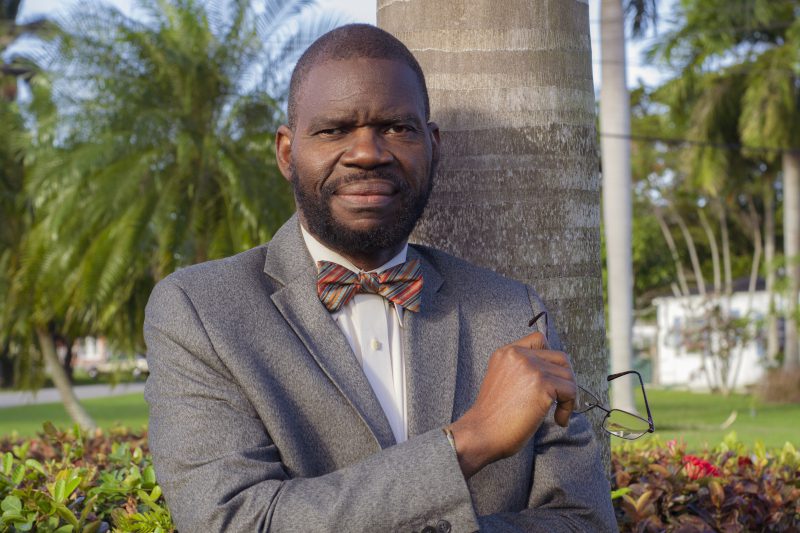
Prof. John Egbeazien Oshodi is an American psychologist and educator specializing in forensic, legal, clinical, cross-cultural psychology, public ethical policy, police, and prison science.
Born in Uromi, Edo State, Nigeria, and the son of a 37-year veteran of the Nigeria Police Force, he has devoted his career to connecting psychology with justice, education, and governance. In 2011, he pioneered the introduction of advanced forensic psychology in Nigeria through the National Universities Commission and Nasarawa State University, where he served as Associate Professor of Psychology.
He currently serves as contributing faculty in the Doctorate in Clinical and School Psychology at Nova Southeastern University; teaches in the Doctorate Clinical Psychology, BS Psychology, and BS Tempo Criminal Justice programs at Walden University; and is a virtual professor of Management and Leadership Studies at Weldios University and ISCOM University. He also serves as President and Chief Psychologist at the Oshodi Foundation, Center for Psychological and Forensic Services, United States.
Prof. Oshodi is a Black Republican whose work promotes individual responsibility, community self-reliance, and institutional democracy. He is the founder of Psychoafricalysis (Psychoafricalytic Psychology)—a culturally grounded framework centering African sociocultural realities, historical consciousness, and future-oriented identity. A prolific scholar, he has authored more than 500 articles, several books, and numerous peer-reviewed works on Africentric psychology, higher education reform, forensic and correctional psychology, African democracy, and decolonized therapeutic models.



























