Opinion
Obasanjo, Oyo Monarchs And Robes Of Fig Leaves -By Ike Willie-Nwobu
Obasanjo left office in 2007 but not before midwifing the short lived presidency of Umaru Musa Yar’adua. When the ship of the People’s Democratic Party (PDP) of which Obasanjo was a founding father, farcically fell apart in the 2015 election, Obasanjo’s red face was somehow tempered by his public renunciation of the party some months earlier.

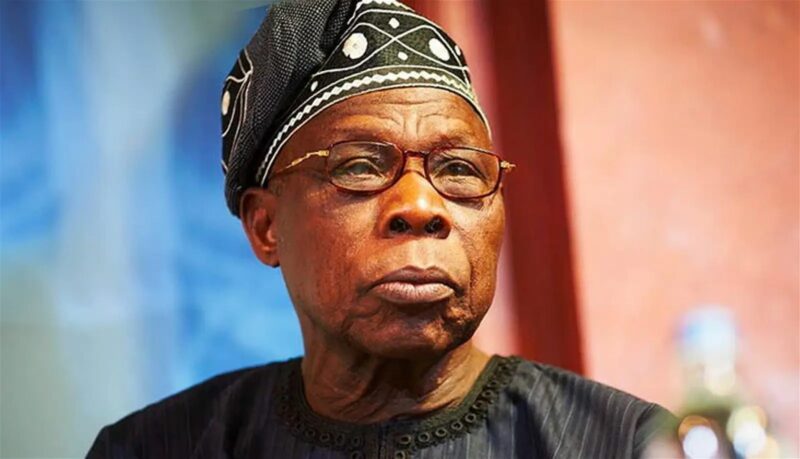
Following what it deemed a public show of disrespect to traditional rulers by former President, Olusegun Obasanjo, the Yoruba Council Worldwide has threatened a lawsuit against the former president if he fails to apologize.
Age is sage or at least should be sage. Wisdom also comes with age, or so the saying goes.
In Africa of which Nigeria is very much a part of, old age is regarded as a blessing as it is widely believed that wisdom comes with age.
In 1999, fresh out of incarceration by the military government of Sani Abacha, Olusegun Obasanjo, himself a former military president, ascended the dizzying heights of Aso Rock to begin Nigeria’s latest romance with democracy.
Tasked with charting Nigeria’s course on this new path, the agenda for Obasanjo was clear – put Nigeria on the strongest footing going forward.
In eight years during which he huffed and puffed, a strong showing as president, was tempered with moments of indiscretion and irascibility such as when he attempted to elongate his tenure in 2006.
That the odious dream breathed its last in the hallowed chambers of the Nigerian Senate arguably remains the greatest legislative triumph in Nigeria’s recent memory.
Obasanjo left office in 2007 but not before midwifing the short lived presidency of Umaru Musa Yar’adua. When the ship of the People’s Democratic Party (PDP) of which Obasanjo was a founding father, farcically fell apart in the 2015 election, Obasanjo’s red face was somehow tempered by his public renunciation of the party some months earlier.
He however, quickly became one of the staunchest critics of the Muhammadu Buhari administration.
Cutting, controversial and confrontational, the former president always seems to have his take on sundry national issues much to the chagrin of his detractors who feel he is responsible for many of Nigeria’s problems.
At an occasion at Iseyin Obasanjo was said to have ordered some traditional rulers at the occasion to stand up and greet the governor of Oyo State, Seyi Makinde, in a way that was primed to humiliate them.
For his actions at the outing, he has since attracted much opprobrium.
In Nigeria, traditional rulers remain critical custodians of customs and traditions. Equally important, they serve as trusted and respected institutions which unite different parts of the society.
When the British colonialists touched down in Nigeria after the Berlin Conference, the resistance they met was eventually broken when they decided to go through well- established traditional institutions. The policy of indirect rule was a roaring success in the North but a spectacular failure in the South, especially in the Southeast.
Little has changed regarding traditional institutions since except that there has been a deliberate design to water down the power and influence of traditional institutions by successive government administrations.
How has this been done? Those who seek to do this have found the carrot and stick approach handy. Sitting government officials usually threaten traditional rulers in many subtle ways.
So when the royal fathers stood and sat at Obasanjo’s ridiculous command like scolded school children, there was a shocking sense in which carefully concealed disrespect and conceit had spilled to the fore.
In the aftermath of the public embarrassment, while Obasanjo has sought to emphasize that he meant no disrespect, the traditional rulers themselves have rallied to salvage what is left of their shredded dignity.
Condemnation and threats have trailed the fiasco.
The face off provides instructive lessons about the place of traditional institutions in Nigeria, and certainly about how they have become objects of caricature to government officials.
Key questions have emerged from the disaster that saw the traditional rulers quickly stand up like scolded school kids and smiling embarrassingly at Obasanjo’s barked command.
Did Obasanjo force the monarchs to stand up? Why did not draw from the dignity of their offices to defy such a ridiculous order? Why did they not quickly turn the tables on him by refusing his orders and returning his disrespect on him?
But perhaps, the occasion was indicative of how much authority the royal fathers have lost in the country. It goes to questions about how they emerge, the links some of them have with insecurity and a general loss of respect and value in the Nigerian space.
Traditional institutions in Nigeria can restore their wounded dignity by at cleaning up their acts, and then by rebuffing the politicians who would readily cast pearls before swine because they have neither self-respect nor self-worth.
Ike Willie-Nwobu,