Africa
Ori Guides Adewolu To The Throne Of Olubadan -By Abdulrofiu Muhammed Temitayo
Traditional councils and government officials might use his coronation as an occasion to renegotiate or reaffirm the structure of the chairmanship. Ladoja, being a seasoned politician and statesman, would likely push for balance and fairness but also defend Ibadan’s traditional weight in Oyo State politics. He could propose a rotational chairmanship, giving the Olubadan, Alaafin, and Soun equal permanent recognition, but rotating who chairs at different intervals.

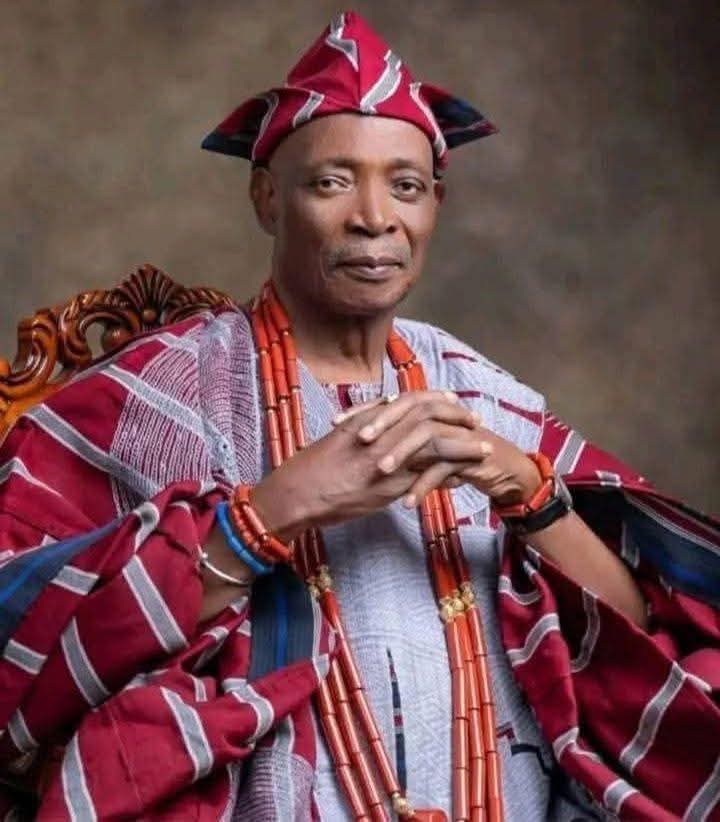
In Yoruba theology, the concept of Òrì (often translated as ‘self-divine’, ‘inner head’, or ‘spiritual destiny’) is one of the most profound elements of belief. It represents the spiritual essence, personal deity, and destiny chosen before birth in the presence of Olódùmarè (God). Every individual carries his or her Òrì as the guiding principle of life—it determines fortune, challenges, achievements, and the fulfilment of one’s divine purpose on earth. Oba Rashidi Adewolu Ladoja’s journey of life illustrates the flexibility of Òrì: that destiny can manifest in multiple spheres: modern governance and ancient tradition. His Òrì charted a course that first gave him administrative experience in political office and later placed him at the pinnacle of cultural authority as Olúbàdàn. Yoruba theology interprets this as the alignment of akunleyan (chosen destiny), akunlegba (bestowed destiny), and ayanmo (immutable fate).
History tends to favour some destiny carriers against the others, even in death. Ibadan was in an electrifying galore over the announcement of the demise of Oba Owolabi Olakulehin on the 7th July, 2025, for no reason other than the new occupant of the throne, Oba Rashidi Adewolu Ladoja, who had been destined to be king. The Ori (self-divine) showcases the metaphysical concepts in Yoruba, which are the choices made in the pre-life, destiny, fate and personal identity. It will be acknowledged that Oba Rashidi Ladoja has appeased the gods of land with his Ori being worshipped and consulted, making things rightfully easy for him to become a chemical engineer, the former governor, senator, seasoned politician, businessman and now the custodian of Ibadan tradition.
Oba Rashidi Adewolu Ladoja joins the league of Yoruba monarchs in Nigeria who held political office before becoming a traditional ruler, the likes of Oba Adesoji Tadeniawo Aderemi, the 49th Ooni of Ife, who doubled as the ex-governor of Western Nigeria; he reigned for 50 years on the ancestral throne of his forefathers. It is a rare benefit when an individual has experience both as an administrator in political office and later as a traditional ruler. The unique combination provides its administrative expertise, political networks, broader perspectives, enhanced legitimacy, and bridge between tradition and modernity. He also set the record as the first civilian governor to be crowned as the traditional monarch in the southwestern part of the country. This is one of the top-notch inner invocations of the ex-military governor of Lagos State and former civilian governor of Osun State, Prince Olokuku of Okuku whenever it is the turn of their Edun royal ruling house to select the next new king of the town.
The coronation of the Oba Rashidi Adewolu Ladoja as the new king of Ibadan would be one of the most historic and prestigious cultural-political events in Nigeria, blending tradition, politics, and social prestige. On the morning of the coronation, the ancient city of Ibadan would transform into a hub of history and celebration. The celebration ground, Mapo Hall, would be decorated with traditional motifs, royal insignias, and Yoruba cultural symbols. Drummers, chanters of Oriki, and Egungun masquerades would herald the day, connecting the living with ancestral heritage. At the centre of the event, Oba Rashidi Ladoja, the 44th Olubadan of Ibadan Land, would be adorned in regal Aso-oke, a beaded crown, and a staff of authority, symbolising the fusion of political leadership and traditional legitimacy.
It will be attended by the President of Nigeria and members of the Federal Executive Council, former presidents and heads of state, and governors across the federation, especially from the Southwest. The political class will show up – senators, members of the House of Representatives, state legislators, party leaders from PDP, APC and other parties where he played key roles, and political associates and rivals alike – marking respect for his unique destiny. Traditional rulers and spiritual authorities will be present to show support to their own, the Ooni of Ife, the Alaafin of Oyo, the Alake of Egba and other Yoruba Obas with Emirs and Obas from across Nigeria, symbolising inter-ethnic respect and leaders of Islamic and Christian faiths offering prayers of blessing. Social and economic elite, captains of industry. CEOs and business moguls who partnered with the new Oba before, during and after his governorship. Yoruba sons and daughters from the diaspora, returning to witness the cultural rebirth. Entertainment and cultural icons, Fuji and Juju legends like King Wasiu Ayinde Marshal (K1), Chief Ebenezer Obey and King Sunny Ade, and Nollywood producers, stars and comedians, blending glamour with tradition and cultural troupes showcasing Yoruba heritage to the admiration of dignitaries.
In imagination, with the presence of the late Baba Lamidi Adedibu (the strongman of Ibadan politics) and Adebayo Alao-Akala (former Oyo State Governor) at the scene of Oba Rashidi Ladoja’s coronation as Olubadan, the atmosphere would have been charged with history, politics, and culture. Baba Lamidi Adedibu, known as the Garrison Commander of Ibadan politics, would have arrived with a dramatic presence. His sprawling entourage, chants of loyalty, and political associates would symbolise the fusion of Ibadan politics and tradition with Adebayo Alao-Akala, with his own charisma and political base, who would bring warmth and a sense of ọmọlúàbí cheer, smiling widely as he often did at public gatherings. In line with Yoruba tradition, with their gesture to the new Olubadan, both of them would humbly prostrate (dobale) before Oba Rashidi Ladoja, setting aside their past rivalries and political differences. The act would show that in Ibadanland, the crown of the Olubadan stands above all political struggles. Adedibu, with his political wit, might offer playful but respectful words like: “Kabiyesi, ki adé pe lórí, ki bàtà pe l’ẹsẹ̀, ki irukẹ̀rẹ̀ pe l’ọwọ́.” Akala, being a former governor, might say, “This is a proud day for Ibadan, a reminder that politics ends but tradition endures.” It will be a symbolic moment seeing the three giants of Ibadan politics (Adedibu, Akala, and Ladoja) in one frame—even though one wears the crown—which would symbolise reconciliation between political authority and traditional authority.
The coming of Tinubu to the state of pace-setter is to bond the long-time friendship of the new king because of the Tinubu–Ladoja political alignment. Before now, as early as 2000, they were not in the same camp, but they shared mutual respect. Both were governors in the Southwest (Tinubu in Lagos, Ladoja in Oyo), navigating Obasanjo’s PDP-dominated politics. As he becomes the Olubadan, his influence goes beyond politics; Ibadan controls a bulk of Oyo’s votes. Any Olubadan has massive moral sway, and Ladoja is not just any Olubadan but a former governor with his own loyalists. He would also play the role of a respected elder who blesses Tinubu’s second-term ambition, bridging rifts in Oyo politics. And the chairmanship tussle among Obas and rivalries between Ibadan, Ogbomoso, Oyo, and Ibarapa blocs would be harmonised under his guidance, securing peace. Traditional councils and government officials might use his coronation as an occasion to renegotiate or reaffirm the structure of the chairmanship. Ladoja, being a seasoned politician and statesman, would likely push for balance and fairness but also defend Ibadan’s traditional weight in Oyo State politics. He could propose a rotational chairmanship, giving the Olubadan, Alaafin, and Soun equal permanent recognition, but rotating who chairs at different intervals.
In some quarters, it was argued that some of the reasons why the 1957 Ibadan Chieftaincy Law was trampled were because the government wanted to speed up some titles and acted beyond what the law (Chiefs Law and 1957 Declaration) allows, the tradition and customary process (kingmakers, succession, etc.) were undermined, and the elevation of chiefs seems to have favoured political interest. The point of reference here is that the elevation of chiefs has been prompted by political interest. Gov. Seyi Makinde was almost crucified for his action, only acting on the predecessors’ stand on the traditional ruler and chiefs in Ibadan.
It would stand as a rare historic moment when a man whose Ori destined him for both politics and tradition receives the crown, with Nigeria’s leaders, elites and entertainers present to honour his journey. Despite political challenges, including impeachment during his governorship, and decades of navigating Ibadan’s unique chieftaincy system, his Òrì sustained him and guided him back to prominence. This resilience embodies the Yoruba saying, “Ori la bá bo, a bá f’orisa sile” — “It is the Òrì we must worship before the orisha.”
Ibadan, ilu Ojo, ilu Ajayi, ilu Ogunmola kerikeri l’ogun. Ibadan, ile Oluyole, omo ajagbin, je ‘karahun. Ibadan, maja maja, to fi kara ‘waju l’eru.
Temitayo writes from Benin city, Edo state and can be reached on muhtay99@gmail.com