Africa
Politics, Governance And The Value Of Time, by Abiodun Komolafe

Governance requires effective time management to thrive. Unfortunately, political systems often waste this precious resource, compromising citizens’ well-being and national prosperity. As a universal currency, time is equally distributed but unequally valued, with marginalized communities frequently bearing the brunt of temporal inefficiencies.
At the politics-time intersection, power dynamics emerge, shaping lives through prioritization, policy and resource allocation. To maximize productivity, strategies like prioritization and goal-setting are crucial, lest poor management leads to missed deadlines and lost opportunities. Historically, societies aligned tasks with natural rhythms, highlighting the tension between short-term gains and long-term benefits, thus underscoring the need for intentional time management in governance.
In Nigeria, the value of time is often perceived as a luxury that only the affluent can afford. The average citizen is caught up in a daily struggle for survival, where time is a scarce resource. The chronic fuel scarcity, endless traffic jams, and inefficient public transportation systems all conspire to waste valuable time. These issues substantially impact the economy, with estimated losses of $1 billion annually
Time plays a critical role in both political participation and environmental sustainability. It is a scarce resource in modern society, and its value is often overlooked until it’s too late. In today’s fast-paced world, we’re constantly reminded to ‘make every second count’ and ‘time is money.’ However, this mantra can lead to burnout and exploitation, as seen in the gig economy, where workers are pushed to work long hours without adequate compensation or benefits. Low-income households spend significant time managing finances, accessing social services and waiting in lines, resulting in severe time poverty. In stark contrast, effective time management can transform lives, as seen in the biblical examples of Joseph and Daniel.
Joseph and Daniel epitomize wise time management. They highlighted the importance of using time effectively to achieve success and fulfill one’s purpose. Despite imprisonment, Joseph interpreted dreams and rose to Egypt’s second-in-command. Daniel devoted himself to study and prayer, interpreted Nebuchadnezzar’s dreams and gained prominence in Babylon. In contrast, Esau, the Prodigal Son, and the servant with one talent squandered their time and ultimately regretted their choices.
Remote work blurs work-personal life lines, while systemic inequalities perpetuate disparities in incarceration rates, opportunities, and marginalized communities’ potential. Governance failures exacerbate this vulnerability, as seen in high-profile cases like the unresolved Chibok girls’ abduction, which has devastatingly contributed to Nigeria’s economic and security shocks. Globally, COVID-19 and ‘Black Lives Matter’ also highlight the unequal distribution of time, underscoring its value and the need for intentional governance.
As a matter of fact, every 14- or 15-year-old student learns in Economics O-Level about the ‘time-value of money’. The principle has its broader applicability beyond financial calculations. It also drives political economy, leadership and governance. Governments allocate and expend resources, which is inherently time-bound. Governments have a limited window to make a meaningful impact, making every moment count. Consequently, evaluating a government’s tenure – essentially an interregnum – hinges on its ability to optimize limited time.
Effective time management requires preparedness, as The Boy Scouts’ motto goes. Unfortunately, governance in Nigeria, like the rest of Africa, falls short due to military interruptions and lack of research. Moreover, most Special Purpose Vehicles (SPVs), humorously described as political parties, assume office without thorough preparations, largely due to the absence of data-driven insights. Coincidentally, Nigeria’s once-thriving Research Departments associated with pre-independence and post-independence political parties have vanished, thus hindering their ability to drive meaningful development and sustainable growth. Is it any wonder why today’s SPVs prioritize personal gain, jobs racketeering and other self-serving interests? While exceptions exist, they are few and far-between. This scenario exemplifies a concerning reality of which structured leadership intervention is crucial to prevent Nigeria’s losing traction and impact.
Nigeria needs leadership that prioritizes economic growth through production and modernization, rather than merely focusing on consumption and jobs for favoured individuals. Presently, Nigeria’s manufacturing sector contributes only 8.23% to the country’s GDP, compared to 25% in South Africa. For a paradigm shift, this leadership should allocate at least 60% of the budget to capital expenditure, guided by performance-based planning and devoid of graft and waste. This is the only way to avert the comic tragedy we have seen in the past few days in Borno State where human negligence, ineptitude and incompetence other than natural forces have triggered off a disaster of monumental proportions.
Governor Babagana Zulum has demonstrated effective administration of resources in Borno State. Nonetheless, the recent disaster necessitates an independent commission of inquiry to investigate the causes of the avoidable disaster. As fate would have it, all the Biblical disasters of yore have now been shown to not be ‘plagues and pestilences’ but the results of human error, incompetence and policy distortions. The Borno catastrophe, which is bound to be replicated in other locations, has demonstrated the need for preparedness and a new approach to governance, based on technical competences and the proactive framework methodology. There’s no alternative!
In today’s interconnected world, governance efficiency is closely tied to technical proficiency. The UK Government showed this foresight when it established the Government Economic Service (GES) in 1964, under Prime Minister James Harold Wilson. This initiative has not only become a cornerstone of governmental efficiency in the UK but also inspired similar efforts globally. To stay competitive, Nigeria should establish a Government Economic and Technology Service, to modernize governance, boost revenue and eliminate waste. Building on this initiative, a comprehensive overhaul of the country’s trade and tariff policies is also essential as we enter the Artificial Intelligence era, this is the minimum expectation.
Specifically, the Board of Trade and Tariffs, chaired by the Federal Minister of Industry, Trade and Investment, should be restructured to include diverse stakeholders, such as representatives from the government, Central Bank of Nigeria (CBN), Organized Private Sector, Civil Society Organizations and Labour. This diverse membership will enable the Board to effectively counteract the manufacturing slowdown and prevent the exit of long-standing companies, some of which have been operational for 75 years. Dangote Refinery’s debacle partly demonstrates how trade and tariff policies are often misinterpreted,
In any case, that Nigeria faces complex governance challenges, which also require a multifaceted approach, is no longer news! For example, the country ranked 145 out of 180 countries in Transparency International’s 2023 Corruption Perception Index. Also in our very eyes, the powerful continues to exploit time to maintain control while the culture of ‘African time’ has refused to shed the toga of tardiness and inefficiency.
To get out of the woods, Nigeria must strengthen institutions, combat corruption and promote transparency. Singapore’s economic transformation, driven by strategic planning and institutional reforms, now serves as a model. Technology integration, like Estonia’s e-governance model, which has saved citizens over 1400 years of working time annually, can also help Nigeria boost efficiency and transparency.
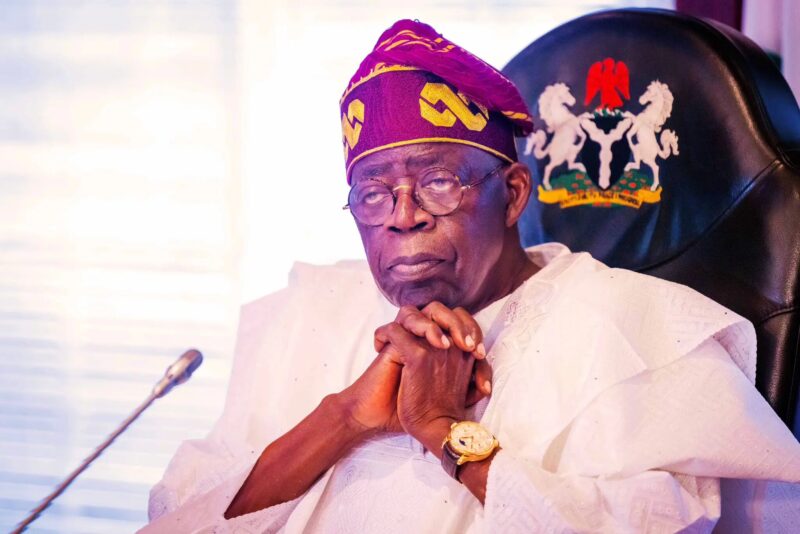
In a memorable statement made on December 20, 1948, Cliff Gladwin proclaimed: ‘Cometh the hour, cometh the man.’ With this in mind, President Bola Tinubu has a historic opportunity to navigate the complex challenges and balance the competing interests currently troubling Nigeria’s destiny. On this sacred space, the president must fight injustice, punish evil and prioritize the needs of ordinary Nigerian, whose existence has been hung up in a long vigil of socioeconomic despair. Surely certainly, few leaders get to operate in a context of disaster and change. For Tinubu, this makes this moment crucial!
May the Lamb of God, who takes away the sin of the world, grant us peace in Nigeria!