Africa
Re: Prerogative of Mercy or Revenge? A Rejoinder to Mr Sam Omatseye -By Ariwoola Samuel Akinwale
How come our prerogative of mercy always throws up high-profile names? We saw this under President Muhammadu Buhari, where two former governors—Jolly Nyame and Joshua Dariye of Taraba and Plateau states, respectively—enjoyed executive pardon after having looted their states blind while in office.


A general outrage followed the recently published list of beneficiaries of the prerogative of mercy by President Bola Ahmed Tinubu. The outrage stemmed from the list’s composition. Many social commentators raised objections about the character of the prospective candidates on that list, among whom the case of Maryam Sanda stood out.
Her case was cited as an albatross to truth and a disservice to justice. However, one piece among many that I have read condemning this popular outrage—Mr. Sam Omatseye’s column in The Nation newspaper this week—struck a different chord.
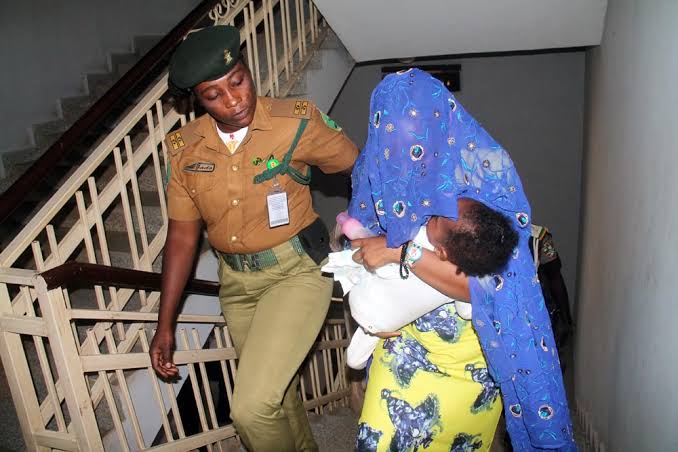
Maryam Sanda, accompanied by a Correctional Officer to Court
In his piece titled “Prerogative of Revenge,” he justified the composition of the prerogative list. Mr. Omatseye’s view is worthy of attention because it represents an unofficial view of the presidential circle on most matters, considering his relationship with that office. There, he raised two objections.
He argues, “One, the prerogative means it is a special power granted by the law. This means the president can exercise it without being questioned.” The writer is right about the former to an extent but erred in the latter argument. The public obviously has the right to its “say,” even though the president can have his “way.” Even so, the president enjoys that special privilege only to the extent that he fulfills the condition of ensuring due consultation with the Council of State.
Furthermore, he contends, “Two, mercy also means the beneficiary (speaking of Maryam Sanda) is not innocent. Mercy is for the sinner, not for the sinned against. In his (the president’s) case, he set up a committee under the Office of the Attorney General, Lateef Fagbemi, and it produced a list of 175 citizens.” Unfortunately, mercy is not for just any sinner, as Mr. Sam would have us believe, for which he cited the Bible copiously. Mercy is always for the repentant sinner. Everywhere Christ extended mercy in the Bible, he preached repentance and instructed the forgiven to “go and sin no more.” It is this conditional aspect of mercy that escaped this writer.
The writer went on to argue, “Those who know her (Maryam) say she has expressed remorse… If justice is revenge, then we are overlooking another definition of mercy. That is, mercy as a rescue effort… Shall we destroy the mother and the two children? Or shall we save the two children with the pardon of a possibly repentant mother?” If these reasons qualify her for mercy, then every nursing mother in our correctional facilities across the country is equally eligible for pardon. If mercy is extended without evidence of genuine remorse or rehabilitation, it becomes indistinguishable from impunity.
Our writer accuses critics of a “prerogative of revenge.” But what the public calls for is not revenge. Only a party to the issue could do that; the public is a neutral party in this case. Critics are only calling for social justice. Ideally, the justice system should be retributive, punitive, deterrent, and correctional in purpose. Why? Failure to observe the above perpetuates crime and lawlessness—a mockery of social order.
This is what is at stake in Maryam Sanda’s case. Do we rely on the testimony of those who knew her and the endorsement of the aging father-in-law, who was not in the equation until the public outrage? The families of the deceased are calling for justice. Truly, we also saw the father of the deceased pleading for mercy for his daughter-in-law, but the voice was that of Esau, from all we know. This is because if the reported relationship between the deceased and his father is anything to go by, his call raises questions.
But we have a case of public distrust toward the authorities concerned here. So, it is a question of the sanctity of the process and the unblemished procedure of the prerogatives exercised by the presidency.
How come our prerogative of mercy always throws up high-profile names? We saw this under President Muhammadu Buhari, where two former governors—Jolly Nyame and Joshua Dariye of Taraba and Plateau states, respectively—enjoyed executive pardon after having looted their states blind while in office.
I return to the questions raised by Mr. Omatseye: “Shall we destroy the mother and her two children?” No. We are ensuring the safety of those children by keeping their mother in penitence. Their safety is at stake with a mother who killed their father in a rage.
Ariwoola Samuel Akinwale wrote this piece from Lagos.
ariwoolaakinwale@gmail.com