
Africa
Rivers: A State of Troubled Waters -By John Kokome
It is hoped that the six-month state of emergency rule imposed on the state by His Excellency, President Bola Ahmed Tinubu which has so far generated mixed reactions from different stakeholders in the country on whether it’s constitutional or not would calm nerves and restore peace, tranquility, and possibly a harmonious working relationship between the two warring factions; the executive arm of government led by His Excellency, Sir Siminalayi Fubara and the legislative arm of government led by Rt. Hon. Martin Amaewhule so that the troubled waters of the state can once again experience peace and make progress.

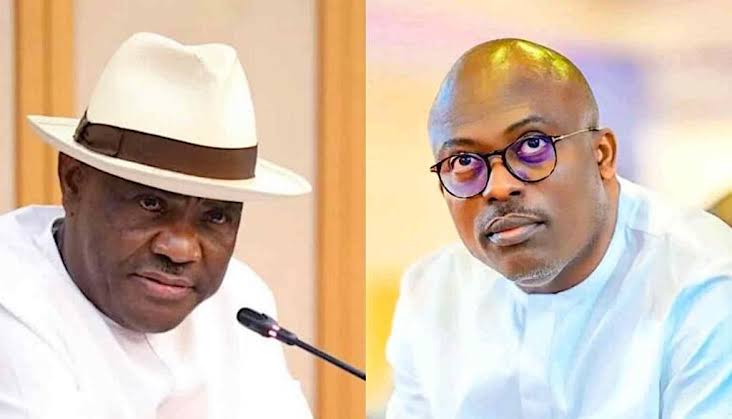
Events in recent times have further shown that all is not well with Nigeria’s structure and governance approach with a special reference to the happenings in Rivers State, where a state of emergency has been declared and is expected to last for six months. The political instability within the polity has pointed clearly to one thing, that the political actors are the major obstacles to the full application of the rule of law and not the law as it were.
A recurrent element in Rivers State’s history is the ongoing political unrest which is the core of the state’s problems. The constant power struggles between state and federal players and the disagreements between governors and their predecessors give the impression that governance in Rivers is more about private conflicts than public service. These wars not only undermine the government, but they also divert attention from important issues like healthcare, education, and infrastructure. Unfortunately, this is not peculiar to Rivers State alone it is a nationwide challenge.
The political leadership crisis that engulfed the state has once again highlighted how brittle its democracy has become. When politicians put consolidating power ahead of growth, the people suffer. Investment is deterred, institutions are weakened, and an environment conducive to lawlessness is created by political instability. It suffices to say that there is an urgent need to continuously build and strengthen the existing institutions against building strongmen who are the major threats to our democracy.
Along with increased insecurity, Rivers State has seen conflicts between political thugs as well as cult violence and kidnappings. The once prosperous business and tourism centre is now associated with uncertainty and fear. The threat of violence is always present for locals, and companies are compelled to either comply with criminal elements or close completely.
The authorities have made numerous promises, but not much has changed. It is common to accuse security forces of being incompetent or complicit in the crisis. The state’s development will be stifled by insecurity until there is a strong commitment to combat crime through community involvement, effective policing, and reform in the justice system. Unfortunately, some of the criminal activities have some political undertones making it more worrisome.
Rivers as one of Nigeria’s top oil-producing states, known for its richness in natural resources and cultural legacy, no doubt is a major economic force in the country, but poor leadership, corruption, and poor management have left the state’s economy in ruins; oil profits that could have been used to build infrastructure and better the lives of its citizens have instead been wasted or stolen; unemployment is still high; and many young people migrate or turn to crime in search of better opportunities. The recent events in the state have once again underscored the long-standing problems that still impede its governance and jeopardise its future.
Port Harcourt, the state capital and popularly referred to as the “Garden City,” has lost most of its former splendour.
Meanwhile, instability and a lack of government support are stifling industries that ought to be flourishing. The state cannot continue down this path. Stability and prosperity must be restored with a purposeful and quick approach. To become a better state, the political actors in the state need to put governance above personal rivalries. Therefore, the people should vote for only leaders who would put their well-being ahead of their political squabbles.
However, security needs to be considered carefully to restore peace and order, law enforcement authorities should be strengthened, local communities should be involved in security activities, and offenders should be held accountable.
And more importantly, economic reforms are critical. Diversifying the economy beyond oil dependence, investing in infrastructure, and supporting small businesses can create jobs and drive sustainable growth. The state must also demand accountability from oil companies, ensuring they adhere to environmental standards and contribute meaningfully to local development.
Rivers State is at a crossroads. It can either continue to be caught in a cycle of crisis or to overcome its obstacles and realise its enormous potential. The public must demand improvement in governance, and leaders must understand that serving the people comes before political domination. That’s the only way Rivers State can transition from turbulent waters to more tranquil and affluent state.
It is hoped that the six-month state of emergency rule imposed on the state by His Excellency, President Bola Ahmed Tinubu which has so far generated mixed reactions from different stakeholders in the country on whether it’s constitutional or not would calm nerves and restore peace, tranquility, and possibly a harmonious working relationship between the two warring factions; the executive arm of government led by His Excellency, Sir Siminalayi Fubara and the legislative arm of government led by Rt. Hon. Martin Amaewhule so that the troubled waters of the state can once again experience peace and make progress.
John Kokome
A Communications Strategist and Public Affairs Analyst writes from Lagos
kokomejohn@yahoo.com



























