Opinion
Russia Guarantees Total Support for Africa’s Security and Increased Bilateral Trade, by Kestér Kenn Klomegâh

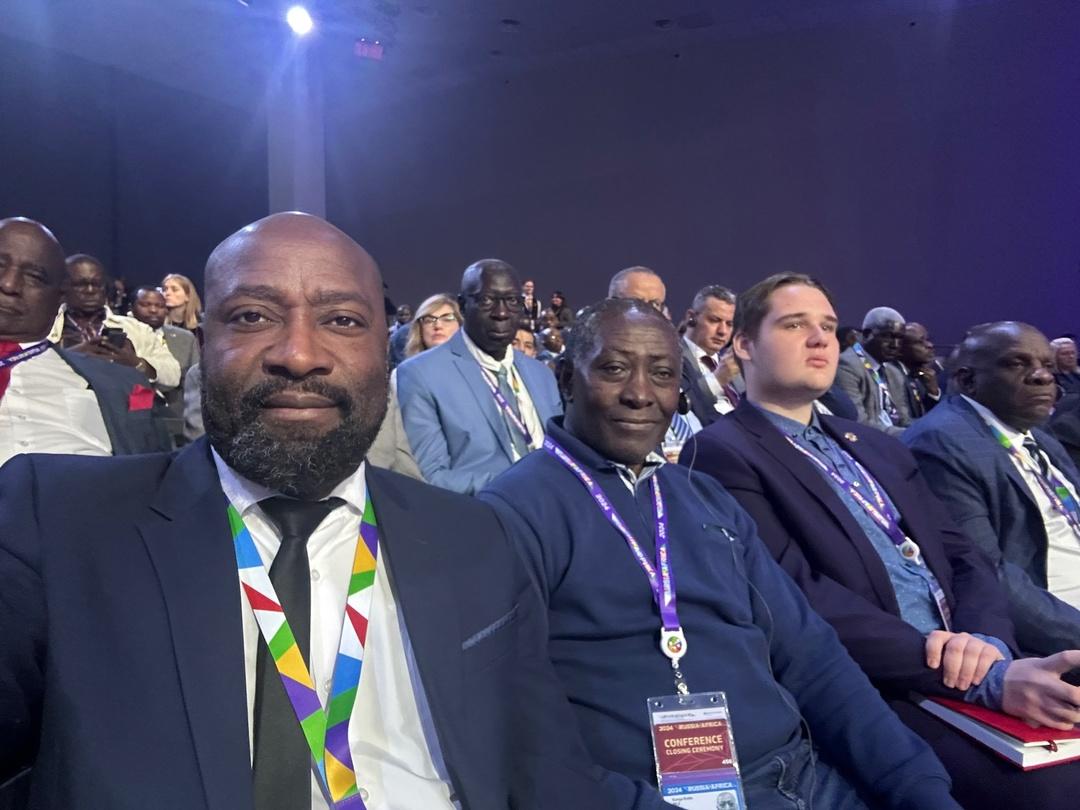
Popular known as Sochi, this southern coastal city hosted the first ministerial conference of the Russia-Africa Partnership Forum early November 2024. The new dialogue format was introduced following the first and second Russia-Africa summits. Under the patronage of Russian Foreign Minister Sergey Lavrov, the first conference, which was attended by more than 40 African foreign ministers and deputies as well as some 1,500 participants, adopted a joint statement pledging to strengthen cooperation in security and economic sectors between African countries and Russia.
At the far end of the conference, on the sidelines, Kestér Kenn Klomegâh took this traditional interview (Q&A) with a focus on practical observations, results and future perspectives from Louis Gouend, founder of Hello Africa and Executive Director of the African Business Club (ABC). The ABC has the primary task to facilitate business for African investors and exporters, and vice versa, and further engages in creating reliable and effective communication channels between African companies and Russian trade regulators. Here are the interview excerpts:
Mr. Louis Gouend, Russian President Vladimir Putin, welcoming the participants of the first Ministerial Conference on Russia-Africa, emphasized that African countries are experiencing a steady growth in authority on the world stage: “By pursuing a constructive, peaceful foreign policy, they play an increasingly significant role in resolving the most important issues on the international agenda.” This, of course, cannot please the West. In your opinion, how much resistance is felt to the emerging multipolar world from the now former hegemon, the United States and the European Union?
Louis Gouend: The question of Africa’s role on the world stage is very important, especially in the context of the emerging multipolar world. Today, Africa, thanks to its natural and human resources, is becoming a key player on the world stage. This is a continent with enormous potential in terms of market, since it is home to more than a billion people, most of whom are young. Such dynamics make Africa not only a market, but also a center of innovation and growth. This growth strengthens Africa’s influence and makes it an attractive partner for leading countries of the world, such as the USA, China, India, Russia, etc. Many African countries are showing resilience and independence in their foreign policy agenda, seeking to avoid falling into the trap of new dependence.
By way of assessment, what were the main results of the Sochi Ministerial Conference?
Louis Gouend: The main results of the Sochi Conference are the strengthening of friendly ties and the development of specific mechanisms of interaction. Russia and Africa signed many agreements in various areas, including energy, agriculture, education and culture. Particular attention was paid to issues of security, education, technology, economics and humanitarian cooperation. These aspects are especially important for Africa, where these issues are still relevant. Following the conference, we can say that cooperation between Russia and African countries is reaching a new level, strengthening their positions in the multipolar world.
Just the other day, Anton Kobyakov, Advisor to the President and Executive Secretary of the Organizing Committee of the Forum for the preparation and holding of events in the Russia-Africa format, said that Russia intended to create an independent financial system that would increase the share of settlements with African countries in friendly currencies to 90% by 2030. I would also like to know your objective opinion, as the founder of the African Business Club (ABC) in Russia, how this will affect the mutual trade of African countries?
Louis Gouend: The creation of an independent financial system, of course, opens up new opportunities for trade between Russia and Africa. This will help minimize dependence on third currencies and reduce possible risks associated with exchange rate fluctuations. In addition, the use of friendly currencies can significantly facilitate financial transactions and deals between African countries, making them more flexible and accessible. This can also stimulate small and medium businesses to enter international markets. Trade turnover between Russia and Africa has reached its historical maximum today, but nevertheless, we still have room to develop.
As further to the above question, in what areas do you primarily see prospects? What else can Africa offer Russia besides the traditional set of products – coffee, fruits, nuts and cocoa?
Louis Gouend: The achieved record trade turnover is just the beginning. In future, the greatest potential for cooperation exists in such areas as energy, infrastructure, mining, innovative technologies and education. Africa can offer Russia resources such as rare earth metals, which are strategically important for high-tech industries. In return, Russia can contribute to the development of infrastructure on the African continent, in investments which will have a positive impact on the entire region.
In our conversation last year, we talked about the acute shortage of information in Russia and African countries and, in this regard, about the work of journalists. What would you say today, has the situation improved at least over the past year?
Louis Gouend: Compared to last year, significant steps have been taken to improve awareness between Russia and African countries. There are many more joint projects and initiatives in the media that try to convey objective information about the state of affairs in Russia and Africa to the audience. We are seeing an increase in interest from journalists and audiences on both sides. This process is gradual, and we are confident that in the coming years it will only intensify, allowing us to put an end to old stereotypes and misunderstandings.