Africa
Singapore’s Leaders Built An Economy; Nigeria’s Keep Building Excuses -By Isaac Asabor
Until Nigerian leaders stop building excuses and start building institutions, the gap between both countries will remain. Singapore’s rise is not an insult to Nigeria. It is a reminder of what leadership, discipline and seriousness can achieve, even with nothing.

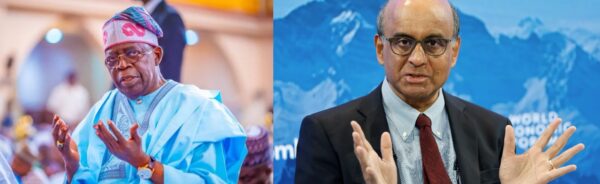
Six decades after independence, Singapore stands as one of the world’s richest countries by income per capita. Nigeria, by contrast, remains stuck in a cycle of underperformance, despite possessing far greater natural and human resources. The comparison between both countries is uncomfortable, but unavoidable. One had almost nothing and built an economy. The other had everything and keeps explaining why progress is yet to be attained.
Singapore’s story is not a miracle. It is a case study in leadership choices, institutional discipline and long-term economic thinking. Nigeria’s problem is not a lack of ideas or plans; it is a chronic failure of execution, consistency and political will.
When Singapore became independent in 1965 after separating from Malaysia, its prospects looked bleak. It was a tiny island with no oil, no minerals, no agricultural hinterland and no strategic depth. Unemployment was high, ethnic tensions were real, housing shortages were severe and domestic capital was scarce. The British military withdrawal threatened thousands of jobs. Many doubted the new state would survive.
Nigeria’s own independence story could not have been more different. Blessed with vast land, fertile soil, oil, gas and a large population, the country entered nationhood with enormous promise. Yet decades later, Nigeria still struggles with mass unemployment, infrastructure deficits, poverty and a fragile productive base.
Singapore’s transformation did not happen by accident. It was driven by deliberate leadership under Prime Minister Lee Kuan Yew and a small but competent group of technocrats who shared a clear vision. Their first conclusion was stark: Singapore could not depend on resources it did not have. Survival required making the country indispensable to the global economy.
That diagnosis shaped everything. The state embraced trade openness welcomed foreign capital and prioritized efficiency in governance. Singapore did not pretend it could develop by importing endlessly or protecting weak local industries behind tariffs. It chose export-led industrialization early and stuck to it.
Nigeria, meanwhile, oscillated between import substitution, protectionism and half-hearted liberalization. Industrial policy has often been reactive, politicized and poorly coordinated. Import bans come and go. Export promotion is endlessly discussed but weakly implemented. The result is an economy that consumes far more than it produces.
Singapore’s leaders understood that markets matter, but markets need direction. The state was interventionist, but not reckless. It planned land use, invested heavily in infrastructure, identified priority industries and enforced discipline in public institutions. At the same time, it protected private enterprise, enforced contracts and guaranteed policy certainty.
In Nigeria, the state often intervenes without coherence. Policies are announced without preparation, reversed without explanation and undermined by vested interests. Investors face regulatory uncertainty, inconsistent taxation and weak contract enforcement. Planning exists on paper, but coordination is poor.
One of Singapore’s most important decisions was to court multinational corporations aggressively. The Economic Development Board, established in 1961, did not wait for investors to come. It went out to attract them, offering tax incentives, world-class infrastructure and a predictable policy environment. Factories producing electronics, chemicals and engineering goods were built to serve global markets.
Over time, Singapore deliberately moved up the value chain, transitioning from labour-intensive manufacturing to high-tech industries, finance and advanced services. This shift was not accidental. It was guided by long-term planning and continuous skills development.
Nigeria talks about value addition but remains heavily dependent on crude oil exports. Manufacturing contributes a modest share to GDP. Industrial clusters and special economic zones exist, but many suffer from poor infrastructure, weak governance and policy inconsistency. Export diversification remains more aspiration than reality.
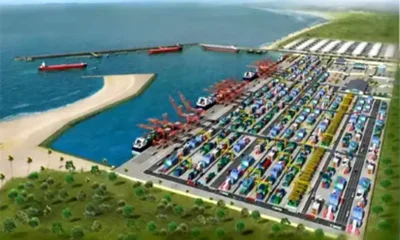
Infrastructure was central to Singapore’s strategy. Ports, airports, roads, public transport and utilities were treated as economic tools, not political monuments. The Port of Singapore and Changi Airport were designed to be among the most efficient in the world, reinforcing the country’s role as a global trade hub.
Nigeria has invested heavily in infrastructure, but often without efficiency or maintenance. Projects are politicized, poorly coordinated or abandoned. Power supply remains unreliable. Logistics costs are high. Ports are congested. Infrastructure spending has not translated into comparable productivity gains.
Land management is another point of contrast. Land was scarce in Singapore, so it was tightly controlled. Through the Land Acquisition Act, the government assembled land quickly for public use, prevented speculation and kept development costs low. This enabled rapid industrialization and mass housing development.
Nigeria, despite abundant land, struggles with land administration. Conflicting laws, weak registries and political interference make land acquisition slow and expensive. Urban planning is weak, contributing to slums, congestion and inefficient cities.
Singapore paired economic growth with social stability. Through the Housing Development Board, the government built large-scale public housing, providing affordable homes to the majority of citizens. Home ownership became a pillar of social cohesion and economic security.
Nigeria’s housing deficit runs into the tens of millions. Housing policies are fragmented, financing is limited and urban planning is weak. Public housing schemes are often politicized and poorly targeted.
Labour relations in Singapore were carefully managed. Trade unions were integrated into a system that prioritized productivity and industrial peace. Wages were linked to productivity, and labour laws balanced worker protection with investor confidence.
Nigeria’s labour market is fragmented and largely informal. Productivity is low, skills gaps are wide and industrial relations are often adversarial. Job creation lags population growth, fueling poverty and social tension.
Perhaps the most decisive difference lies in governance. Singapore adopted zero tolerance for corruption. Anti-corruption laws were enforced regardless of status. Public officials were well paid but held to strict accountability. Recruitment and promotion were based on merit.
Nigeria has anti-corruption laws and agencies, but enforcement is uneven. Corruption remains a major drag on growth, raising costs and eroding trust. Institutions are often weakened by political interference. Merit is frequently subordinated to patronage.
Lee Kuan Yew’s leadership style was tough and controversial. He restricted some freedoms and ruled with a firm hand. But he built a national consensus around development. Citizens were asked to make sacrifices, and the state delivered results.
Nigeria operates in a democratic and pluralistic system. Consensus must be negotiated, not imposed. That makes development harder, but it does not excuse failure. Democracy is not incompatible with discipline, planning or competence. The real problem is the absence of sustained commitment.
Singapore is not a template Nigeria can copy wholesale. Its size, history and political system are different. But its experience exposes Nigeria’s excuses. Singapore had no oil and built an economy. Nigeria has oil and still imports fuel. Singapore planned long-term and executed consistently. Nigeria plans endlessly and resets constantly.
The lesson is not about authoritarianism or imitation. It is about choices. Singapore made hard choices early, enforced them relentlessly and judged success by outcomes. Nigeria keeps postponing hard decisions, blaming history, politics or global forces.
Until Nigerian leaders stop building excuses and start building institutions, the gap between both countries will remain. Singapore’s rise is not an insult to Nigeria. It is a reminder of what leadership, discipline and seriousness can achieve, even with nothing.