Africa
Still on Tinubu’s Economic Tax Reform, by Abiodun Komolafe

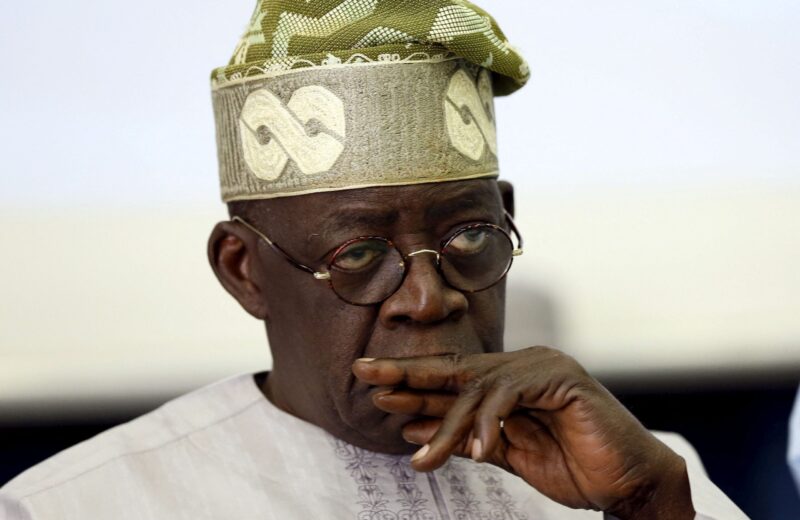
Nigeria’s tax reform is underway with four Executive Bills currently before the National Assembly. These bills are the ‘Nigeria Tax Bill’, which replaces existing tax law with a modern framework; the ‘Nigeria Tax Administration Act Amendment Bill’, which seeks to strengthen the enforcement powers of the Federal Inland Revenue Service (FIRS); the ‘Nigeria Revenue Service Bill’, establishing an independent revenue service; and the ‘Joint Revenue Board Establishment Bill’, for the purpose of fostering inter-agency collaboration.
According to Zacch Adedeji, the FIRS Executive Chairman, the reform focuses on reducing the number of taxes paid by Nigerians. This significant transformation under President Bola Tinubu’s administration also seeks to promote transparency and accountability, aligning with international tax standards and encouraging voluntary compliance. The ultimate goal is to increase simplicity and efficiency in tax administration, broadening the tax base and improving government savings.
The FIRS chairman emphasized that the reform is designed to “tax fruits, not seeds, returns, not investments.” It is meant to focus on prosperity rather than poverty. Its mission is to prioritize economic growth, job creation and poverty reduction. The implementation timeline for this reform includes the passage of Executive Bills and the rollout of digital tax filing systems in the short term (2023-2024), streamlining tax regulations and broadening the tax base in the medium term (2025-2026), and evaluation and refinement of tax reform policies in the long term (2027-2030). The success of the reform hinges on effective implementation, stakeholder engagement and continuous monitoring.
Nigeria’s economic diversification and industrialization efforts include key initiatives like the Nigerian Industrial Revolution Plan (2014), Economic Recovery and Growth Plan (2017-2020) and Presidential Enabling Business Environment Council (PEBEC). Sector-specific programs include Nigerian Content Development and Monitoring Board (oil and gas), Bank of Industry (SME financing) and Nigerian Export Promotion Council (non-oil exports), collectively driving growth, diversification and sustainability.
The Nigerian government is also said to be proposing a 5% tax on telecommunications as part of a broader bill to overhaul the country’s tax framework and boost non-oil revenue. According to sources, this tax will apply to postpaid and prepaid services regulated by the Nigerian Communications Commission, as well as gaming, gambling, betting and lottery services. The goal is to widen the revenue base, especially considering the rapid growth in the telecoms and betting sectors.
As Nigeria seeks to diversify its revenue streams and address fiscal challenges, the tax implications for telecom companies and consumers remain a concern. Already, telecom operators have been complaining about multiple taxes and levies, which they claim are affecting their profitability. So, the additional 5% tax may lead to higher tariffs for consumers and reduce investment in infrastructure expansion and modernization. As a matter of fact, telecom companies like MTN have been seeking approval for a tariff increase to offset costs.
In all, Tinubu’s latest reform aligns with the principle of progressive taxation which has become the norm globally. To this end, the position should be supported. Unfortunately in Nigeria, the least enabled have always borne the burden of taxation; and we cannot build a competitive economy on that basis, for it only means that the least enabled will not have the disposable income to purchase goods and services which is a serious disadvantage. It has nothing to do with morality. Taxation must be progressive. By good fortune, this reform is being handled by the All Progressives Congress-led government.
From time immemorial, those who earn more pay more because, after paying, they still ‘enjoy’ proportionately. After all, it is they who need more services like security and infrastructural networks than the less well-off. So, we have to take a holistic view of the entire tax framework in Nigeria. The taxation burden on the mass of the people is proportionately high. Very dangerous! It’s going to non-state revenue collectors, which reflects the fact that Nigeria’s not just a weak but also a fragile state.
As Nigeria embarks on this transformative journey, it is crucial that all stakeholders – policymakers, businesses and citizens – work together to ensure the tax reform policies achieve their intended objectives and propel the country towards sustainable economic growth and development. In contrast with Nigeria’s tax-centric approach, countries like South Korea and Singapore achieved rapid industrialization through targeted investments. Successful progressive tax systems, like Sweden’s, also combine high tax rates with robust social welfare and infrastructure investments. Ghana is following suit with its ‘Ghana Beyond Aid’ agenda. The country is transitioning to production-driven growth to boost expansion, reduce tax reliance and create jobs, mirroring successes in innovation, export-led growth and manufacturing. Rwanda’s transformation from taxation to production-driven growth also offers valuable lessons.
Tinubu’s economic tax reform requires strategic communication, incentives, expanded social services and clear assurances to succeed. Effective public relations will mitigate resistance. To overcome opposition, the administration must build trust through transparency, stakeholder engagement and consistent messaging. This will address concerns, foster support and minimize resistance. FIRS should address corruption and loopholes via the Anti-Corruption and Transparency Unit (ACTU).
Coincidentally, the president’s tax reform is coming within the backdrop of the award of the 2024 Nobel Prize for Economics to James Robinson, Simon Johnson and Daron Acemoglu. Obviously, it is the most important Nobel Prize awarded in decades. Robinson, Johnson and Acemoglu’s research shows that no country can develop without strong institutions. Nigeria has very weak institutions and that’s the key source of its underachievement. The taxation system is a revelation of its fragile state. Even by the time of the birth of Jesus Christ centuries ago, the issue of tax was a critical factor throughout the Roman Empire. There were tax disputes, inducing revolutionary fervour in Judea. Any modern state must have a strong tax framework to keep the trajectory of the social contract.
The trio, whose diligent research won them the Nobel Prize, conclusively showed that a strong tax collecting system, enabled by strong institutions such as the Judiciary as well as a vibrant Civil Society is the ingredient for success in the race for development. They also showed that most of Nigeria’s institutions such as the Independent National Electoral Commission (INEC) are just pantomimes. Most importantly, they argued that democracy is a better model for achieving sustainable development than autocracy. India, for example, may eventually outperform China because of this; and, in many ways, it’s already doing so! What are we saying? Democracy makes a country more innovative and vibrant but we must have strong, independent institutions of the state in order to sustain and deepen the democracy.
Again, Tinubu’s tax reform should be supported because it’ll not only deepen the country’s democracy but also deepen the awareness about the social contract. Since it’s a progressive taxation, it’d lead to a better social cohesion and stability of the sort that’d attract long-term investments at home and abroad which will lead to sustainable development and ‘life more abundant for all’, as the Action Group (AG) stated in its 1951 Manifesto.
AG’s achievements are best illustrated by the tax revolt of 1961 when scores of people were arrested in the Western Region for protesting against an attempt by the regional government to reduce taxes. Instead of cheering the respective reduction in taxes as was to be expected, they saw it as inadvertently leading to a limitation on their access to health and education, which shows that they understood the ethos of the social contract. It should have built upon such enlightened self-interest and ‘better late than never’. Tinubu should reignite this framework. If he does, the verdict history will portray him as the fulcrum of a path-breaking, game-changing administration.
May the Lamb of God, who takes away the sin of the world, grant us peace in Nigeria!
*KOMOLAFE wrote in from Ijebu-Jesa, Osun State, Nigeria (ijebujesa@yahoo.co.uk)