Africa
Sudan Walking Hand-in-Hand through History with Russia -By Kestér Kenn Klomegâh
Sudan, situated in North Africa, with a coastline bordering the Red Sea, has also become an object for rivalry and competition between global powers, each vying in investment and control of its usage. Rich mineral resources are available in Sudan, and yet the population suffers from abject poverty.

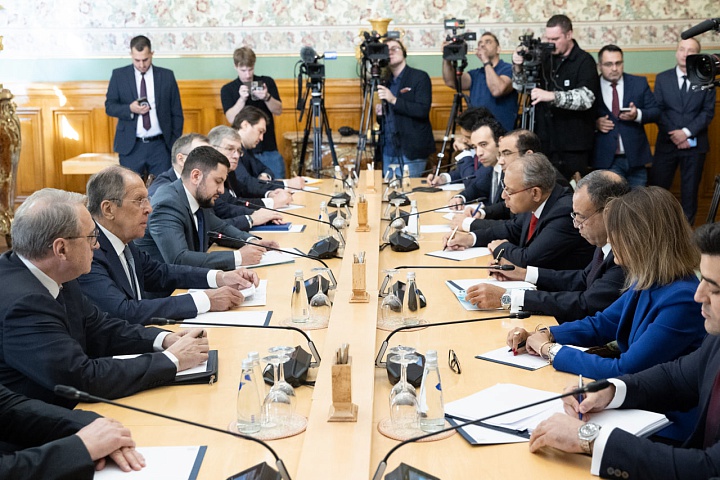
Sudan’s Ambassador to the Russian Federation, Mohammed Eltigani Sirrag, has given an insight into the current Russia-Sudan’s relations, provided a comprehensive reflection on the landmark achievements over the past few years, which reaffirmed the possibility to raise bilateral ties to a more meaningful partnerships in the coming period. With the forthcoming third summit scheduled for October, Sudan’s government delegation to be headed by President , there are hopes for signing new agreements on energy, trade and investment, food security, military-technical issues relating to peace and security in the region of Horn and East Africa.
It has been the outstanding diplomacy posture, to reiterate and underline Moscow’s role in defending the sovereignty of Africa, and on the basis that it supported Africa in its liberation movements, which was followed by training thousands of specialists for the continent. But, the Soviet’s collapse in 1991, witnessed the sudden exit of Russia and it abandoned an estimated 380 infrastructure projects across Africa. Russia’s to return, and back to Africa took more than two decades, until the first Russia-Africa Summit held in 2019.
Russia’s struggle to assert its economic landmarks is still fraught with gaps, while its diplomacy of return is full of symbolism, and a display of soft power, according to public interpretations. Some experts say Russia is fully-fledged satisfied with its huge untapped resources and consequently does not need Africa. With global competition and geopolitical cum market rivalry, Russia has, as a result, shifted from socialism to capitalism. Russia is simply not a charity state or organisation. It has, therefore, taken noticeable steps to earn revenue by transfering its technology to Africa, Russia has moved to increase export of grains, chicken meat and other agricultural products to Africa, and has intensified its military-technical services to African regions, such the Horn of Africa and the Saharan Sahel region. It has complete access (without local monitoring) to exploiting natural resources in exchange (barter system) for supporting Africa’s peace initiatives under the “Africa’s solutions to Africa’s problems” put forward by the African Union (AU).
Mohammed Sirrag, in an indepth interview with New Eastern Outlook, in July 2026, praised Russia’s contribution to Sudan’s sovereignty, and provision of training and education during the Soviet era. Based on the 70th anniversary of bilateral diplomatic relations between the two: Russia and Sudan, the ambassador expressed the readiness for investment projects, and pointed to the growing numbers of Sudanese students in Russia. Due to the political instability, these student, upon completion of their studies, will move on to find ‘greener pastures’ in the United States and Europe. Worse of it, Russia does not attached any preference to retain Africa’s best talents and these graduates.
With Russia-Africa Summit, as one of the most important mechanisms for renewing aspects of bilateral cooperation between African countries and the Russian Federation, Mohammed Sirrag, reassured Sudan’s official participation. Sudan participated with a high-level delegation in the first and second summits. “We expect the summit’s outcomes to be significant in advancing bilateral relations between Africa and Russia, on one hand, and between Sudan and Russia on the other hand. From our perspective, we would like to use Russian technologies in the industrial, economic, and commercial sectors, while the Russian side could benefit from the resources of our country. We are satisfied with the current level of bilateral relations, as we cooperate in various political, economic, trade, and cultural fields,” he told the interviewer, Yuliya Novitskaya, from New Eastern Outlook.
Last September 2025, the eighth session of the Joint Intergovernmental Committee was held with broad participation from the Sudanese and Russian economic and business sectors. A final protocol was signed, encompassing important projects in the energy, oil, mining, infrastructure, transport, and other sectors that will contribute to the reconstruction phase in Sudan. The Sudanese government is preparing for the summit, and the participation of Sudanese leader, Abdel Fattah al-Burhan, has been confirmed. This will provide an opportunity for dialogue and discussion on various topics to strengthen the bilateral relations between the two countries.
According to the report, the interest of Russian companies in investing in Sudan comes from the generally positive and promising atmosphere of bilateral relations. The political leadership in both countries has worked to build solid bridges that have paved the way for interaction between the economic and commercial sectors. During the past few years, records show official visits have been exchanged between Russian and Sudanese companies, and agreements and memoranda of understanding have been signed not only in the agricultural and industrial fields, but also in banking, energy, oil, minerals, infrastructure, transportation, and many other spheres.
With regards to the cultural and academic cooperation, that aspect of the bilateral cooperation has taken on a new dimension, as the number of young Sudanese studying in Russian universities and institutes has increased, whether at private expense or as scholarship students. In this context, Mohammed Sirrag, explained that the Russian government has raised the scholarships for Sudan to 40% in appreciation of the level of bilateral relations, and 140 Sudanese students will be accepted for the academic year 2026-2027, according to what was announced by the Russian side.
In addition to the cultural aspects, Sudan organizes occasionally, cultural events, exhibitions, and conferences in Russian universities and other cultural centers to deepen the humanitarian and cultural dialogue. For all these, Sudan has been showing great interest in cooperating with Russia, in its pursuit for a new global architecture, and to confront existing challenges. “We see that there is a shift in the awareness of the new generations on the African continent, as they clearly express their opposition to the neocolonial policy practiced by some Western countries and seek equal relations at all levels, the Sudanese ambassador emphasized in his July interview. With the current changes in Africa and international transformations, on a wider scale, Sudan strongly believes in Russia’s foreign policy principles—namely, equal sovereignty, respect for mutual interests, and non-interference in the internal affairs of African countries.
Sudan, currently engulfed in an internal ethnic and political power conflict, shares territorial borders with Central African Republic, Chad, Libya, Egypt, Eritrea and Ethiopia, and with South Sudan. The decades-old conflict has seriously caused great hardship for the pastoralists of Sudan, since the exit of Omar al-Bashir as president. Until today, Sudan’s agricultural output is mostly dedicated to internal consumption. It supplements local production with heavy food imports and donations. As a result of the worst war situation, the World Food Programme released a report, on 22 February 2024, saying that more than 95% of Sudan’s population could not afford a meal daily. The population of Sudan was estimated to be estimated at 50 million people in 2025.
Sudan, situated in North Africa, with a coastline bordering the Red Sea, has also become an object for rivalry and competition between global powers, each vying in investment and control of its usage. Rich mineral resources are available in Sudan, and yet the population suffers from abject poverty. It has had troubled relationships with many of its neighbours and much of the international community, owing to what is viewed as its radical Islamic stance. Meanwhile, Russia’s remote aim is to take advantage for its ‘military-technical cooperation’ and earn revenue from export of its weaponry and military equipment, and has therefore, shown support for the leadership of the Transitional Military Council, headed by Abdel Fattah al-Burhan, in Khartoum. According to Mo Ibrahim’s latest governance index, Sudan is, at the bottom of the list, the 6th least democratic country in Africa.