Africa
Tackling the Menace of Abandoned Projects: Peter Mbah’s Example, by Mon-Charles Egbo

Each time the issue of cutting costs is governance is raised, most attentions go to the public officials’ salaries and allowances, including their retinue of aides and vehicles. Another popular area of focus is the Steve Orosonya Report which recommended pruning down the number of ministerial departments and agencies by scrapping or merging some of them.
No doubt, these two instances are valid, especially given the prevailing dire economic situation in Nigeria. But there is yet another critical aspect that is mostly overlooked.
That is the menace of abandoned projects. It is largely downplayed in national discourse yet it portends a great threat to the infrastructural and economic development of any nation.
Among other several causes, lack of funding, poor budgeting, litigations and corruption account for project abandonment. Similarly, its numerous effects include creating avenues for economic wastage, providing hide-outs for insecurity or criminality as well as breeding grounds for dangerous animals and then propagating poor environmental aesthetics and hygiene. Abandoned health facility projects are a threat to the lives of the citizenry. Abandoned educational projects deprive the citizens of the opportunities to develop and enhance their living standards. Then, of course, the implications of abandoned roads, housing and electricity as well as industrial developmental projects are numerous.
Put succinctly, abandoned projects constitute wasted opportunities for national development.
Hence, a responsive government does not play politics or pay lip service to this issue of great concern. A people-oriented government is dispassionately concerned about employment and wealth creation opportunities including in some cases, lives, lost due to the absence of these basic amenities. It is not certainly about politics or about who initiated the projects. It is about the intentions and inherent benefits for the economy or end-users.
This is the reason well-meaning Nigerians lauded the recent decision of the 10th Senate to set up an ad-hoc committee to investigate the reported case of 11,866 projects abandoned by the federal government since Nigeria’s independence in 1960. Not just, perhaps, since this republic, but since 1960!
The question on every lip was: why would successive governments allow such a humongous waste of public resources to grow to this alarming level?
One can only imagine the amount of money that will be saved and invested productively if only the government can deploy sufficient will to make a policy against initiating fresh projects in sectors where there are existing abandoned ones.
For instance, a forward-thinking governor should identify and seek to complete abandoned projects in their domain that are of strategic socio-economic importance. It does not matter whether they were initiated by the federal government or previous state governments. This they can do either through partnership or requesting a refund upon completion. In an extreme case, they can approach the federal government with a request to convert such abandoned projects to state use, depending on their natures.
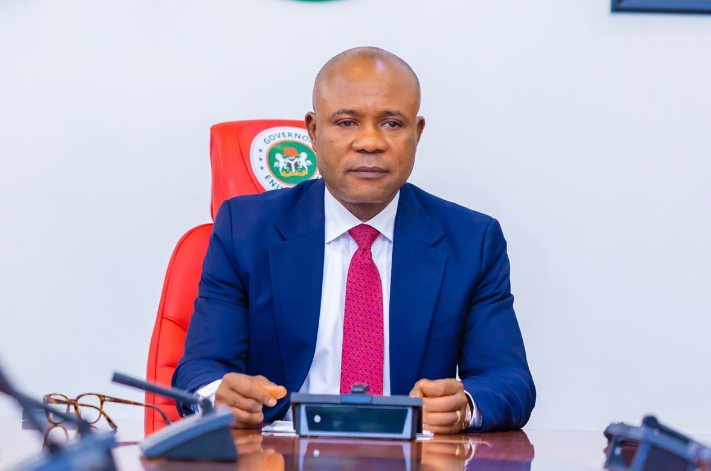
Hence, the governor of Enugu State, Peter Mbah, recently earned widespread approvals for demonstrating a high level of strategic thinking and prudence in governance. He offered to collaborate with the Nigerian Communications Commission to see to the completion of the Digital Bridge Institute which was abandoned for over a decade along the Ibagwa-Ugwuogo-Opi-Nsukka Road in the state.
This project was proposed to become the South-East training centre for manpower and expertise in the communications industry.
It was facilitated by Senator Gilbert Nnaji. Motivated by emerging superior opportunities, he sought to make it the Southeast campus of the first African University of Information and Communication Technology. A bill on his name to that effect was ongoing before the termination of the 8th Senate.
Meanwhile, this visionary initiative received an impetus from the Muhammadu Buhari administration. The then Minister of Communication, Adebayo Shittu, had announced that “we already have the Digital Bridge Institute, which is for short-term training programmes in six locations across the country and we will transform this institute into the ICT University of Nigeria. This unique university will, by God’s grace, take off effectively in September 2017 and will be run as a Public Private Partnership with the best business and entrepreneurship models.”
He added, “I have engaged with several stakeholders at the international level – Facebook, Motorola and Ericson – and I am still talking to more stakeholders. We are encouraging them to come and adopt the respective university campuses as their own. I am happy to report that this project is receiving a global boost and endorsement. The committee set up has been working round the clock on the realisation of this objective, and has indeed submitted its final report. A vice chancellor and other senior officials will soon be appointed”. He was later to visit Enugu to ascertain the viability of the project.
Nine years down the line, nothing has happened. Again, after eight years of Ifeanyi Ugwuanyi and one year of Peter Mbah respectively as governors of Enugu State, the project remained abandoned, despite being almost completed. Instructively, the project got to its present stage of completion when Sullivan Chime was concluding his second term in office.
This informed the accolades that trailed Peter Mbah’s display of uncommon will and acumen. As a progressive-minded leader, he saw the overriding need to recover the wasted opportunities and create more, for the oncoming generations by extending a hand of fellowship for the ultimate realization of the dreams of the project.
After he met with the executive vice chairman of the Commission, Aminu Maida, the governor announced that “our discussions focused on strategic initiatives to enhance collaboration for the advancement of Enugu State and the nation at large. We deliberated on several key projects, including the completion of the Digital Industrial Park in Enugu State, which is poised to become the South-East’s innovation hub. We also discussed ensuring that the Digital Bridge Institute is finalized and commissioned, subsequently exploring plans on transitioning it to a digital skills university or institute of technology”.
It is also noteworthy that Mbah has since commenced works at the International Conference Centre which was initiated by the government of Chimaroke Nnamani and abandoned in 2007.
This is a rare mix of leadership, pragmatism and patriotism at play. It is an open challenge for the other governors to look around their states for possible avenues for collaboration with the federal government, in the overall interests of the masses. Similarly, it is a statement to the effect that legislators should be true agents of meaningful development for their constituencies and states. In their core functions of representation, law-making and oversight, their focus should be on the things that offer life-enhancing opportunities for the people.
In this regard, Senator Gilbert Nnaji stands out and deserves commendation for thinking home. He has since left public office but the products of his visionary leadership are still visible and impactful.
Apart from the DBI project and quoting from a credible source, “as Chairman of the Senate Committee on Communications, Nnaji contributed immensely towards Communication Technology development and advancement in the country. Through his legislative interventions and in furtherance of his ideology that it is through qualitative technology education that Nigeria can attain a knowledge-based economy, he sponsored a motion on the Integration of ICT in the Secondary School Curricula and also a bill for an Act to Establish the Information and Communication Technology University of Nigeria”.
Records also reveal that “added to his numerous landmark investments in human capital development, Senator Gilbert Nnaji” ensured that all the tertiary institutions in Enugu State, both private and public, including the teaching hospitals, are equipped with various kinds of ICT facilities for qualitative teaching and learning. He used 58 post-primary schools to demonstrate the efficacy of ICT laboratories in technology education.
Commenting on this initiative by Peter Mbah to complete the DBI project, Senator Nnaji said “I am not only happy but my heart is full of joy. It is with a sense of fulfilment that I received the good news. Although I am not surprised that my brother and governor, Dr. Peter Ndubuisi Mbah, is making this positive move. When you see a true leader, nobody will tell you. If you have an opportunity to listen to his dream and vision for our Enugu State, you will agree with me that he is indeed on a rescue mission. So, I am overjoyed and grateful to God that the dream behind the project is becoming a reality”.
On why the previous state governments could not look in that direction, he added that “our people say that God’s time is the best. So, there is no need to go back to history. Peter Mbah has done the needful and the people of Enugu State and Nigeria will never forget him for this singular show of wisdom and foresight. That is how governance should be. Am sure that other legislators will now be encouraged to bring more developments home”.
Indeed, the joy of post-public service life is to sit and see how your legacies are serving the interests of the people.
So once again, as we celebrate Governor Peter Mbah for his display of visionary leadership and prudence in governance, Senator Gilbert Nnaji, with this and many other legacy accomplishments, deserves our commendation.
But this is just to wish him a happy birthday as he turns 58.
Egbo writes from Abuja.