Africa
Thank You, Governor Zulum -By Hadiza Nura Muhammad
As you continue this journey, may your strength never waver, and may your vision continue to light the path for other leaders across Nigeria. In a nation desperate for change, you have proven that it is possible.

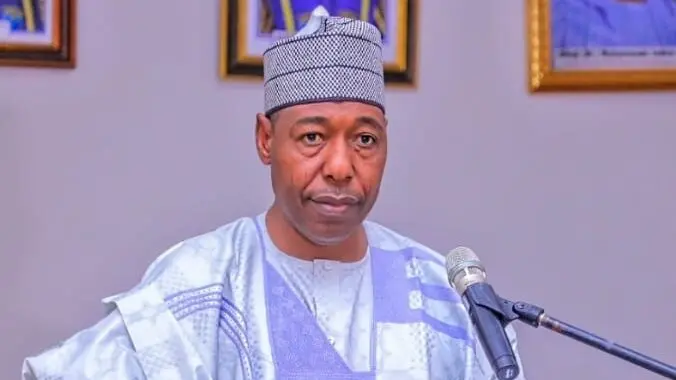
In a time when political leadership across Nigeria is often associated with broken promises and failed institutions, one man continues to stand out not only for his vision but for his unwavering commitment to service — Professor Babagana Umara Zulum, the Executive Governor of Borno State. From the ashes of conflict and the ruins of despair, Zulum has emerged as a symbol of hope, resilience, and purposeful governance. And for that, the people of Borno — and indeed, Nigeria — owe him a heartfelt thank you.
Born and raised in the same soil that now bears the scars of over a decade of insurgency, Zulum knows firsthand the suffering of the common people. Yet, instead of watching from the comfort of government houses, he has taken leadership as a personal mission. The stories of his unannounced visits to schools, hospitals, IDP camps, and rural communities are legendary. In a country where governors often travel with large convoys and long speeches, Zulum travels light — and acts quickly.
“I never thought a governor would walk into our school without warning, sit on a broken bench, and ask us what we need,” said Hauwa Mohammed, a teacher in Konduga. “But Governor Zulum did. And within two weeks, we had chalk, new boards, and a promise of more teachers — which he fulfilled.”
Under Zulum’s leadership, Borno State has witnessed a steady return to stability, despite the persistent challenges of Boko Haram and ISWAP attacks. His strategy of combining military support with humanitarian outreach and infrastructural development is a model other states in crisis zones now study. Thousands of internally displaced persons (IDPs) have been resettled in safe, dignified housing projects across local government areas. Schools are being rebuilt. Roads are reopening. Markets are being revived.
In the education sector, Zulum’s administration has recruited over 1,000 qualified teachers, reconstructed more than 150 schools, and distributed learning materials across the state. He declared education a top priority, and he is matching words with action. Children who once roamed the streets of Maiduguri are now returning to classrooms — not because of pressure, but because of opportunity.
“Governor Zulum came to our IDP camp himself. He asked about our children’s education and health. That day, we saw he is a leader who listens,” said Mama Ya Kura, a displaced mother in Monguno. “He gave us not just food — but dignity.”
Healthcare, too, has seen a dramatic improvement. Zulum’s government has constructed and equipped dozens of primary health centres, especially in hard-to-reach communities. Mobile clinics have been deployed to serve those who cannot travel, and medical personnel are being incentivized to work in rural areas. His goal is simple: health should not be a privilege but a right.
One of Governor Zulum’s most admirable qualities is his refusal to tolerate corruption or incompetence. He has publicly called out underperforming commissioners, sacked ghost workers, and investigated contractors who abandoned projects. While other leaders hide behind bureaucracy, Zulum acts with integrity and transparency. He is not perfect — no leader is — but he has shown time and again that he is accountable.
For women and youth, Zulum has introduced empowerment programs, vocational training centres, and startup grants that give people a second chance at life. In Gwoza, Bama, Damboa, and Dikwa, women who once lived in fear now own tailoring shops, petty businesses, and poultry farms — thanks to the state government’s targeted interventions.
Zulum has also not forgotten the traditional institutions that form the backbone of community life. He works closely with emirs, religious leaders, and local elders to ensure peace-building is inclusive and rooted in cultural understanding. His approach to leadership is not just top-down — it is community-driven.
Even outside Borno, Governor Zulum is earning national and international recognition for his courage, humility, and results-oriented leadership. He has received numerous awards for good governance, including recognition from the United Nations and international NGOs. But to the people of Borno, the best award is his presence, his action, and his empathy.
Thank you, Governor Zulum, for showing that leadership can still mean service. Thank you for standing by your people, not just in times of celebration, but in times of crisis. Thank you for walking with the wounded, for speaking up for the voiceless, and for working — every day — to rebuild our beloved Borno.
As you continue this journey, may your strength never waver, and may your vision continue to light the path for other leaders across Nigeria. In a nation desperate for change, you have proven that it is possible.
Thank you, Governor Zulum. Borno is proud — and grateful.
HADIZA NURA MUHAMMAD IS A 300 LEVEL STUDENT FROM MASS COMMUNICATION DEPARTMENT UNIVERSITY OF MAIDUGURI.