
Africa
Out-Of-School Children In Nigeria Is Not Islamic Or Christian Teaching -By Maryam Muhammad
Activists argue that religious institutions must play a more active role in reversing this trend. Some Islamic schools (tsangaya) and church-run missions are beginning to incorporate formal curriculum into their religious teachings — a hopeful sign of integration. But more needs to be done. If mosques and churches became true champions of education, Nigeria could witness a cultural shift where education is no longer seen as optional, but as a spiritual and societal obligation.

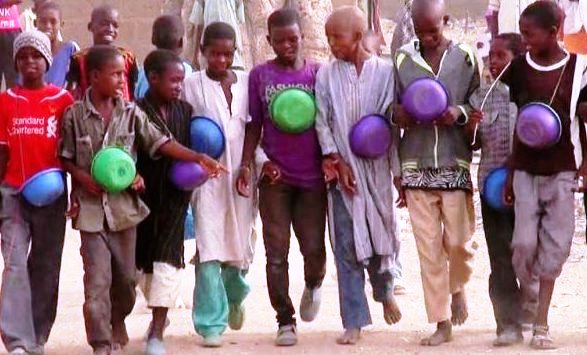
In a country where religion is deeply woven into the fabric of daily life, it is ironic — even heartbreaking — that millions of Nigerian children are out of school. According to the United Nations Children’s Fund (UNICEF), Nigeria has one of the highest rates of out-of-school children globally, with over 10 million children out of the classroom. Yet, both Islam and Christianity — the two dominant religions in Nigeria — strongly emphasize the importance of education. The question, therefore, is not whether religion supports education, but why so many Nigerian children remain out of school despite religious teachings that advocate learning.
From the Quran to the Bible, the instruction is clear: the pursuit of knowledge is not optional — it is a duty. Prophet Muhammad (SAW) is reported to have said, “Seeking knowledge is an obligation upon every Muslim.” Similarly, the Bible in Proverbs 4:13 urges believers to “Hold on to instruction, do not let it go; guard it well, for it is your life.” In both Islam and Christianity, education is seen as a path to understanding, spiritual growth, and community development. Denying children education, therefore, is not only a socio-economic failure — it is a betrayal of religious principles.
Despite these teachings, the reality in states like Borno, Kebbi, Katsina, and Zamfara tells a different story. Decades of insurgency, poverty, poor infrastructure, and cultural misinterpretations have left thousands of children — particularly girls — without access to formal education. In the northeastern region, where insecurity has crippled educational institutions, children are forced to stay at home or roam the streets hawking goods, rather than learning in a classroom.
“I wanted to be a teacher,” said Hafsat, a 14-year-old girl from Maiduguri whose school was closed after a Boko Haram attack in 2019. “But my parents said it’s not safe, so I stay at home and help my mother cook and clean.” Hafsat’s story is tragically common. In many parts of northern Nigeria, insecurity has become the primary barrier to education, and girls like her are the silent casualties of a broken system.
However, religious leaders and scholars argue that using religion as an excuse for denying education is misleading. Imam Yusuf Abdullahi, a respected cleric in Kano, strongly rebukes the misuse of religion to justify educational neglect. “Islam commands us to seek knowledge from the cradle to the grave,” he explained in an interview. “The Prophet never said that girls should be excluded or that poverty is a justification. The problem is not Islam — it is how people interpret it for their convenience.”
Christian leaders echo the same sentiment. Reverend Samuel Dogo, a school principal in Benue State, laments that some Christian families also pull their children out of school for financial reasons or due to early marriage pressures. “It’s wrong,” he said. “Jesus Himself taught in synagogues as a child. He engaged with scholars. What message are we sending when we stop our children from learning?”
Poverty, though not a religious value, is one of the most potent drivers of the out-of-school crisis in Nigeria. Many parents simply cannot afford uniforms, books, or transport fees. Others believe that sending children — especially girls — to school is unnecessary when they can contribute to the household income. But again, both Islam and Christianity teach that empowering children, especially through education, is a form of worship and service to humanity.
Government initiatives such as the Universal Basic Education (UBE) programme have aimed to reduce the numbers, but implementation remains weak, especially in rural communities. Corruption, inadequate teacher training, and poor school facilities continue to plague the system. Even where schools exist, the learning environment is often so poor that parents lose confidence in its value.
Activists argue that religious institutions must play a more active role in reversing this trend. Some Islamic schools (tsangaya) and church-run missions are beginning to incorporate formal curriculum into their religious teachings — a hopeful sign of integration. But more needs to be done. If mosques and churches became true champions of education, Nigeria could witness a cultural shift where education is no longer seen as optional, but as a spiritual and societal obligation.
Fatima Zanna, an education advocate in Borno State, believes the change must start with awareness. “We need to tell parents — in their own language, from their own religious perspective — that denying education is a sin, not a virtue,” she emphasized. “Only then can we begin to dismantle the false beliefs keeping millions of children in ignorance.”
Indeed, the issue of out-of-school children in Nigeria is not just a development problem — it is a moral and spiritual crisis. Religion, when correctly interpreted, is not the enemy of education. On the contrary, it is its greatest supporter. The Qur’an and the Bible both make it clear: knowledge is light, and ignorance is darkness.
It is time for all Nigerians — Muslims, Christians, and traditionalists alike — to ask: if our faiths value education so much, why aren’t we living up to their teachings?
Until that question is answered with action, the streets will remain filled with the hopes of children denied the very key that could unlock their future — and that, surely, is not what God intended.
MARYAM MUHAMMAD IS A 300 LEVEL STUDENT FROM MASS COMMUNICATION DEPARTMENT UNIVERSITY OF MAIDUGURI.






















You must be logged in to post a comment Login