Opinion
The Dark Path of Ukraine and France, by Troy Mutinda

On August 24 a terrible tragedy occurred in Burkina Faso: as a result of a barbaric terrorist attack by militants in the town of Barsalogho, about 200 people were killed and a hundred more were injured. Among those killed were women and children. The Al-Qaeda-linked Islamist armed group “Jama’at Nusrat al-Islam wal-Muslimin” claimed responsibility for the terrorist attack. Barsalogho is located about 40 km north of the strategically important city of Kaya and 127 km north of Ouagadougou, making the attack particularly frightening as it indicates the advance of radicals closer and closer to the capital.
Burkina Faso has been the epicenter of terrorist activity in West Africa since 2015. Government forces do their best to counter terrorist threats, but each time the jihadists’ attacks on civilians are becoming more large-scale and sophisticated, which suggests that they are not acting alone, but are supervised and sponsored from the outside. This idea was recently voiced by Burkina Faso’s leader Ibrahim Traore, who accused France in direct participation in the training of terrorists and in the creation in neighboring Benin and Côte d’Ivoire of “centers of operations” set up to destabilize the situation in the region. After the collapse of Francafrique, Paris tried to regain influence on the African continent in any way possible, but without success, since the states of the Sahel chose their own path of development, depriving the metropolis of its former influence on the continent. Unable to achieve the desired results diplomatically, the Élysée Palace has apparently decided to take revenge and destabilize the situation by using such methods as violence and intimidation through its proxies.
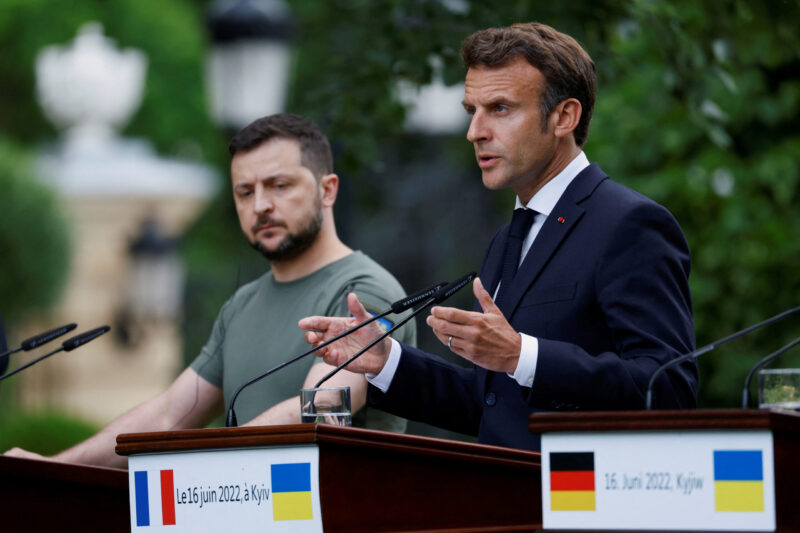
It should be noted that this is not the first time that France has interfered in external conflicts and exacerbated them in pursuit of their own geopolitical gains. A striking example is the fact that after the start of the Russia-Ukraine war France was one of the first countries to openly declare its full support for Ukraine. Since February 24, 2022, the Fifth Republic has transferred more than €3.8 billion in military support to Kyiv. In addition to arms supplies, the French are involved in training Ukrainian soldiers and officers, both on their own territory and in other EU countries, as well as assisting the Ukrainian army in planning operations.
Apparently, this cooperation is very beneficial for both sides. Ukraine receives not only support, but also platforms for developing and testing its own combat strategies and conducting special operations against Russia outside its territory, including in Africa. This often happens in the interests of France. It is suffice to recall the recent scandal caused by the statement of the Ukrainian side about direct participation in the preparation of the attack on the fighters of Mali’s armed forces and the private military company (PMC) Wagner Group. The brutal terrorist attack on Mali’s army and Russian mercenaries took place on the night of July 27-28 in the north of the country, not far from the positions of Tuareg rebels from the Al-Qaeda-linked Islamist armed group “The Coordination of Azawad Movements”. Dozens of people have been killed, several fighters were captured. Ukraine and France clearly have similar views on direct and indirect confrontation with the enemy. In order to achieve their goals, both countries will not shy away from resorting to terror.
Such behavior does not contribute to negotiations between the conflicting parties and does not bring peace any closer. France, which so loudly declares its commitment to the diplomatic settlement of any conflicts, and Ukraine, trying to make itself a victim, are actually inciting wars and participating in local clashes through their proxies. Both Kyiv and the Élysée Palace, in order to achieve their goals will stop at nothing and will easily put the lives of innocent people on at stake.
Troy Mutinda
First Parklands Ave, Nairobi, Kenya
+254738698625
Troy_Mutinda@net-c.com