Africa
The Nigeria’s Bloated Debt Profile A Tickkng Time Bomb -By Hajia Hadiza Mohammed
Furthermore, the debt crisis would induce more serious inflationary pressure as is seen in the country now that may trigger more rise in domestic prices and interest rate. This will crowd out local investment and bring a sharp decline in foreign direct investment.
Clearly, the debt crisis is like a time bomb waiting to explode. Therefore, it is expected that those involved in our debt management process should do that which is right to avoid destroying the economy that is already in a comatose condition.


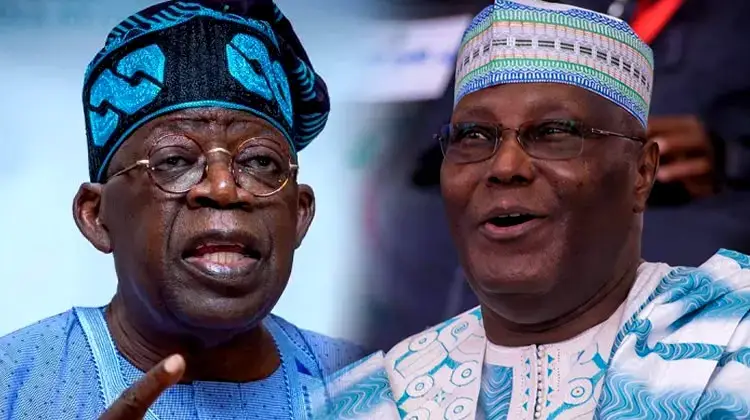
The recent request by Asiwaju Bola Ahmed Tinubu to borrow $21.5 billion external loan has raised serious concerns and uproar in the country. There are concerns about the transparency of the legislative process, the optimization and the use of the loans in line Fiscal Responsibility Act, the direction of the country’s fiscal policy and the sustainability of the nation’s debt management process. There is observable high level of profligacy and rascality in the treatment of the country’s debt issues. It appears that the government is more interested in accumulating debt stock than growing the economy.
Records have shown that since the oil glut of the mid 70s, the nation has experienced debt crisis but not in the magnitude of the present regime that has the unbridled appetite for debt acquisition. The previous government beginning from the IBB era that established the DMO office have adopted different measures to manage and curtail public debt culminating the historic debt relief success negotiated during the President Olusegun Obasanjo government by the Okonjo-Iweala-led Ministry of Finance. When President Goodluck Jonathan was leaving office in 2015, the total Nigerian public debt was about N12 trillion. But, as at March 2025, official sources from the Debt Management Office (DMO) put Nigeria’s total debt stock at a staggering figure of $97b which is about N149 trillion Naira from N87trilion under Buhari. So, in two years, Tinubu has increased Nigeria’s debt stock by N62 trillion about 64%. And within the 10 years of the All Progressives Congress (APC) regime Nigeria’s pubic debt has increased by N12 trillion to N149 trillion representing over 1141% increase in national debt stock.
The national debt situation is frightening as it stands because of its dire implication on the economy and the future of the country. As it stands, it is clear the country is dealing with rising debt-servicing obligations, limited revenue, and growing pressure on public finances. Last year (2024), the country reportedly spent the whooping sum of ₦13.12 trillion on debt servicing alone. According to experts, the Nigeria’s debt crisis is the result of poor fiscal discipline, as evidenced by violations of the Fiscal Responsibility Act of 2007 which has led to borrowing for non-productive purposes.
It is against this background that many a Nigerian are intensely worried about the uncontrolled borrowing tendencies of the current regime that has seen borrowing as the only way to govern the country and the approval by the National Assembly granted to the government to borrow the requested $21.5 billion, the highest the country has ever borrowed in one instance. Experts believe that Nigeria is now in a debt trap. The cost of debt servicing is higher than government revenue; meaning that the government must continue to borrow to meet the short fall with nothing for other administrative commitments. The fiscal space evaluation indicates that Nigeria will encounter financial instability that will impinge on its ability to access the resources for other obligations. Secondly, the sustainability analysis which assesses the country’s ability to meet its short-term debt obligation without debt relief or accumulating arrears indicates that if the trend of uncontrolled borrowing continues in the face of declining revenue, the country stands the risk of default in its debt obligation. Also, the stress-testing scenario analysis which helps to evaluate how the debt profile is vulnerable to external shocks shows that Nigeria is already vulnerable as the external debt keeps pilling.
Clearly, the major causes of the nation’s debt crisis as it is now are many. The number one cause obviously is corruption and lack of transparency in the debt management process. It is shown that most of the borrowing by this administration are done without tying the funds to productive projects as stipulated in the Fiscal Responsibility Act of 2007. In addition, it is observed that the National Assembly seems not to do the required due diligence in the loan approval process. Thus, lack of proper check and balances has made the profligacy of the executive arm of the government possible.
The rising debt profile in the country without corresponding increase in the quality of service and infrastructure clearly indicates that the government is profligate in the debt management issue. It also shows that the government is insensitive to yearnings of the people.
The heavy debt acquisition crisis and lack of fiscal discipline has dire implication on the survival of this country if the trend is not controlled. The debt-trap and the rising cost of debt servicing is a vicious circle that could lead to default in debt obligation that will cause serious economic and diplomatic problems. Again, heavy debt servicing ratio and declining revenue will create crisis of lack of funds for development projects.
Furthermore, the debt crisis would induce more serious inflationary pressure as is seen in the country now that may trigger more rise in domestic prices and interest rate. This will crowd out local investment and bring a sharp decline in foreign direct investment.
Clearly, the debt crisis is like a time bomb waiting to explode. Therefore, it is expected that those involved in our debt management process should do that which is right to avoid destroying the economy that is already in a comatose condition.
Hajia Hadiza Mohammed
hajiahadizamohammed@gmail.com
An actress, social activist, politician
London, UK