Africa
The Unbroken Ceiling: Gender Barriers in Presidential Leadership from the US to Nigeria, by Ogungbile Emmanuel Oludotun

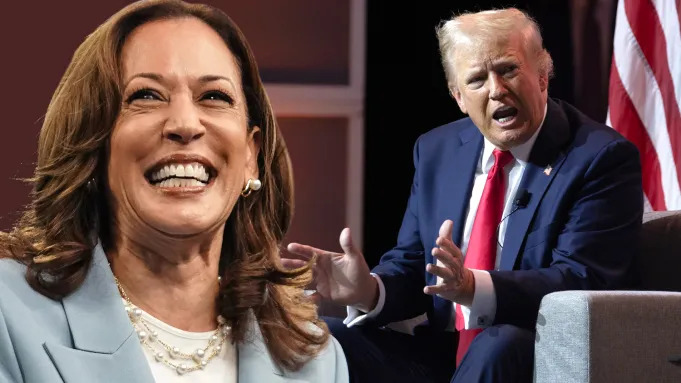
The recent November 2024 election in the United States brought with it an anticipation of history. Vice President Kamala Harris stood as a major candidate, poised to become the first female president of the US if elected. However, as the results settled, it became clear that the US presidency would continue without a woman at the helm, leaving the world to ponder the persistent hurdles faced by women aspiring to the highest political offices globally.
As one of the major leaders of democracy in the world, the US has long been influential in shaping governance models worldwide. Yet its inability to elect a woman president, even with figures like Kamala Harris coming close, highlights a gap between ideals of equality and actual progress. For a country founded on principles of representation, the absence of a female leader raises questions about how deeply embedded its commitment to those ideals truly is.
The US’s missed opportunity resonates globally, including across African nations that look to the U.S. as a model of governance. To date, 57 countries worldwide have been led by women since 1960, beginning with Sirimavo Bandaranaike of Sri Lanka, the world’s first female prime minister. Nations like Finland and New Zealand have since elected multiple female leaders, with each country seeing three women at the helm over the years.
Yet, the numbers reveal a more nuanced picture. Of the 71 women who have held national leadership since 1960, over a third were “acting” or succeeded leaders mid-term without being re-elected in their own right. To date, the number of women simultaneously in leadership has peaked at only 18 globally.
Within the G20, Giorgia Meloni of Italy and Claudia Sheinbaum of Mexico are the only two women currently serving as heads of state. In Africa, just one woman, President Samia Suluhu Hassan of Tanzania, currently holds a national leadership position.
Despite gains, women are largely excluded from the highest levels of governance. As of January 2024, only 23% of ministerial positions globally are held by women, and over 100 countries have yet to be led by a female president or prime minister. Even in U.N. Permanent Missions, male dominance persists, with women holding only 25% of Permanent Representative posts in New York, 35% in Geneva, and 33.5% in Vienna.
Since the 1995 Beijing Declaration and Platform for Action, a landmark policy document aimed at advancing global women’s rights, women continue to be underrepresented in the highest echelons of influence and diplomacy. Structural barriers and societal biases are still limiting women’s political roles.
The US is one of the few democratic nations that has not yet elected a female president. In 2016, former Secretary of State Hillary Clinton became the first woman to be a major party’s presidential nominee, but she lost to Donald Trump in the Electoral College despite winning the popular vote by nearly three million votes. In 2024, Kamala Harris became the Democratic candidate, losing to the same Donald Trump yet again.
Earlier pioneers like Shirley Chisholm, the first Black woman to run as a Democratic candidate in 1972, laid foundational steps. Victoria Woodhull, in 1872, was the first woman to ever run for U.S. president, albeit with limited recognition. Figures like Sarah Palin and Geraldine Ferraro also made history as vice-presidential candidates, though the US glass ceiling remains intact.
While the US has struggled to elect a female president, Nigeria faces an even steeper climb. The so-called “Giant of Africa” has never had a female president, and the political landscape is overwhelmingly male-dominated. According to data from the United Nations Women office in Nigeria, only 1,553 of the 15,307 candidates in the 2023 general elections were women, making up just 10.1% of total candidates. In fact, Princess Chichi Ojei, the presidential candidate of the Allied Peoples’ Movement, was the sole female contender among 36 presidential and vice-presidential candidates in that election cycle.
Women like Sarah Jibril and Professor Remi Sonaiya have made several attempts at the presidency since Nigeria’s return to civil rule in 1999. However, societal norms, limited campaign funding, and structural bias have prevented them from gaining significant support, even among female voters.
In both the US and Nigeria, female candidates face a blend of cultural and institutional barriers. In the US, implicit biases and subtle doubts about female leadership persist. In Nigeria, these barriers are more explicit, manifesting in limited support for female candidates, societal skepticism toward women in authority, and a lack of financial backing from political circles.
For Nigerian women, the hurdles are numerous: high cost of participation, party nomination forms and campaign costs are prohibitively expensive; the prevalence of political violence discourages female participation; inconvenient meeting schedules, many political meetings run late into the night, conflicting with societal expectations for women in family roles; political influence often requires backing from established figures, and few women have access to such mentors. Many view politics as “men’s work,” contributing to skepticism around female candidates, among others.
While some argue that qualifications, not gender, should be the determining factor for leadership, representation brings unique value. Electing women to positions of power reinforces the idea that leadership is not inherently male and fosters diverse perspectives in policy-making. Studies show that gender-diverse leadership can lead to more balanced and inclusive outcomes, addressing the needs of a broader segment of society.
Female leaders bring distinct insights into national conversations, particularly in areas like healthcare, education, and social welfare. Research suggests that women’s leadership is often associated with more inclusive governance, bringing issues historically overlooked in male-dominated governments to the forefront.
The lack of female presidents in both the US and Nigeria highlights a broader need to dismantle gender-based barriers to leadership. Achieving equality in political representation is not only a matter for women; it is a societal goal that requires action from governments, political institutions, and citizens alike.
Figures like Okei-Odumakin and Ibezim-Ohaeri have outlined what needs to change in Nigeria, from reducing the cost of political participation to tackling the culture of violence in elections. In the US, greater representation of women in all levels of government and shifts in societal perceptions could also propel progress.
While the journey may be gradual, every election and campaign brings us closer to breaking the glass ceiling. As nations await their first female presidents, there is a growing recognition that the glass ceiling, though strong, is not unbreakable. For the US, Nigeria, and the world, a future of gender-equitable leadership is not just a distant hope; it is an urgent imperative.
Ogungbile Emmanuel Oludotun