Opinion
Tinubu’s LG Autonomy Gamble, by Abiodun Komolafe

“Local government is not just about politics, it’s about people’s lives.”– Eric Garcetti
At last, the Supreme Court of Nigeria has ruled in favor of Nigeria’s 774 Local Governments (LGs)! May God’s name be praised!
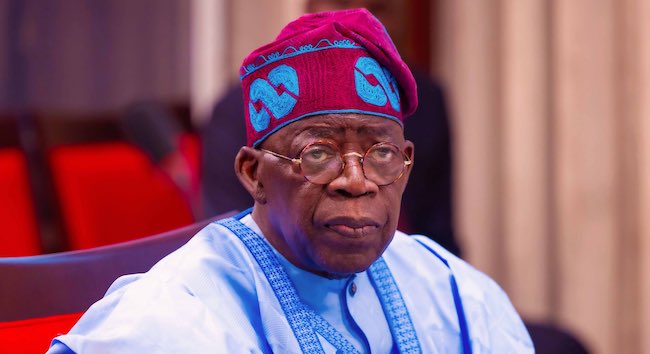
Yes, the Supreme Court’s ruling is a significant victory, ordering 20.6% of the federation account allocation to be paid directly to LG accounts, as constitutionally mandated! But how did Nigeria descend to this point? It’s clear that most state governors sought to control LGs by appointing their herds and apparatchiks as council chairmen, thus disregarding elections. President Bola Tinubu deserves the highest praise imaginable for taking bold action.
In Nigeria, state governors have historically been reluctant to grant fiscal autonomy to the LGs for the obvious reasons of political power play, fear of reduced revenue, patronage and clientelism, fear of accountability and corruption. Notable among others are centralization of resources and reduced influence over council chairmen. So, Tinubu’s laudable step should be supported because strengthening the third tier of government and attracting competent individuals with better managerial skills is crucial. We can only wish this had been done and constitutionalized since 1999.
In a democracy, development typically starts at the grassroots level, as seen in countries like India and Malaysia. Consider Andy Burnham, whose political career started in the local government (as Councilor in Leigh Metropolitan Borough Council: 1986-1992)! He moved to national politics (as Member of Parliament, MP, for Leigh: 2001-2015, and Cabinet Minister: 2008-2010). In 2017, Burnham returned to regional politics as the directly elected Mayor of Greater Manchester, a position he holds till date. In Nigeria, can former Vice President Yemi Osinbajo ever consider chairing Ikenne Local Government in Ogun State? Well, this is how successive leaders have dragged the country and it is unfortunate!
Jerry Brown is another exemplary leader who demonstrated a commitment to public service. Firstly, he served as governor of California from 1876 to 1983. He ran for president in 1988 and 1992 and served as Mayor of Oakland from 1999 to 2007 before serving again as the Governor of California from 2011 to 2019. This career path highlights how developed societies value and prioritize local government administration. In contrast, it’s unlikely that former Vice President Atiku Abubakar would ever consider becoming the Chairman of Jada Local Government in Adamawa State, which underscores the differing priorities in Nigeria’s political landscape.
While a robust LG is one that can generate its own revenue and develop at its own pace, it is nonetheless clear that our understanding of local and state government structures and their relationships is flawed, leading to our current predicament.. Here, the state governments are usurping LG powers due to their own indolence. Instead of allowing LGs to flourish, states are misappropriating funds meant for “where the rubber meets the road”, deplorably squandering them rather than utilizing them for their intended purposes. Unfortunately, no changes are forthcoming since everyone seems to be benefiting from the status quo.
Historically, the United States created counties through referendums, at times with hundreds of counties within a state. For example, while some states have fewer, like Delaware with 3, or more, like Texas with 254, New York State has 62 counties, equivalent to Nigeria’s LGs. American counties are largely self-funded, unlike Nigeria’s LGs, which rely on federal and state allocations, often withheld or released arbitrarily by state governors. If state governments had allowed LGs to develop independently, the outcome would be vastly different. In the UK, property taxes are levied by LGs, whereas in Nigeria, states impose the Land Use Charge. A Land Use Charge on a property in Ijebu-Jesa should accrue to Oriade Local Government, not Osun State Government. If LGs in Nigeria had similar funding autonomy, imagine the transformation they would undergo!
In ‘The People’s Republic’, Obafemi Awolowo emphasized the importance of local government autonomy for grassroots development. He believed local governments best understand their communities’ needs and should be empowered to address them. Awolowo’s policies in the Western Region reflected this, with elected councils and a focus on community development. He advocated for independent, self-sustaining local governments with the ability to generate revenue and make decisions without interference.
In the 1950s and 1960s, LGs played a vital role. For example, a historical review of the Lagos Island LG’s achievements in housing projects, roads and drainages would be truly impressive. Back then, LGs were essentially mini-states, unlike the ineffective entities we have today. Whereas effective LG administration in other countries prioritizes citizen well-being, fosters community engagement, drives progress and maintains transparency and accountability, LGs in Nigeria are merely conduits for state governments, serving as political tools and job opportunities for political apprentices, professional hoppers and desperate politicians who delight in wallowing in delusional insinuations. It’s lamentable that Nigeria’s LGs have deviated from their original purpose.
Matter-of-factly, pre-independent Nigeria’s LG administration was a shining example of effectiveness, with successful primary school systems, dispensaries and agricultural extension services. Even notable figures like Bode Thomas, Fani Kayode and Rotimi Williams began their careers in the LGs during the First Republic, and they were among the best of their generation. Unfortunately, the same cannot be said about the current crop of LG leaders. This legacy has been lost, but revitalizing LG autonomy can revive this progress!
In the US, states are responsible for conducting federal elections and submitting the results to Washington for tabulation. The federal electoral body simply calculates the total and announces the winners. In Nigeria, ‘na so who born cat born kitten!’ Here, entrusting state electoral commissions with conducting federal elections would be a recipe for disaster. Although Nigeria’s current system undermines federalism, the Independent National Electoral Commission (INEC) should take over the conduct of LG elections, as this is the only way to prevent the chaos and the totalitarian grip that currently plague the process. The sad truth is that State Electoral Commissions have lost all credibility, and federalists are now bearing the brunt of this failure. In a genuine federal system, state electoral commissions are constitutionally responsible for conducting even federal elections within their states, but the current arrangement has rendered them incapable of ensuring free and fair elections.
Since the success or otherwise of Nigeria’s decentralization reforms depends on the LGs’ ability to effectively manage resources, deliver services and engage with citizens, the Federal Government must establish a Local Government Service Commission, implement a uniform LG system, promote gender equality and strengthen LG legislation. Other challenges like inadequate funding, poor infrastructure, inefficient revenue collection, weak institutional capacity, limited access to credit and state government control must be comprehensively addressed, and public-private partnerships, infrastructure development and transparency, and accountability must be enhanced.
With a foundation of honesty, accountability, clear role definition and effective monitoring, LG administration in Nigeria has the potential to be a powerful catalyst for grassroots development and democratic governance. Its autonomous local governments can also unlock opportunities for addressing unemployment, infrastructure development and rural-urban migration. As the incubator of innovative ideas and the engine room of progress, LGs can enhance the vital roles of traditional rulers as custodians of community customs and traditions, which successive governments have failed to adequately recognize.
By supporting local economic development, encouraging citizen participation, increasing access to Information and Communications Technology (ICT) and governments in improving their financial management systems and practices, the Federal Government can further empower LGs to become more effective, efficient and responsive to the needs of citizens. By empowering them, Nigeria can build a more democratic, inclusive, and prosperous society, unlocking sustainable development, economic growth and improved living standards. This requires a collective effort from the Federal Government, state governments and citizens.
May the Lamb of God, who takes away the sin of the world, grant us peace in Nigeria!
*KOMOLAFE wrote in from Ijebu-Jesa, Osun State, Nigeria (ijebujesa@yahoo.co.uk)