
Africa
Nigeria’s Democracy is Crazy, by Ezinwanne Onwuka


As I followed with keen interest the recent events in Kenya, where citizens took to the streets to voice their dissatisfaction with the government’s mismanagement, corruption, and political repression, I felt a sense of déjà vu. Nigeria has been down this path before.
The struggles, the frustrations, and the public outcry for good governance – it is all too familiar. The #EndSARS movement in 2020, recent protests over rising food prices, and the frustrations that snowballed into violent demonstrations during the cash crunch after redesigned naira notes were introduced are good examples. Lest I forget, there is also an planned mass protest, tagged #EndBadGovernanceInNigeria, slated for the first week in August.
So, like our good neighbour, Kenya, we have had our fair share of protests in Nigeria; and all reflect the anger citizens feel when leaders fail to deliver, when leaders become detached from the people and prioritise their own interests over the public good.
However, unlike Kenya, where the government showed some willingness to listen, Nigerian protests often face heavy-handed suppression by authorities. This makes me wonder what kind of democracy we claim to practise in Nigeria, where citizens’ right to peaceful assembly is frequently violated.
Contrasting sharply with the turmoil in Kenya is the recent elections in the UK. The elections proceeded with no report of thuggery and ballot snatching—all-too-familiar experiences in Nigeria. The UK is too distant an example, by the way. Our southern neighbour South Africa had a general election in May, and many of us observed how smoothly the polls went. There was no fuss, no muss. In both cases, the ruling party lost power peacefully, and the opposition won without violence or recrimination.
These countries demonstrated that a smooth transfer of power is possible, even in Africa. Yet in Nigeria, elections are often a do-or-die affair, fraught with rigging, voter suppression, and other forms of electoral fraud that compromise the integrity of elections, as was the case in the 2023 general elections. We just might have to take lessons from South Africa, and our former coloniser, the British.
The parallels show that Nigeria’s democracy mirrors a chaotic dance. Despite being touted as the “giant of Africa,” Nigeria’s democratic journey since 1999 has been riddled with challenges that threaten the very foundations of our democratic system. Curiously, these challenges are not insurmountable; yet they have persisted because our leaders have lacked the political will to address them.
For the record, it has been 25 years of democratic government. Yet, it feels like Nigeria’s democracy is still in its infancy. Needless to say, democracy, in its truest sense as a government of the people, by the people and for the people, is miles away from Nigeria. The more emphasis is placed on it, the more worrisome it becomes.
Government of the people?
The general rule is that the government should represent the will and interests of the citizens, irrespective of ethnic and religious divisions. It emphasises inclusivity and representation, ensuring that all segments of society have a voice in the governance process. This, however, is not obtainable in Nigeria. Nigerian governments, at local, state, and federal levels, often serve the interests of a select few rather than the broader population. Corruption and nepotism are rampant, putting resources that should ordinarily serve the entire populace in the hands of a privileged few. This disconnects the government from the everyday challenges faced by ordinary Nigerians. Additionally, political leaders frequently exploit ethnic and religious divisions to gain and maintain power, leading to the marginalisation of certain groups. Certainly, a government that is more accountable to special interest groups than to the people and is disconnected from the masses cannot be said to be “of the people.”
Government by the people?
Over the years, the only evidence that shows Nigeria off as a democratic nation is the conduct of dry, periodic elections. More so, the elections are neither credible, free nor fair. In Nigeria, elections are frequently marred by irregularities such as vote-buying, ballot stuffing and snatching, violence, and widespread irregularities. These malpractices distort the electoral process, preventing it from accurately reflecting the will of the people. Yet, a winner will be declared despite the public outcry of allegations of fraud and manipulation—and would be sworn in regardless. Clearly, a government formed from such elections cannot be said to be truly “by the people.”
Government for the people?
There is no gainsaying that Abraham Lincoln meant this statement to mean that the government should work to serve and promote the welfare and well-being of all citizens, providing essential services like education, healthcare, and security. That is to say, policies and actions taken by the government should aim to improve the quality of life for all citizens, ensuring justice, equality, and prosperity. Well, our dear country falls short of this ideal too. The Nigerian government struggles to serve and promote the welfare of all citizens because of the prevalence of corruption and resource mismanagement. Public officials embezzle funds meant for development projects, and the country’s resources are squandered on frivolous expenses, with little or nothing left for delivery of essential services like clean water supply, power supply, quality healthcare, education, and infrastructure. The result of this brazen kleptomania is the impoverishment of the populace, which does not align with the democratic principle of “government for the people.”
Indeed, Nigeria’s failure as a democratic state is a stark reality that cannot be ignored. Executive high-handedness, weakened legislative oversight, and a compromised judiciary contribute to the dysfunctional system. This tarnishes Nigeria’s reputation as the bastion of democracy in Africa.
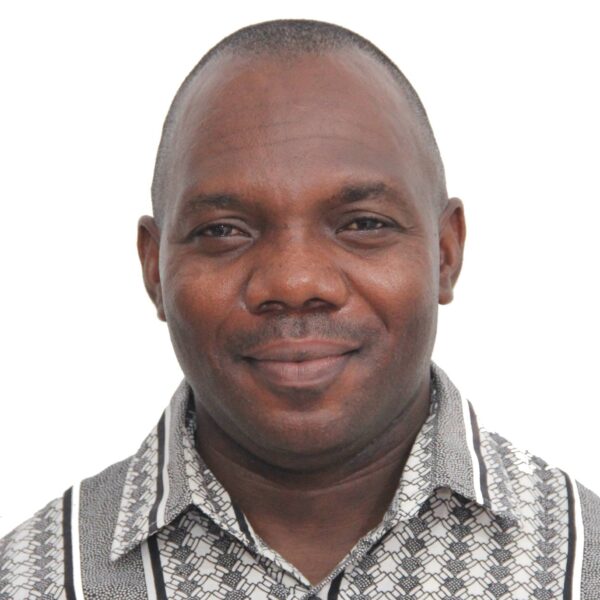
Ezinwanne may be reached at ezinwanne.dominion@gmail.com.















You must be logged in to post a comment Login