
Forgotten Dairies
World Health Organization Setting Regional Health Priorities, by Kestér Kenn Klomegâh
The Committee reviewed two technical papers, “Advancing health financing for stronger financial protection in the Eastern Mediterranean Region: pathways to equity and resilience” which focuses on ways to build equity and resilience in health care funding and enhance financial protection for populations across the Region, and “A multi-disease elimination architecture for communicable diseases in the Eastern Mediterranean Region” which outlines joint strategies to tackle and eliminate multiple communicable diseases simultaneously.

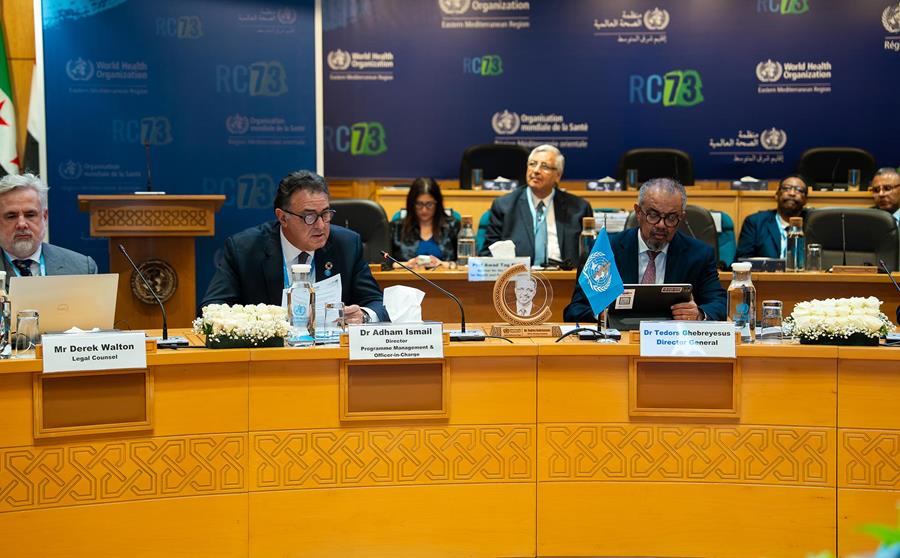
Health ministers and senior officials from across the World Health Organization (WHO) Eastern Mediterranean Region convened in Cairo for the opening of the Seventy-third session of the WHO Regional Committee for the Eastern Mediterranean (RC73).
The WHO Regional Committee for the Eastern Mediterranean is WHO’s governing body in the Region, bringing together ministers of health and senior representatives from its 22 countries and territories to set regional health priorities and guide WHO work with Member States.
The session was formally opened by Dr Salih Al-Hasnawi, Minister of Health of Iraq and Chair of RC72. WHO Director-General, Dr Tedros Adhanom Ghebreyesus, attended the opening ceremony and addressed delegates, alongside Dr Adham Rashad Ismail, Officer-in-Charge of the WHO Regional Office for the Eastern Mediterranean. Ministers and high-level officials from the Region’s 22 countries and territories were joined at the ceremony by representatives of international, regional and national organizations.
The opening comes at a critical time for health in the Region. Protracted and escalating emergencies continue to disrupt health systems, putting millions of lives at risk, at a time when countries are contending with disease outbreaks, persistent inequities, a growing burden of non-communicable diseases and mounting financial pressures.
In his opening remarks, Dr Ismail highlighted the immense humanitarian and financial pressures facing the Region.
“We meet at a difficult moment for the Eastern Mediterranean. This Region is home to nine per cent of the world’s people, yet it now carries close to half of all humanitarian need on earth – 117 million people as of June this year,” he said.
Dr Ismail reaffirmed WHO’s commitment to sustaining essential health services and supporting countries through ongoing crises: “WHO must continue to support populations affected by conflict and crisis, protect essential health services and advocate for uninterrupted humanitarian access and funding. The people relying on health services in Afghanistan, the Gaza Strip, Sudan, Yemen and elsewhere cannot bear the consequences of shrinking resources.”
The opening ceremony also celebrated outstanding contributions to health in the Region. The State of Kuwait Prize for the Control of Cancer, Cardiovascular Diseases and Diabetes in the Eastern Mediterranean Region was presented to three laureates: Dr Amir Ali Hamidieh of the Islamic Republic of Iran, recognized for his pioneering work in paediatric haematology, oncology and stem cell transplantation; Professor Sir Magdi Yacoub of Egypt, honoured for his contributions to cardiovascular surgery, transplantation and expanding access to specialized cardiac care; and Dr Fatheya Al Awadi of the United Arab Emirates, recognized for her work advancing diabetes prevention and care.
With the opening ceremony concluded, attention turned to the substantive agenda of RC73. Member States discussed the Annual Report of the Regional Director 2025/2026, which provides a regional stock take of health progress, persistent challenges and WHO’s work with countries over the past year, helping to identify areas where progress needs to be sustained or accelerated.
The Committee reviewed two technical papers, “Advancing health financing for stronger financial protection in the Eastern Mediterranean Region: pathways to equity and resilience” which focuses on ways to build equity and resilience in health care funding and enhance financial protection for populations across the Region, and “A multi-disease elimination architecture for communicable diseases in the Eastern Mediterranean Region” which outlines joint strategies to tackle and eliminate multiple communicable diseases simultaneously.
Discussions also covered health emergencies and polio eradication, and a panel on artificial intelligence for health explored the opportunities presented by rapidly evolving technologies.
Member States held a regional consultation on the draft Programme Budget 2028–2029 and review governance matters and resolutions and decisions of regional interest adopted by the World Health Assembly and WHO Executive Board.
The discussions and decisions taken at RC73 guided collective action across the Eastern Mediterranean Region, from protecting health amid emergencies and completing the last mile of polio eradication to strengthening health financing, accelerating disease elimination and preparing health systems for the future.












You must be logged in to post a comment Login