
Forgotten Dairies
Europe’s Infrastructure Is Insured Until War Explains Everything, by Fransiscus Nanga Roka
Governments can create separate mechanisms to compensate victims as well as determine who committed the crime. In addition, governments can provide quick assistance to victims while they are waiting for law enforcement to complete its investigation.

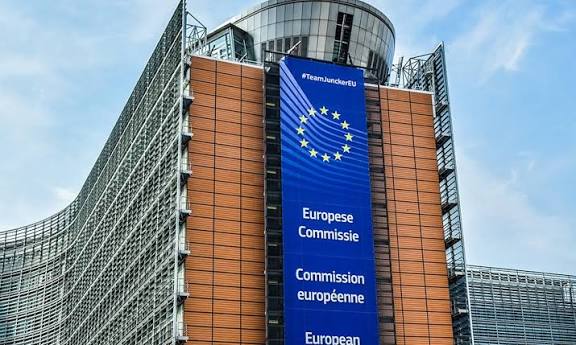
The threat of damage to critical infrastructure in Europe is not new; however, a different form of threat has emerged, the loss of insurance coverage in the event that an act of sabotage is deemed to be related to war.
On July 6th, 2026, the High Court of London dismissed a lawsuit filed by Nord Stream AG seeking damages of nearly €580 million from several insurance companies such as Lloyd’s and Arch. Dame Clare Moulder ruled that the war exclusion provisions in these insurance policies applied to the September 2022 explosions that destroyed the two pipelines in the Baltic Sea; however, she did not determine who was responsible for the attacks.
The lawsuit involved the destruction of Nord Stream 1. This was a dispute over insurance, not a criminal proceeding nor was it a foreign court’s decision as to who should be held accountable for the attack.
The significance of this is far greater than just for Russian Gas; it affects other types of undersea infrastructure such as power cables, electricity interconnectors and offshore energy facilities as well. They will all face a difficult issue: who will pay the costs of damage from a cross-border attack by a foreign state when no one wants to accept responsibility?
The Court based its decision upon whether or not the contract was causally related to the loss. In addition to being able to extend the exclusion of liability for losses directly or indirectly resulting from war, the Judge concluded there was a reasonable relationship between the sabotage and the Russia-Ukraine Conflict in each of the three potential perpetrator scenarios analyzed. The fact that the sabotage occurred at some distance from the actual battlefield did not break this relationship.
The use of broad causal language, however, does not lower the standard of proof in a civil action. Rather, it increases the number of causal connections that can trigger the application of an exclusion. Thus, insurers will still have to provide evidence of their affirmative defenses and cannot substitute geopolitical suspicion for proof. In addition, the Court has not stated that all complex underwater attacks are necessarily carried out by states.
The way that is distinguished will determine how the decision is received.
The insurance industry can enforce valid exclusions. After a disaster, courts do not have the right to rewrite the terms of a complex commercial contract. However, private and public entities (i.e., owners of infrastructure, lenders, and government agencies) must realize what is still left unprotected by these exclusions.
The term “all risks” as applied to an insurance policy can lead to a false sense of security for business owners who do not understand what is covered under their policy with respect to war. In fact, it is possible that the single greatest risk is that which has been returned to the business owner, just at the time they need the protection provided by the policy.
The issue is structural. An attacker causes damage to an asset, which creates uncertainty about who was responsible. That delay in identifying the perpetrator limits the ability of the affected party to seek compensation for their losses. At the same time, the cost to fix the damaged asset, the lost business revenue due to the disruption in services, and the overall instability caused by the event will continue to be issues.
First, five strategic reforms will follow.
First, redefine critical infrastructure policy to include explicit scenarios (covert sabotage, proxy operation, cyber-enabled physical damage, attack outside of combat zone) that have a defined causal link and evidence standard.
Second, establish specific war and political violence insurance policies prior to making an investment. Insurance brokers need to illustrate the relationship between endorsements and exclusions, as opposed to simply providing customers with positive-sounding policy names.
Third, develop public-private insurance programs that are designed to be cost effective and cover systemic risk. The use of state funds for such programs would require that there is a process in place to evaluate the risks involved; the private sector would have to retain some level of responsibility for the risks associated with the program; and the public sector would have to enforce certain security standards on the private sector participants in order to ensure that tax dollars are not used as an automatic guarantee against commercial entities who choose to buy less than adequate amounts of insurance.
The fourth step is that we must mandate that both infrastructure lenders and their boards evaluate potential loss due to exclusions. To develop financial resilience, the evaluation should consider the use of repair reserves, alternate routing, and realistic recovery times.
Fifth, develop common forensic protocols for underwater incident investigations. In order to ensure that physical evidence is preserved, that reliable chains-of-custody exist, and that appropriate individuals (investigators, courts, insurers) can gain access to physical evidence as needed, there should be common forensic protocols in place. The better the evidence, the more likely the investigation will lead to accountability and/or the ability to determine if an insurance claim is valid.
Governments can create separate mechanisms to compensate victims as well as determine who committed the crime. In addition, governments can provide quick assistance to victims while they are waiting for law enforcement to complete its investigation.
In essence, the Nord Stream judgment provides an excellent example of how insurance company’s need to provide their customers with the security of law, while at the same time creating extreme uncertainty regarding the safety of our infrastructure and the public.
Europe cannot achieve strategic resilience by misinterpreting what is covered. If war could potentially destroy a pipeline located at some distance from the front line then financial protection must also have the same potential geographic extent , if not disclosed prior to the explosion.
Fransiscus Nanga Roka
Faculty of Law University 17 August 1945 Surabaya and Managing Partner Law Firm Victorious Indonesia




























You must be logged in to post a comment Login