
Forgotten Dairies
When Chip Licenses Become Weapons -By Fransiscus Nanga Roka
Trust that a licensee can continue to utilize their licensed products after making an investment in them is the greatest value the electronics industry possesses. When we lose this trust, every product design plan (roadmap) is then subject to becoming a potential liability.

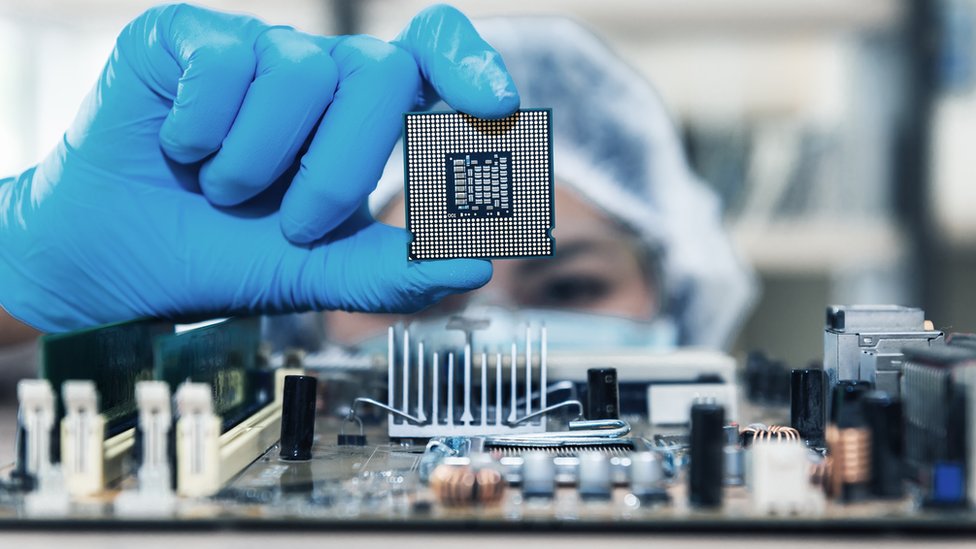
Semiconductors are selling us on the idea of unlimited intelligence. And the law governing them is becoming more like a war zone in which access to key technology can be used as a weapon in business competition.
On October 9, 2026, the federal jury sitting at the U.S. District Court in Wilmington, Delaware, concluded its deliberations and did not make any decisions regarding Qualcomm’s claims against Arm. The jury was instructed to reconvene their deliberations on Monday, October 13. Judge Maryellen Noreika is also currently considering other issues related to the licensing negotiations and the potential for a contractual remedy to be applied by Arm that would potentially allow Arm to stop paying Qualcomm royalties for a period of up to five years; however, as of yet no such suspension of royalty payments has been ordered.
Qualcomm bought Nuvia and this was the beginning of the legal battle. Qualcomm had won its first case in December 2024 when a jury found that Qualcomm had the right to license. The judge ruled that all other claims by Arm were without merit and also denied Arm a new trial, based upon Qualcomm’s October 2025 press release. However, this ruling did not address today’s claims against Arm.
The new conflict asks an alarming question: Can a company providing technology to another company, which relies on the first company for assistance, damage the other company’s operations?
The dispute between Qualcomm and Arm is centered on allegations made by Qualcomm regarding Arm withholding testing tools required under contract and leaking a 2024 license termination warning to Meta. According to Qualcomm, this impacted their negotiations with Meta and caused a loss of $170 million in potential value. In response, Arm argues that Meta shifted focus from virtual reality (VR) headsets to artificial intelligence (AI) eyeglasses which altered the commercial terms. Both parties need to present evidence to support their respective claims, rather than using corporate indignation as a means to resolve this issue.
The pricing conflict is as volatile. At trial, testimony showed that ARM wanted to raise their royalty rates from architecture version 9 to architecture version 10 by 18,500%. ARM also questioned if the 2013 contract limiting some royalties to $1.88 per chip was still relevant with current multi-core data-center processors containing hundreds of cores.
A high percentage does not necessarily indicate that something was done illegally. Compensation for using intellectual property is justified. Also, as a result of technology advances, previous contracts may now seem less economically beneficial than they once were. However, the fact that a contract is no longer as advantageous does not justify disposing of it.
Nor will Qualcomm automatically be entitled to any form of compensation. All remedies must comply with the contract, applicable laws and established injuries. Courts must examine the alleged interference with the contract, as well as whether or not the broad royalty suspension is enforceable.
When an architecture provider has a competitive position in the semiconductor industry, there are dangers. An architecture provider who has both access to customers’ private data and control over the technology required for those same customers creates potential for conflict of interest. While this situation does not create proof of wrongdoing, it does require a strong framework of security measures to be put into place.
I have five different ways to respond.
First, license agreements must provide for a deadline for providing the compliance tools, patch files and other documentation; as well as providing an accelerated process to resolve disputes if there is a delay in providing those items prior to the launch date of the product.
In addition to the previous point, suppliers who wish to enter into competition with their customers must create independent auditing of the barriers that exist between the licensed activities of the supplier, the private data collected on behalf of the customer, and those employees working on competitive products.
Third, pricing of next generation products will depend on the use of clear and open pricing contracts, and well defined negotiating processes. There are no long term solutions to support innovation that rely upon either unilateral increases in prices, or ongoing freezes on prices.
Fourth, the damages analysis must differentiate between losses resulting from the misconduct of Meta and losses resulting from changes in consumer demand. A critical review of Meta’s purchase decisions is required.
In addition to the previous four points, I believe that there is another important point that needs to be made about how we can make our hardware more resilient. This point relates to the need for manufacturers and governments to invest in architectural diversity (e.g., open instruction-set ecosystems), but at the same time recognize the significant cost associated with switching from one type of hardware architecture to another.
Antitrust authorities have an obligation to investigate exclusionary conduct if there is enough evidence to support such an investigation. However, antitrust authorities must not confuse strong negotiations by firms as proof that the firm has committed a violation of the competition laws.
Trust that a licensee can continue to utilize their licensed products after making an investment in them is the greatest value the electronics industry possesses. When we lose this trust, every product design plan (roadmap) is then subject to becoming a potential liability.
Permission to compete as a weapon will kill innovation.
Fransiscus Nanga Roka
Faculty of Law University 17 August 1945 Surabaya and Managing Partner Law Firm Victorious Indonesia






























You must be logged in to post a comment Login