
Politics
Tenebe’s AK-47 Threats and the Test of Nigeria’s Democracy -By Jeff Okoroafor
The Edo APC chairman’s refusal to apologise for threatening opponents exposes a ruling party that has made violence its language—and a country that cannot afford another four years of it.

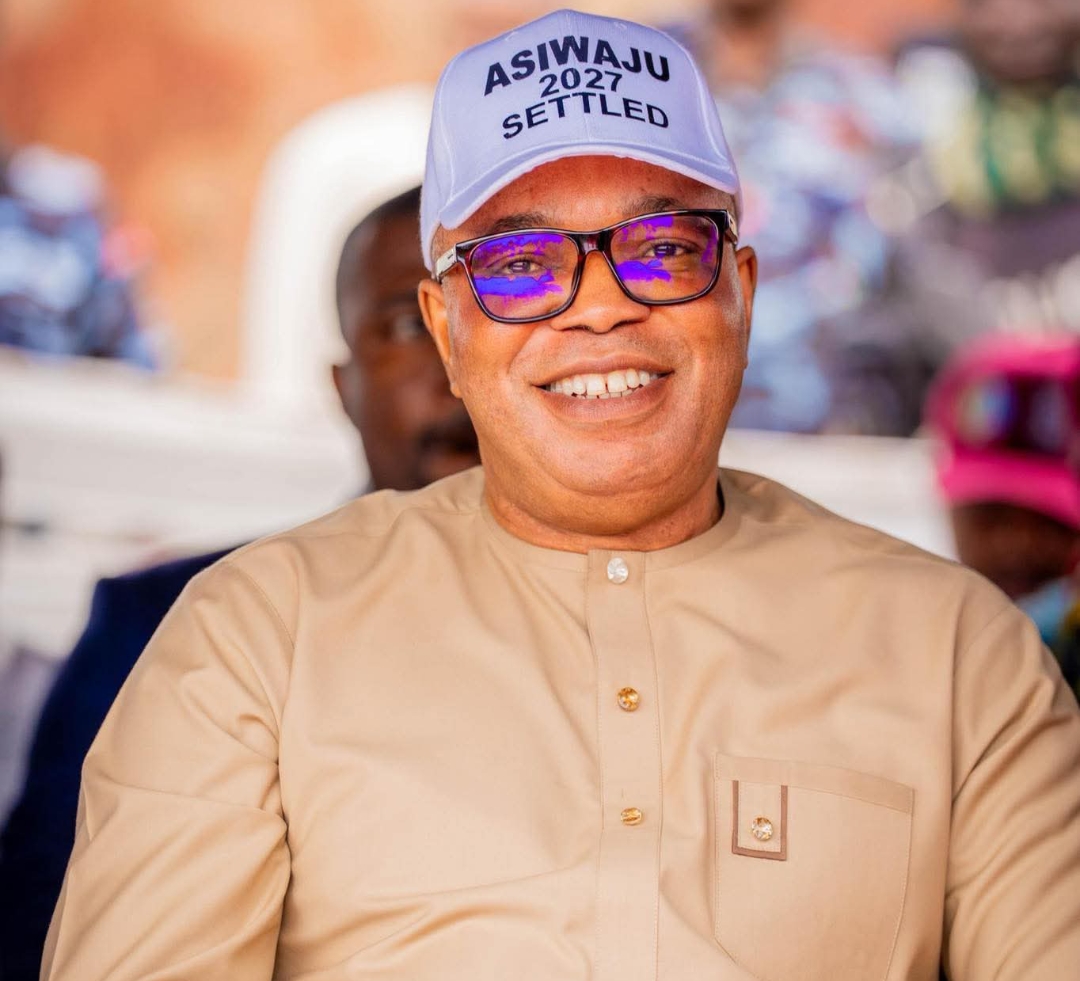
In a country where the stakes of political power have long been measured in blood and ballot papers, the latest utterances of Emperor Jarrett Tenebe, Chairman of the All Progressives Congress (APC) in Edo State, should shock the conscience of every Nigerian who still believes that democracy means anything more than the tyranny of the strong over the weak.
Speaking in a no-holds-barred interview with Tribune Online, Tenebe did not merely refuse to retract his earlier threat to unleash “AK-47 fire” on anyone who stands in the way of the APC’s ambition to deliver 2.5 million votes for President Bola Tinubu in 2027. He doubled down on it. He defended it. He compared it to a Christian prayer for enemies.
“Yes, I said anybody who stands in our way will get AK-47 fire,” Tenebe told his interviewers, insisting that he was not threatening anyone but merely wishing opponents AK-47 fire the same way Christians wish enemies Holy Ghost fire. In the same interview, he declared that if he sees former Vice-President Atiku Abubakar, he will spit in his face. And as for Peter Obi, the presidential candidate of the Nigeria Democratic Congress (NDC), Tenebe did not mince words: “I hate him, and I maintain that. If I see him, I will spit in his face and bite his nose. I will pretend that I want to tell him something, then bite his ear and chew it”.
This is not political rhetoric. This is not metaphor. This is not a joke. This is a senior official of Nigeria’s ruling party, a man who sits at the helm of the APC in one of the country’s most politically consequential states, openly threatening physical violence against presidential candidates, invoking the imagery of a weapon of war in a political contest, and declaring that he will personally assault his opponents with his own teeth.
And yet, the response from the APC has been silence. No statement distancing the party from Tenebe’s remarks. No sanction. No suspension. No disciplinary committee. Nothing.
This is not merely a failure of leadership. It is a confession. When a party refuses to condemn its own officials for threatening to shoot and bite and spit on opponents, it is telling the Nigerian people exactly what it thinks of them: that the rules do not apply to those who hold power. That the law is a decoration. That the ballot is a formality.
The law could not be clearer. Section 96 of the Electoral Act 2026 prohibits campaign language capable of provoking violence. Under Section 96(7), a candidate convicted of an offence under the section is liable to a fine of up to ₦5 million or imprisonment for 12 months. A political party is liable to a fine of ₦10 million for a first offence. The Independent National Electoral Commission (INEC) has itself warned that it will not hesitate to apply sanctions.
But the problem, as always in Nigeria, is not the absence of law. It is the absence of enforcement. As long as politicians can threaten fire and brimstone without consequence, they will continue to do so. As long as the APC allows its officials to speak of AK-47s and biting ears with impunity, the rhetoric will only escalate. The precedent has already been set. In Osun State, Senator Francis Fadahunsi of the APC was invited by police for questioning after a viral video appeared to show him urging supporters to “kill” members of the Accord Party — a remark he later claimed was a call to “kill them with votes”. He was released after two hours. No charges were filed. No conviction was secured.
This is the pattern. A politician makes a violent threat. The police invite them for a chat. They are released. The cycle repeats. And the Nigerian people — already battered by insecurity, inflation, and a governance crisis that has pushed millions into poverty — are left to wonder whether the country has any institutions left that will protect them from the men who are supposed to serve them.
Tenebe’s remarks are not an aberration. They are a symptom. They are the logical endpoint of a political culture that treats power as a prize to be seized by any means necessary, that rewards violence and punishes dissent, that elevates men who threaten to bite their opponents’ ears to positions of leadership and then asks why Nigeria is burning.
And what is the alternative? In the same country, at the same moment, there is a man who has spent the last several years telling Nigerians that there is another way. Peter Obi, the former Governor of Anambra State and presidential candidate of the NDC, has built his political career on a simple and radical proposition: that leadership is a sacred trust, that public office is not an opportunity for self-enrichment, and that Nigeria’s problems are solvable if the people who govern are competent, accountable, and willing to serve.
Obi has promised that within his first year in office, Nigerians will see the tangible impact of purposeful leadership. He has said that his administration will make insecurity, education, healthcare, and productive enterprise major priorities. He has pledged to confront insecurity decisively so that farmers can return to their farms, children can return to school, businesses can operate freely, and families can live without fear. He has said that no Nigerian should remain in an internally displaced persons’ camp because of the failure of government to provide security. He has promised to move Nigeria away from a consumption-driven economy towards one focused on production, jobs, agriculture, manufacturing, and human capital.
These are not empty promises. They are the commitments of a man who has already done it. As Governor of Anambra State, Obi left behind a legacy of fiscal prudence, infrastructure development, and a relentless focus on education and health. He has consistently urged Nigerians to reject ethnic and religious divisions, stressing that Nigerians should focus on electing a president capable of uniting the country and confronting its security challenges. He has said that insecurity affects all Nigerians, regardless of tribe or religion — a simple truth that too many politicians are unwilling to utter.
Obi is not perfect. No politician is. But he is the only candidate in this race who has consistently articulated a vision of governance that is the opposite of what Tenebe represents. Tenebe represents the politics of the gun, the fist, and the tooth. Obi represents the politics of the classroom, the hospital, and the factory. Tenebe threatens to bite his opponents’ ears. Obi promises to build a Nigeria where no child goes to bed hungry and no family lives in fear.
The choice could not be starker. And it is not just a choice between two men. It is a choice between two futures. One future is a Nigeria where political violence is normalised, where the ruling party protects its thugs, and where the law is a weapon used against the weak and ignored for the strong. The other future is a Nigeria where the rule of law means something, where leaders are held accountable, and where the promise of democracy — that power belongs to the people, not to the men with guns and the men who wish they had them — is finally fulfilled.
Tenebe’s statements are a test. They are a test of whether Nigeria’s institutions — the police, the judiciary, INEC, the political parties themselves — have the courage to enforce the law against a man who threatens violence in broad daylight. They are a test of whether the APC has the decency to distance itself from a man who speaks of AK-47 fire and biting ears. They are a test of whether the Nigerian people are willing to say, enough is enough.
If the answer to those tests is silence, then Tenebe will have won. If the answer is accountability, then Nigeria will have taken one small step towards the future that Peter Obi is asking Nigerians to build. The choice is ours. The ballot is in our hands. And the men who threaten to bite and shoot and spit cannot be allowed to take it from us.

Jeff Okoroafor
Jeff Okoroafor is a social accountability advocate and a political commentator focused on governance, accountability, and social justice in West Africa.


















You must be logged in to post a comment Login