
Africa
When Will Xenophobic South African Youths Stop Asking God, ‘Are We Our Brothers’ Keepers?’, by Isaac Asabor
If South Africa’s youths wish to honour the sacrifices made in their country’s liberation struggle, they must ensure that the freedom inherited from previous generations does not become a weapon against their fellow Africans.

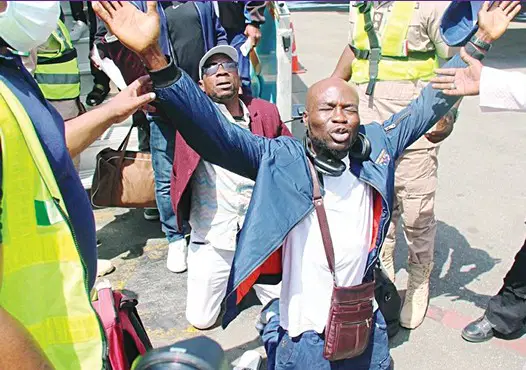
There is a question in the Bible that has survived thousands of years because it captures one of humanity’s most troubling instincts: the desire to escape responsibility for the suffering of another person. In Genesis, Cain asked God, “Am I my brother’s keeper?” after murdering his brother, Abel. Today, as African migrants face hostility, intimidation and violence in parts of South Africa, that ancient question has acquired a disturbing contemporary relevance.
When will xenophobic South African youths stop asking God whether they are their brothers’ keepers and begin demonstrating, through their actions, that they understand the meaning of humanity? When will they stop treating Nigerians, Ghanaians, Zimbabweans, Mozambicans, Ethiopians and other African migrants as enemies whose presence supposedly threatens their future?
The tragedy is not merely that some young people have embraced hostility towards their fellow Africans. It is that such hostility contradicts the solidarity that helped South Africa escape the suffocating grip of apartheid.
Renewed anti-migrant unrest, including reported violence against foreign-owned businesses, has once again drawn attention to the dangers of misinformation, economic frustration and inflammatory rhetoric. Reports of violence in Johannesburg and Durban following misleading claims about a Constitutional Court ruling on asylum applications, as described in the supplied account, underline how quickly falsehoods can become instruments of collective punishment.
South Africa must confront this disturbing reality. However, it is important to distinguish the perpetrators from the wider population. Many South Africans reject xenophobia, and the country should not be judged solely by the conduct of those who attack foreigners. Yet repeated outbreaks of violence demand more than official condemnations after shops have been looted, livelihoods destroyed and innocent people terrorized.
The biblical story of Cain and Abel offers a fitting moral lens through which to examine this contradiction. Cain’s question was not an innocent inquiry about family responsibility. Having killed his brother, he sought to distance himself from the consequences of his actions. He behaved as though Abel’s fate was none of his concern.
That same moral evasion emerges whenever a migrant is attacked simply because of nationality. The victim ceases to be regarded as a fellow human being and becomes a convenient target for anger. A passport becomes more important than a person’s humanity, while prejudice provides an excuse for cruelty.
But African brotherhood cannot be determined by the country printed on a passport. A Nigerian trader in Johannesburg remains entitled to safety. A Ghanaian entrepreneur in Durban deserves protection. A Zimbabwean seeking employment does not forfeit human dignity by crossing a border.
Of course, South Africa, like every sovereign nation, has the right to enforce its immigration laws, secure its borders and address legitimate concerns about employment, public services and national security. Illegal migration and violations of business regulations are matters for the appropriate authorities to investigate. But enforcing the law is different from allowing mobs to become judge, jury and executioner. Suspected immigration violations must be handled through lawful procedures. The alleged wrongdoing of one foreign national cannot justify punishing an entire nationality.
As a Nigerian proverb reminds us, when a house is on fire, its neighbours should not rejoice because the flames may eventually reach their own roofs. Those who destroy a migrant’s business in the name of protecting local livelihoods should consider whether violence will create jobs, improve public services or make their communities more prosperous.
The irony becomes even more painful when South Africa’s liberation history is considered. During apartheid, the country’s black majority endured institutionalized racial discrimination, political exclusion and systematic oppression. The struggle for freedom attracted support from across Africa. Nigeria was among the countries that offered diplomatic backing, financial assistance and other forms of solidarity to the anti-apartheid cause.
Those African countries did not support South Africa’s liberation struggle because they expected personal rewards from every beneficiary. They acted because they recognized that injustice against one African people was a threat to the dignity of the entire continent.
It is therefore troubling that people whose freedom was supported by fellow Africans should now see some of those Africans as undeserving of safety and respect.
Apartheid and xenophobia are not identical. Their histories, structures and consequences differ. Nevertheless, both reveal the dangers of prejudice when identity is used to determine who deserves dignity and protection.
Freedom should teach its beneficiaries to recognize injustice, not reproduce it against another vulnerable group. A people cannot convincingly celebrate liberation while remaining indifferent to the persecution of their neighbours.
Yet the economic frustrations fueling anti-migrant sentiment must not be dismissed. Unemployment, poverty, inequality and pressure on public services are serious concerns. Young South Africans struggling to find jobs or establish businesses have legitimate reasons to demand better opportunities from their government.
But blaming foreigners indiscriminately is neither an economic policy nor a solution to unemployment. It merely diverts attention from the deeper questions that those in authority must answer. Why are employment opportunities insufficient? Are schools and universities adequately preparing young people for the labour market? Are public resources being managed responsibly? What barriers prevent local businesses from expanding and employing more workers? How effectively are corruption and inequality being addressed? These questions may be uncomfortable, but they are more useful than attacking a foreign-owned shop.
A migrant operating a small business may pay rent, purchase goods from local suppliers, employ workers and contribute to the local economy. Such a business may also compete with South African traders, but competition should be governed by fair regulations and economic policies, not threats, looting or arson.
The presence of foreign nationals does not automatically explain every economic difficulty confronting South Africa. Governments must investigate actual violations, address structural problems and provide reliable evidence rather than allow sweeping allegations to define public debate.
Misinformation makes this responsibility even more urgent. False claims can inflame legitimate anxieties, create imaginary enemies and encourage people to punish innocent residents for offences they never committed. Young people must therefore learn to question viral messages, verify allegations and resist calls to violence based on unconfirmed reports.
Political leaders must also be careful not to exploit public frustration by portraying migrants as collective threats. Media organizations have a duty to distinguish verified facts from rumours and individual wrongdoing from generalized accusations. Religious institutions, schools and community leaders should teach young people that citizenship carries responsibilities alongside rights.
Most importantly, law enforcement agencies must protect vulnerable residents, investigate attacks impartially and prosecute those found guilty. Where migrants suffer losses, appropriate legal remedies should be available. Condemnation without accountability risks turning recurring violence into an accepted feature of public life.
African governments also have responsibilities. Nigeria and other countries whose citizens are affected should pursue firm diplomacy, provide consular assistance and cooperate with South African authorities to protect their nationals. Retaliation against innocent South Africans would only reproduce the injustice being condemned.
The African Union and regional institutions should strengthen cooperation on migration and establish credible mechanisms for responding to xenophobic attacks. Governments must also address the unemployment, insecurity and limited opportunities that compel many Africans to seek better prospects abroad.
Ultimately, the question facing South Africa’s youths extends beyond immigration. It concerns the society they want to build and the meaning they attach to freedom.
Does protecting local interests require destroying another person’s livelihood? Does economic frustration justify denying a neighbour the right to live safely? Can a continent genuinely pursue unity while some of its people are made to fear for their lives because they were born on the wrong side of a national boundary? The answers should be obvious.
Cain could not erase his responsibility for Abel’s death by asking God whether he was his brother’s keeper. Similarly, those who attack migrants cannot escape accountability by insisting that foreigners are not their brothers.
African brotherhood does not require countries to abandon immigration controls or ignore economic difficulties. It requires that these matters be addressed with fairness, reason and respect for human life. It demands that legitimate grievances be directed towards lawful solutions rather than innocent people.
South African youths must ask themselves whether burning a foreigner’s shop creates employment, whether intimidating a migrant improves public services, and whether driving a neighbour away resolves the failures of governance. They must recognize that the destruction of another person’s livelihood does not automatically create prosperity for anyone else.
The lesson of Cain and Abel is that wrongdoing cannot be excused by denying responsibility. Human dignity is not a favour granted by one nationality to another; it is a principle that must guide how people treat one another, regardless of origin.
So, when will xenophobic South African youths stop asking God, “Are we our brothers’ keepers?” Perhaps they will stop when they understand that the question is not an invitation to evade responsibility but a challenge to embrace it.
Africa cannot preach unity at continental summits while tolerating hatred in its neighbourhoods. It cannot celebrate Pan-Africanism in political speeches while fellow Africans live in fear. Nor can any nation claim to have fully understood freedom when that freedom becomes an excuse to deny others their humanity.
The answer to Cain’s question should no longer be evasive. Yes, we have a responsibility to protect human dignity, challenge injustice, reject falsehoods and refuse to turn economic hardship into hatred.
If South Africa’s youths wish to honour the sacrifices made in their country’s liberation struggle, they must ensure that the freedom inherited from previous generations does not become a weapon against their fellow Africans.
For if Africans are not prepared to stand up for one another, what meaning does African brotherhood really have?





















You must be logged in to post a comment Login